“We work with gas station networks only when they genuinely want to improve fuel quality, and our task is merely to facilitate this process. I warned partners in advance, drew their attention to our inspection data and publications in the press and social media. Unfortunately, they treated this superficially — it was their conscious choice,” explained Yuriy Chernobrivets, Director of the Institute of Consumer Expertise.
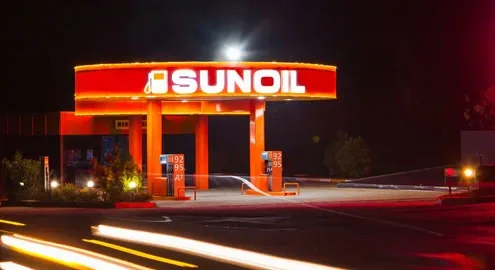
During the April inspection, in which specialists studied A-92 gasoline, it turned out that samples from SunOil and MOTTO exceeded the permissible content of sulfur and benzene. And in fuel purchased at BRSM and SunOil stations, traces of amines were found — a toxic substance prohibited for use in fuel not only in Ukraine but also in European countries and the USA.
Official notifications have already been sent to the BRSM-Nafta, MOTTO, and SunOil networks: they are ordered to remove the Institute's sign from their stations, delete mentions of cooperation from corporate websites, and cease any claims that they participate in the Institute's quality control program.
Chernobrivets also said that the conditions for participating in customer support programs have become stricter. Now, if a network wants to cooperate, an unscheduled inspection of three fuel samples will be conducted at three of its stations. The Institute will recommend a particular network to consumers only if the fuel passes inspection according to all standards. Subsequently, one detected deviation per month will be grounds for a warning, and repeated violations will lead to automatic termination of the contract with notification through the media.
“Such a deplorable situation with fuel quality as now has probably not been seen since the early 2000s. Our Institute intends to contribute to protecting consumer rights, supporting fair competition, and the Ukrainian economy, so we have a clear schedule of inspections of gas stations across the country for the coming months. We also plan new research methods and ways to communicate results to the public and government structures,” emphasized Yuriy Chernobrivets.
The Institute of Consumer Expertise is an independent public organization that conducts examinations of various goods and services in Ukraine. The Institute began its work in 2003. Over this time, the organization has earned a reputation as an objective and independent structure trusted by consumers.
Over its entire history, the Institute has conducted:
- 15 studies of motor oils (synthetic, semi-synthetic, mineral, various API classes);
- 177 studies of automotive fuel (A-95, A-95 “premium”, A-92, A-76, diesel), of which 76 in Kyiv and 101 in regions;
- 7 studies of brake fluid;
- 14 studies of washer fluid;
- 2 studies of vegetable oil;
- 34 studies of alcoholic beverages;
- 55 studies of meat and meat products, as well as other types of examinations.