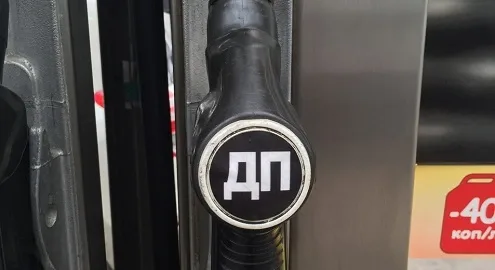
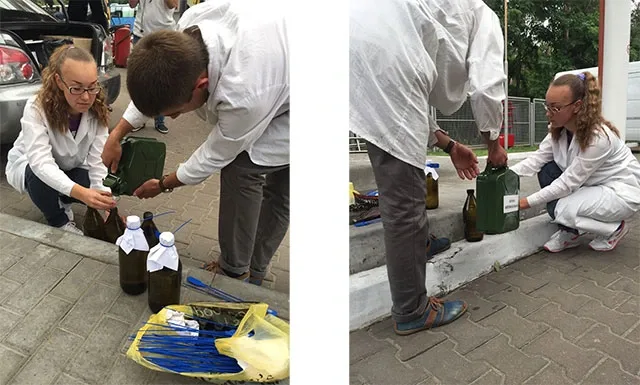
The issue was investigated by specialists from the Institute of Consumer Expertise, who purchased the most expensive and the cheapest samples of "heavy" fuel at Ukrainian gas stations and sent them for laboratory testing.
Test control
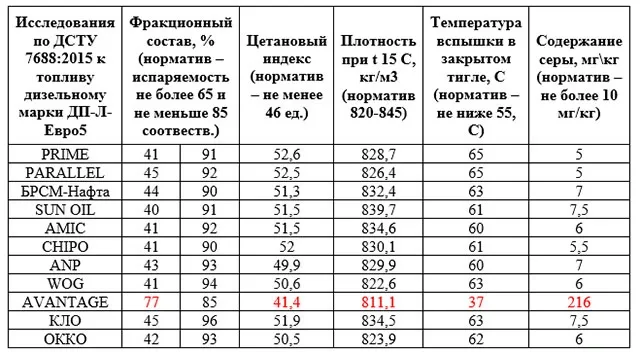
The market does not stand still – and competition leads to segmentation. Following the premium segment (OKKO, WOG), discounters appeared (BRSM-Nafta, Chipo, SunOil), and then super-discounters (Avantage, Marshall), operating on the brink of dumping. In addition, networks tailored to a specific group of consumers are emerging. For example, the rapidly growing all-Ukrainian network Prime offers preferences to long-haul truckers – for this purpose, the network's gas stations create parking areas with all amenities for comfortable stays, offer discounts, and sell AdBlue fluid for exhaust neutralization. This time, experts took samples of regular "eurodiesel" at 11 networks: WOG, Parallel, ANP, Klo, Prime, OKKO, AMIC, BRSM-Nafta, SunOil, Chipo, and Avantage. In the laboratory, all samples were tested for 5 parameters: cetane index, fractional composition, flash point in a closed crucible, sulfur content, and density. Let's say right away, all tested samples turned out to be "summer" ones. But there were some surprises.
Cetane index
First, specialists calculated the cetane index of the tested samples. The cetane index is the cetane number of the fuel before the use of cetane-improving additives. The general principle is the more, the better. Unfortunately, not all test participants met the standard. In the sample purchased at Avantage gas stations, the cetane index was almost 5 units below the standard. The largest margin was demonstrated by Prime samples – 52.6 units, Parallel – 52.5 units, and Klo – 51.9 units. Such diesel fuel will result in lower fuel consumption and smoke.
Fractional composition
The fractional composition of diesel fuels is important for engine operation. With an increase in the content of light fractions in diesel fuel, the critical ignition pressure of the working mixture increases, knocks appear in the cylinders, and crankcase oil is diluted. Too heavy fractions burn incompletely and increase carbon deposits in the combustion chamber. Also, the fractional composition of diesel fuel indirectly characterizes its volatility. Fuel with a lighter fractional composition evaporates more easily. For automotive diesel engines, the most satisfactory fuel consists of fractions boiling at temperatures of 200-360°C. The narrower the temperature range in which the fuel boils, the better its combustion process in the engine. According to this indicator, all participants had no problems; the values were approximately the same. The narrowest ranges were for "diesel" from Parallel and BRSM-Nafta.
Flash point
The second significant indicator is the flash point in a closed crucible. It characterizes the ignition temperature of the fuel. In the event of an accident involving a car filled with fuel with a low ignition temperature, the driver's safety is very conditional. In addition, this indicator may indirectly mean whether foreign components got into the "diesel fuel." The best results, 65 degrees with a standard of not less than 55, were for fuel from Parallel and Prime. But for fuel purchased at the Avantage network, the value was far below the limit – 37°C.
Sulfur
Finally, the main "environmental" indicator of diesel fuel is sulfur content. Although sulfur combustion products hit not only the environment but also the engine. Sulfur is deadly for catalytic converters and particulate filters; extracting it from fuel is a rather difficult and expensive process. With a sulfur concentration in fuel of less than 10 mg/kg, a "mileage" of the catalytic converter of more than a hundred thousand kilometers is not a problem. For example, if it is 1000 mg/kg (six or seven years ago this was the norm), the catalytic converter may stop working effectively after ten to fifteen refuelings: sulfur, interacting with the precious metals of the catalytic converter, multiplies their chemical activity by zero. According to Ukrainian standards (similar to Euro 5), the sulfur content in fuel is allowed no more than 10 mg/kg. This time, the results were generally pleasing, but there was a fly in the ointment. With the exception of one sample, all samples met the Euro-5 level. Samples from Parallel and Prime turned out to be almost free of harmful sulfur (5 mg/kg). The sample purchased at Chipo gas stations fell slightly short of the leader – 5.5 mg/kg. But the diesel sample from Avantage had a hefty 216 mg/kg, which is an excess of more than 20 times.
Total
The research picture turned out to be ambiguous. On the one hand, only one sample turned out to be substandard, which indicates the stability of supplies and a careful approach to logistics and incoming control at serious networks. Apparently, retailers are not eager to bear reputational risks and deal with "left" fuel, especially during the period of falling "spills." On the other hand, the quality in "medium" networks has equaled and even surpassed the indicators of their counterparts in the premium segment, and the price difference between them remains quite noticeable. So, is it worth paying more? However, each car owner is free to answer this question themselves. But motorists should still be very careful about "super sweet" offers on the price boards.
Dmitry Gordienko