It was decided not to stop there, and already in the 2021/2022 season the number of football clubs in the domestic championship will increase to 16 teams.
More Ukrainian football news — on the Football24 website.
Fortunately, this decision was made before the start of the new season, so both Premier League clubs and First League teams will be able to properly prepare for such a serious change in the tournament format. This will allow them to set priorities and develop a strategy to achieve them. Moreover, such an innovation will be an additional incentive for young footballers who strive to get into the Premier League. So we look forward to the new season, which promises to be more exciting and competitive!
And one more pleasant detail — the innovation of the 2019/2020 season will be the long-awaited introduction of the VAR system. In the first round of the competition, video replays will be tested in offline mode to check the equipment and train referees. And already in February-March 2020, Ukrainian football will await permission from FIFA and IFAB for the full use of VAR, that is, in online mode.
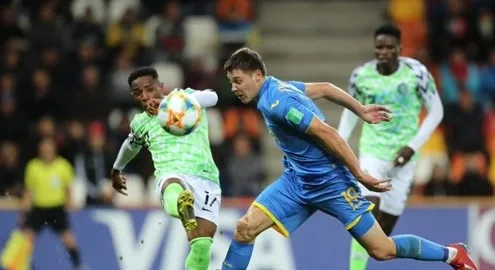
Thus, we can say that football in our country is gradually recovering from serious upheavals. Pavelko emphasizes that the recent historic victories and achievements of Ukrainian national teams are a clear confirmation of this.
UPL President Thomas Grimm and director of the channels "Football 1/2" Alexander Denisov spoke about preparations for the Ukrainian Super Cup-2019. They noted that the VAR system could be used already in these matches.
In a week, it will be 15 years since the first Ukrainian Super Cup. Then the match featured Dynamo and Shakhtar. Since then, this competition has become a traditional prelude to the new season.
This year, the Super Cup will take place on July 28 between Dynamo and Shakhtar, and on the same day the UPL will start. Ticket sales began on June 20. So far, 5 thousand tickets have been sold. The organizers are counting on a full stadium and invite fans to Odesa. 100 people are responsible for holding the match, and the broadcast will be carried out from 18 cameras — more than at the group stage matches of the Champions League. In addition, slow-motion cameras will be used, and for the first time, away pre-match and post-match studios will operate.