The question is whether it is worth buying such a device. Let's consider this issue from different angles.
Why do you need a charger for a car battery at all?
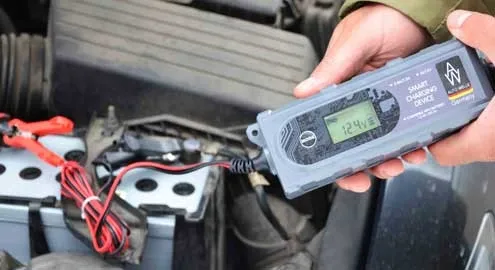
The answer to this question is obvious – a portable car battery charger is designed to restore and maintain a constant charge in this element. However, charging is by no means the main device for this. The main load falls on the standard car generator, and it is this that helps charge the battery constantly on the road.
But here lies a problem. If an external car battery charger takes current from the mains and adjusts only to the required current for the battery due to its discharge level, then the generator directly depends on the engine speed. Simply put, the higher the speed, the more current. On the highway at high speeds, charging the battery will be easy, since higher gears provide good current generation. But in city traffic jams, you constantly have to start moving (that is, use the battery), but there is little opportunity to accelerate and properly recharge the battery. Tell me, where do you spend more time – on long trips or driving slowly around the city? In the first case, you will rarely need a charging device, but in the second, you will quickly regret not having one.
Also consider self-discharge, which is inherent in most modern batteries. If the car sits for a long time without driving, or you leave the battery in the cold for a couple of days, the likelihood that you can easily start at any moment drops significantly. However, leaving the battery in the cold is also fraught with it freezing, which will definitely deprive you of the ability to go anywhere at all.
Conclusion. You should definitely buy a charging device for the battery, unless you own an electric vehicle that charges directly from the mains. Now let's figure out which one.
How to choose a car charger
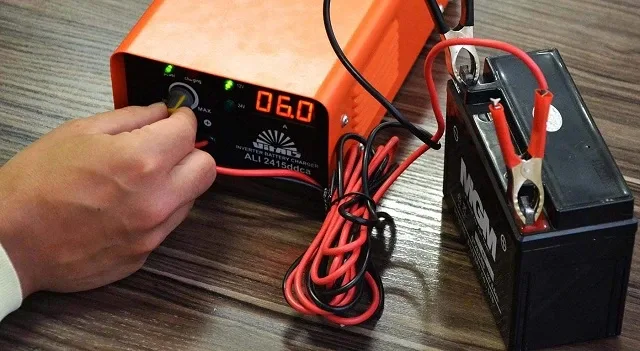
We will tell you about the types of chargers a little below. The main criterion by which a car charger is selected is the capacity of the battery that needs to be charged. You can find out this value simply by looking at the battery; it is indicated on the case in the vast majority of cases.
The power of the car charger should be 10% of the battery capacity. Plus, it is better to take it with some margin, at least the same 10%. This will help you not worry that the device has slightly “weakened” and cannot deliver the rated power, and also make it more universal and not have to change it if you take a slightly more powerful battery than you currently have.
For passenger cars with a battery of 60..90Ah, a 10 Amp charger will be quite sufficient. If your car electronics on board are particularly power-hungry and require a battery larger than 100Ah, then it is better to get a charger of 12…15 Amps. If you own a powerful truck, then it is time to look at the most productive chargers with a rated power of 20 Amps.
What type of charger to choose for your car
More precisely, for your battery. There are currently only two types of chargers on sale. They differ in how the battery is charged:
• transformer;
• pulse.
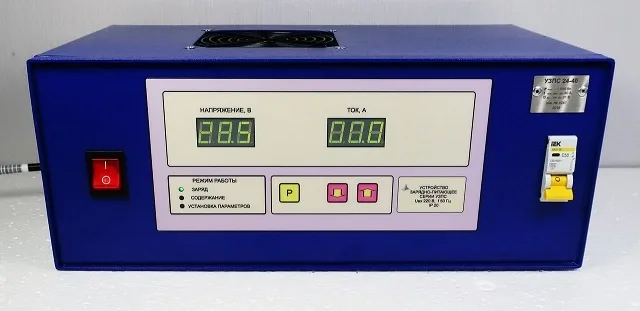
Transformer chargers are considered an outdated type of charger, have been discontinued by most companies and are now rare. Such devices are bulky, heavy, hum during operation, require manual adjustment, and are not distinguished by the accuracy of the set current. True, they have a plus – with such a starter-charger you can start the engine without a battery, and also set a high current to destroy the salt layer on the plates or charge a heavily discharged battery.
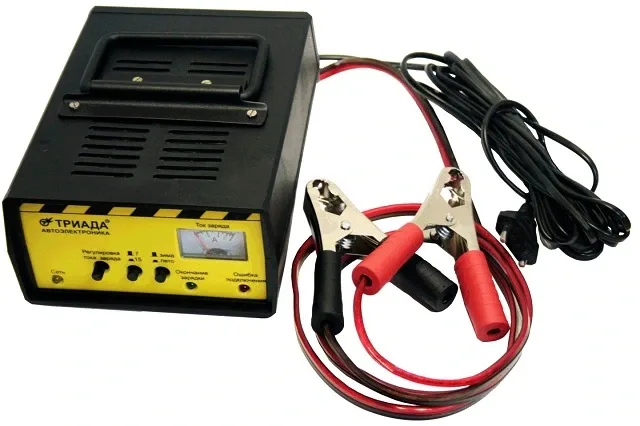
A pulse charger is much lighter and more compact than its transformer predecessors, and the control board allows you to read the current charge level and select the current accordingly. Human participation and setting adjustments are not required here; the device will operate in automatic mode and will only require connecting the battery and a standard power cord to it.
The disadvantage of this type of charger is that they simply will not see a heavily discharged battery and will not be able to select the current for it. There are, of course, chargers that also have a charge mode for a greatly reduced capacity, but their cost is clearly above average. To avoid such a nuisance, periodically check the charge level with a multimeter or hydrometer (if you have a serviceable acid battery).
In conclusion, we will say that you should definitely buy a charger for your car's battery, even the simplest automatic pulse type. This device is not too expensive, but it is durable and universal. And you will not be afraid that a discharged battery will force you to refuse a trip in any car!