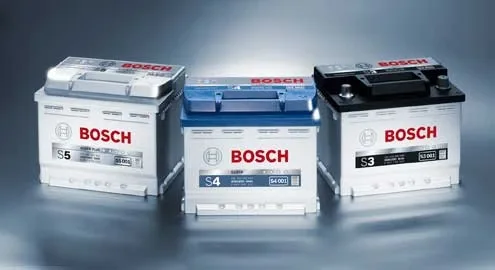
Even a person far from the car's design and the basics of electrical engineering understands that without a battery, a car won't go. However, when the question of buying a new battery arises — in an offline store or online — it turns out that the market offers a huge number of various types of batteries.
How do they differ from each other? Why is the price range so wide? What is hidden behind the abbreviations GEL, AGM, and the designation Hybrid on the label? Let's figure it out in order.
The most affordable and simple in design option is the classic lead-acid battery. Inside its case, divided into sealed sections, a liquid solution of sulfuric acid and distilled water is poured. Lead plates acting as electrodes are immersed in this liquid. The chemical reaction between lead and acid generates electric current.
To prevent the plates from deteriorating and shedding, various impurities are added to their composition. It is by these that one can distinguish one type of battery from another by marking. For example, the designation Sb/Ca indicates that we have a low-antimony battery. The inscription Ca/Ca is found on maintenance-free calcium batteries. And the marking Ca+ or the word Hybrid indicates that the product is manufactured using combined technology.
In addition to traditional acid batteries, more technologically advanced solutions can be found on store shelves.
• AGM batteries. In such batteries, the space of the cans is filled with fiberglass filler impregnated with electrolyte. This porous structure holds the liquid and prevents the shedding of lead plates. Such batteries have an increased service life, require no maintenance, and lose charge more slowly during storage.
• Gel batteries. Instead of liquid electrolyte, they use a gel-like mass that does not spread. Such batteries are noticeably more expensive than standard ones, but they last much longer and can deliver consistently high current even when deeply discharged.
• Alkaline batteries. Instead of acid, caustic potassium is used here. Such batteries can store more energy at the same weight and tolerate frost well. However, due to their high price, they are rarely installed in passenger cars as a standard power source.