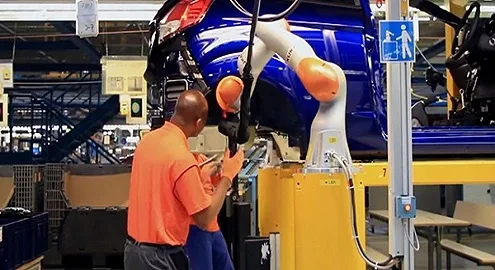
At the American automaker's plant in Cologne, the first robots have already begun to be used. Ford's press service clarified that these devices were developed in cooperation with KUKA Roboter GmbH.
The robots reach about two meters in height. Their design replicates the structure of a human arm, which allows the mechanisms to be used in a wide variety of operations. Currently, they are engaged in installing shock absorbers on the Ford Fiesta model. The device is activated by simply pressing a button. The company is already thinking about where else such robots could be applied. As emphasized, they can be configured to perform many tasks — even making coffee for the plant's employees.
"Thanks to the robots, we complete tasks faster and safer. These devices open up broad opportunities for producing new Ford models," said Karl Anton, who heads Ford's operations department in Europe.
Earlier it was reported that the German concern BMW is also introducing automation: its enterprises have begun using self-propelled robotic carts, which should reduce annual production costs per vehicle by 5%. The pilot project started at BMW's logistics center in Wackersdorf. Such carts independently find the required container with components, move under it, and deliver it to the packaging area.
BMW's production department head Oliver Zipse noted that using robots is more profitable than manual labor: order processing takes less time, and material flows become more optimized. He added that it is difficult for a person to keep track of which parts to send where, so it is necessary to constantly maintain stocks of various components along the assembly line.