In other words, the nature of a trip is constantly transforming: from unhurried city driving with stops in traffic jams to rapid driving on highways and freeways.
The advantages of a longer service interval directly translate into reduced vehicle maintenance costs. The point is that the frequency of maintenance is not rigidly fixed but is calculated based on the intensity of vehicle use and driving style. For the engine, specialized long-life oils are necessarily used.
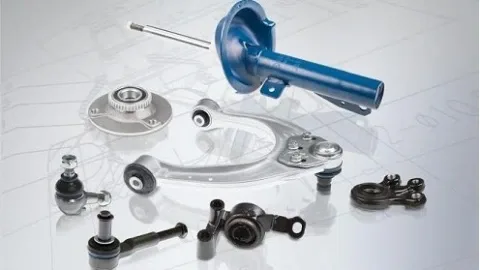
If there is an opportunity to save on scheduled maintenance, it is logical to minimize repair costs as well. The German company Wulf Gaertner Autoparts AG has transferred the principle of extended service intervals to suspension components, modernizing their parts. The company's specialists identified the main parameters affecting the service life and functionality of chassis parts.
To increase the replacement interval of components, they need to be given a higher safety margin. For this, it is not enough to simply focus on the end result — the very approach to solving the problem must be reconsidered. Improving characteristics at the design stage certainly bears fruit. However, for maximum return, innovative solutions in materials science and production processes are required. At the same time, the mounting dimensions of the parts remain unchanged.
The durability of components is most often determined by the wear resistance of their individual parts. An example is stabilizer links. Under intensive use, in standard links, the insert wears out first, after which cracks often appear on the joint housing, and the pin begins to strike it.
The solution seems obvious — increase the diameter of the ball element from 12 to 22 mm, and then the contact area will more than triple. As a result, the inner plane of the joint housing also increases, which reduces the specific pressure on it.
Along with the increase in the joint, the friction zone also increases, which with classical manufacturing technology would make it less mobile. Therefore, in MEYLE, the precision of ball surface roughness is comparable to the polishing of optical lenses. Such a ball minimizes the impact on the insert, creates almost no resistance even with a very tight fit, and, as a result, does not overheat during operation.
The wear-resistant insert made of polyoxymethylene (POM) also has an extremely low coefficient of friction. This material has found application in aircraft construction. In shape, it is not annular, but in the MEYLE version it completely envelops the lower hemisphere of the ball, which not only reduces the specific load but also prevents moisture from penetrating to the ball from the side opposite the pin.
The joint head is fixed in the insert using Clip-on technology, which eliminates even minimal play. An additional locking ring at the bottom, secured by ultrasonic welding, absorbs axial forces and holds the joint-insert pair inside the link eye.
MEYLE ball joints use a lubricant from a well-known manufacturer that produces lubricants for components operating in extreme conditions — for marine transport, aviation, wind turbines, etc. This lubricant retains its qualities in any situation in which the joint may find itself during operation.
To protect the internal contents, MEYLE-HD joints also received external refinements:
- a natural rubber boot is secured with clamps that are painted to protect against rust after wire cutting;
- the joint housing is coated using cathodic dip painting (KTL), used to protect metal elements operating in liquid environments, including salt water (constant exposure to splashes of winter slush with reagents and salt is not a problem for such a housing);
- a self-locking nut on the pin prevents loosening of the fastening.
What is the practical effect of such improvements? For example, the mentioned stabilizer link was tested at the Helmut Schmidt Institute in Hamburg (University of the Bundeswehr, where applied research on materials and technologies for the defense industry is conducted). First, a standard link was tested — the housing cracked after 580 thousand cycles. Then they began testing the MEYLE-HD part. The result exceeded even the researchers' own expectations: after a million cycles, there was not even a hint of play!
Using the same scheme, Wulf Gaertner Autoparts AG improves other ball mechanisms — tie rod ends and ball joints. Unlike the improved version, MEYLE parts are structurally fully compliant with the original. They are manufactured according to drawings of factory components, but with the use of more advanced technologies and materials.
Under the MEYLE brand, over 18,500 product items are supplied, among which there are unique offers from the reinforced line — for example, suspension arms with replaceable ball joints in a reinforced version.
Technical refinements of parts provide them with a longer service life, which increases service intervals and replacement frequency. This allows saving not only on the price of the parts themselves but also reducing costs for installation work. To ensure confidence in the quality of the upgraded elements, Wulf Gaertner Autoparts AG provides a four-year warranty on MEYLE-HD products in Europe.
The article was prepared by the international marketing agency "AGV-Aftermarket".