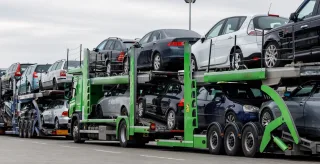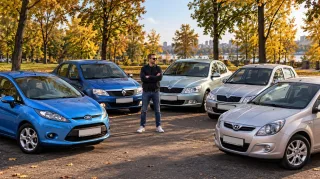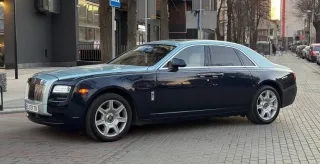
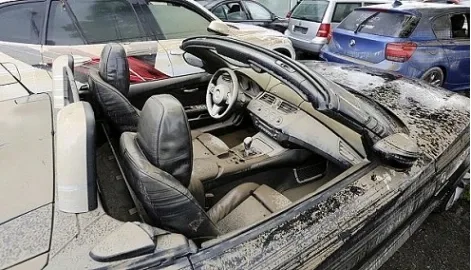
Many people mistakenly believe that bringing a car that has survived a flood back to life requires huge investments and time. In reality, cars damaged by floods in Europe have not only been washed and tidied up, but also delivered to Ukraine with customs clearance completed. All further costs for their full restoration will fall on the shoulders of the new owner.
Currently, such vehicles in our country can be found both on the secondary market, where they are passed off as ordinary used cars, and in showrooms, where they may be presented as new. A significant portion of such cars will likely be dismantled for parts. However, examples with attractive exteriors and expensive models will be attempted to be sold under the guise of standard cars.
Purchasing such a car promises its owner a host of problems. First of all, there is silt, which gets clogged into the tiniest gaps. Even after replacing lubricants and thorough washing, it remains inside components and assemblies, subsequently acting as an abrasive. Parts of such a car will not last long and will become a source of constant headaches for the driver.
The next point is the wiring. All connectors that have been in water become covered with oxides, which provokes malfunctions in electronic systems. But the most unpleasant thing is that such a car becomes truly dangerous. The engine may stall without warning, and due to a short circuit in the electrical network, there is a risk of fire. Completely replacing the electrical system is a troublesome and costly endeavor.
The third nuance is the musty smell that is permanently embedded in the upholstery of the interior. In addition, the metal frames of the seats begin to rust.
Based on the above, a "drowned car" can be recognized by several characteristic features:
1. Too tempting a price — if it is 25–30% lower than the market average, this is already a reason for serious suspicion;
2. The smell in the cabin is often tried to be masked with air fresheners or perfumes. If this has not been done, you will smell a distinct odor of mud or swamp;
3. In hard-to-reach areas, such as under door seals, layers of sound insulation, in the glove box, or other hidden cavities, traces of silt can be found;
4. Headlights and the dashboard may fog up from the inside;
5. Seat frames are covered with rust.
More detailed recommendations on identifying such cars can be found in our video material: