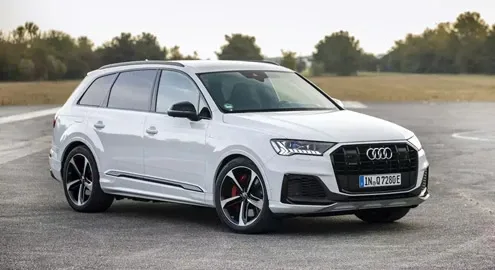
The basis of the powertrains of both "Q-sevens" with the TFSI e badge is a 3.0-liter turbo engine producing 340 horsepower and 450 Nm of torque. It is complemented by an electric motor (94 kilowatts; 350 Nm) installed between the engine and the gearbox, and a 17.3 kilowatt-hour battery consisting of 14 modules with 168 prismatic cells each. The difference in total system output: the Q7 60 TFSI e has 456 horsepower (700 Nm), while the Q7 55 TFSI e has 356 horsepower (600 Nm).
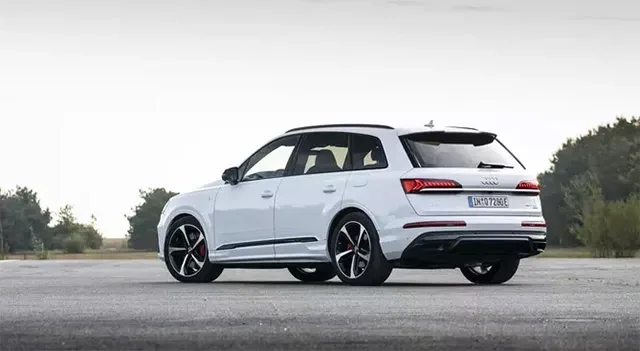
From a standstill to 100 km/h, the 60 TFSI e accelerates in 5.7 seconds, while the 55 TFSI e takes 0.2 seconds longer. The electric-only range is 43 kilometers for both cars. The charging port is located on the rear left side of the body. The SUV can be connected to public chargers or, through the proprietary Charging Service, gain access to 110,000 terminals across Europe.
The PEA efficiency assistant monitors the optimal battery charge consumption. The algorithm for switching between the internal combustion engine and the electric motor is based on the features of the planned route: speed limits, surface types, and terrain. Additionally, PEA looks at the proximity of other cars and decides when, for example, it is better to use coasting and recuperate energy. The driver also has access to the Hold charge preservation mode and forced switching to electric drive.
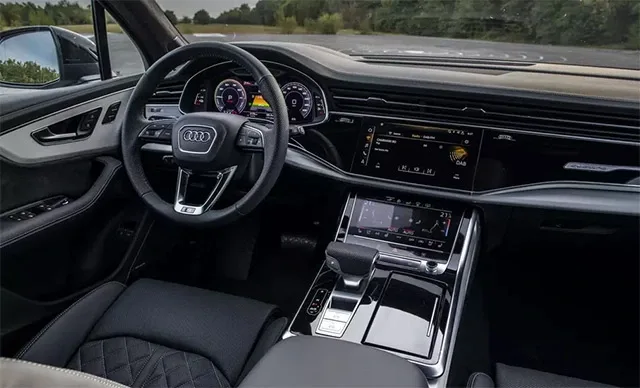
As in the e-tron, all decelerations up to -0.3 g are performed by the electric motor. During hard braking, conventional mechanisms are engaged. The recuperation power of the hybrid Q7 is 80 kilowatts. When coasting, the crossover can return up to 25 kilowatts of electrical energy to the battery.
Audi has already begun accepting orders for the Q7 60 TFSI e and Q7 55 TFSI e in Germany. The first costs 89,500 euros, the second — 74,800 euros.