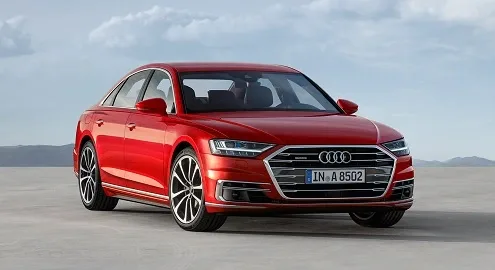
The design impresses with a significantly enlarged radiator grille and more aggressive headlights. The A8 has grown 37 mm in length (5172 mm) and 13 mm in height (1473 mm), while the width has decreased by 3 mm (1945 mm). The wheelbase has expanded to 2998 mm (+6 mm).
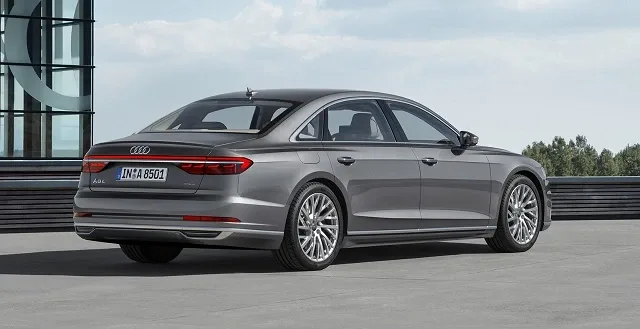
One of the main highlights of the model is the active suspension Audi AI active suspension, which uses electromechanical actuators instead of anti-roll bars, controlling each wheel individually and effectively suppressing body roll while providing outstanding ride comfort.
Moreover, in the event of a side collision threat, the "smart" suspension will raise the affected side of the car by 80 mm, so that the impact hits the sill area rather than the less sturdy door.
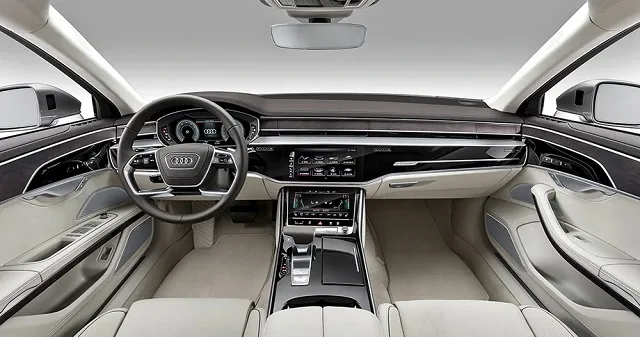
The interior has been radically transformed and boasts a 10-inch media center screen, neatly integrated into the center console, as well as a fully digital instrument cluster. For the rear passenger on the right seat, a foot massage function has been added.

The options list now includes the Traffic Jam Pilot, which can autonomously drive the car at speeds up to 60 km/h, without the driver even needing to hold the steering wheel. Additionally, the flagship now offers remote parking pilot and remote garage pilot functions, activated via smartphone and requiring no driver behind the wheel.
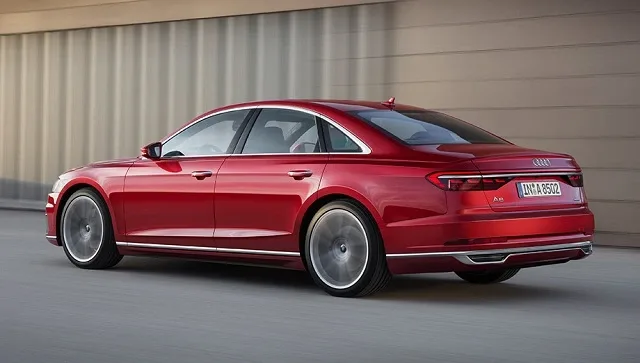
The engine lineup of the new A8 initially offers only two six-cylinder engines: 3.0 TFSI (340 hp) and 3.0 TDI (286 hp). Next year, two four-liter V8s will be added: a TFSI with 460 horsepower and a diesel with 435 hp. The top version will eventually get a six-liter W12, shared with the premium crossover Bentley Bentayga. The hybrid version A8 L e-tron quattro will also come later.
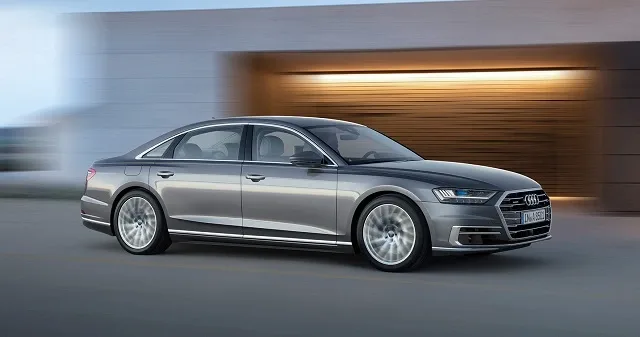
The new Audi A8 will arrive in dealerships in late autumn. Prices will be announced closer to the start of sales.