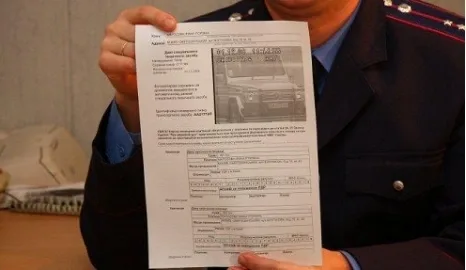
The State Automobile Inspectorate believes that the automatic recording system will reduce the number of traffic violations and at the same time help fill the state treasury.
But let's not be critics. Let's consider the positive aspects of the innovation, if it takes place.
The first point is the effectiveness of the system compared to the officers of the State Automobile Inspectorate. A driver can be punished for a violation based on fact, and actually cannot evade responsibility. The reason is simple - there is no one to negotiate with. Today, Ukraine is perhaps the only country in Europe where violators are caught the old-fashioned way - with a baton.

The second positive point is that the widely placed automatic recording systems force drivers to hold back their eagerness, affecting them psychologically. The placement points of the devices can be in completely unexpected places and record the violation unnoticed by the driver. The driver learns that his inappropriate behavior was noticed and that he will be punished only after receiving the notification.
As the experiment conducted by the State Automobile Inspectorate showed, a device installed at a dangerous intersection recorded 89 violations in a short time. This is a level of violation recording unattainable for an ordinary inspector.
Nevertheless, even with a positive decision to introduce such systems into operation, their mass use may begin no earlier than 2015. Such deadlines are due to the cost of the devices and the huge number of accident-prone areas requiring their installation.
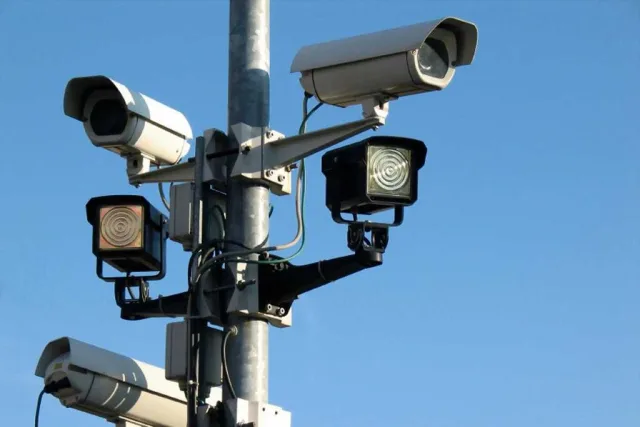
There are also negative aspects in the operation of automatic traffic violation recording systems. First of all, it is the difficulty of establishing the identity of the person behind the wheel of the vehicle. It is this problem that is the biggest stumbling block between the State Automobile Inspectorate and lawyers dealing with road topics.