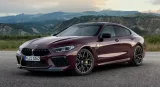
The highest scores in the tests went to the Bavarian "three". Protection for the driver and adults in the front seats was rated at 97 percent, for young passengers at 87 percent, and for pedestrians also at 87 percent. Electronic assistants earned 76 percent. The model successfully passed all crash tests, including a simulated side impact with a pole, and had virtually no complaints.
The only drawback noted by experts was the low probability of chest injury for the driver and front passenger in the event of a frontal collision. For people outside the vehicle, the main threat comes from the body pillars. One of the systems scored low, but the other safety features performed well.
The maximum five stars, which are the highest possible, were also earned by the compact hatchback BMW 1-Series of the third generation. The new "one" scored 83 percent for adult safety, 87 percent for child safety, 76 percent for protection of other road users, and 72 percent for the operation of electronic assistants. In a frontal collision, there is a significant risk of chest injury for the front passenger. Also, in a rear-end collision, the neck of the rear-seat occupant is poorly protected. Almost all assistance systems worked well, but the lane-keeping system again drew criticism, as it did for the "three".
The Peugeot 208 demonstrated 91 percent for adult safety, 96 percent for children, 56 percent for pedestrians, and 71 percent for electronics. The car successfully passed almost all tests, but engineers identified a risk of chest injury for the driver in a frontal collision with a deformable barrier, as well as in a side impact. In a rear-end collision, the danger of neck injury awaits the passenger in the back seat. As a result, Euro NCAP awarded the model four stars.
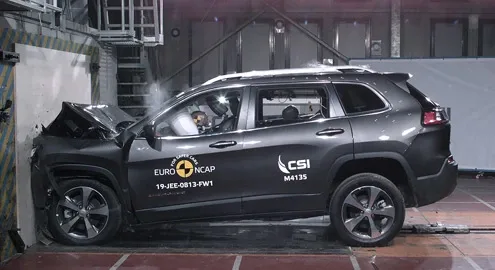
The only SUV presented in the tests, the Jeep Cherokee, also had to settle for a final four-star rating. This assessment is due to the likelihood of neck injuries for all occupants in a rear-end collision. In a side impact with an obstacle, there is a high threat of chest injury for the driver. The final score for adult protection was 80 percent. For the safety of young passengers, the car earned 78 percent of the maximum. Electronic safety systems were rated at 69 percent, and pedestrian protection at 56 percent.