BMW 7 Series: prices and specifications
4 generations Country of origin: Germany

BMW 7 Series is the flagship sedan of the Bavarian brand, which replaced the outdated BMW New Six model in the late 1970s. The "7 Series" index indicates that the car belongs to the F-class according to European classification.
First generation (E23)
Work on the successor to the BMW New Six began in the mid-1970s simultaneously with the development of the 6 Series. The design of the new flagship was created by Paul Bracq. The car was based on a modernized "E" platform and received the factory code E23. The premiere of the first generation 7 Series took place in 1977 at the Frankfurt Motor Show. At that time, it was the most equipped BMW model: the sedan came with an onboard computer, ABS, and a driver's front airbag. In 1983, the model underwent a minor facelift.
Second generation (E32)
The second generation of the "Seven" (E32) debuted in 1986. The exterior of the car was developed by the famous designer Ercole Spada. In this generation, a modification with an extended wheelbase — the 7 Series L — appeared for the first time. In addition to the standard version, a tuned modification from the Alpina division was also produced.
Third generation (E38)
The third generation (E38) was introduced in 1993 at the Paris Motor Show. The design of the model was created by Boyke Boyer. Serial production began in 1994. The car received an expanded list of standard equipment: climate control, factory navigation, xenon headlights, as well as improved active and passive safety systems. The model was produced in two variants — with a standard and extended wheelbase. For the first time, production of the "Seven" was established outside Germany — in Mexico.
Fourth generation (E65)
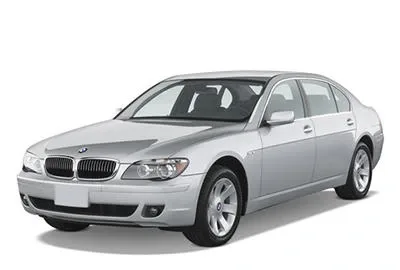
The fourth generation (E65) was shown in 2001 at the Frankfurt Motor Show. The design, developed by Adrian van Hooydonk, differed radically from its predecessor. The car grew significantly in size and was offered with a standard and extended wheelbase, as well as a wide range of gasoline and diesel engines. The model underwent a facelift in 2006. In this generation, a "charged" version B7 from Alpina appeared. The geography of assembly expanded: in addition to Germany, the car was produced in Egypt, Thailand, Mexico, and Russia.
Fifth generation (F01)
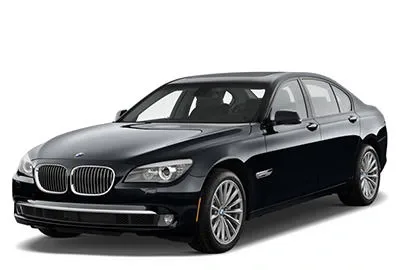
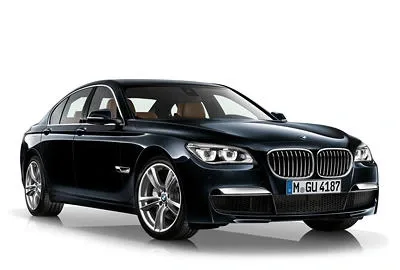
The fifth, and currently the latest generation of the BMW 7 Series, was introduced in 2008 in Moscow. The design was developed under the direction of Karim Habib. The car is built on a new "F" platform.
In Ukraine, the fifth generation (F01) began to be supplied in 2009 in both modifications — with a standard and extended wheelbase. The model is equipped with gasoline engines of 3.0, 4.4, and 6.0 liters, diesel engines of 3.0 liters, as well as hybrid powertrains of 3.0 liters. The engines work in conjunction with a six- or eight-speed automatic transmission. Drive — rear or all-wheel drive.