The most illustrative demonstration of how solid wax works is an ordinary apple. Since the twenties of the last century, these fruits have been coated with wax to make them last longer. Specialists at the USDA laboratory in Washington recently confirmed the benefits of this approach. They left two groups of apples — with and without a wax coating — at room temperature for eight days. It turned out that the treated fruits retained their firmness and original color better.
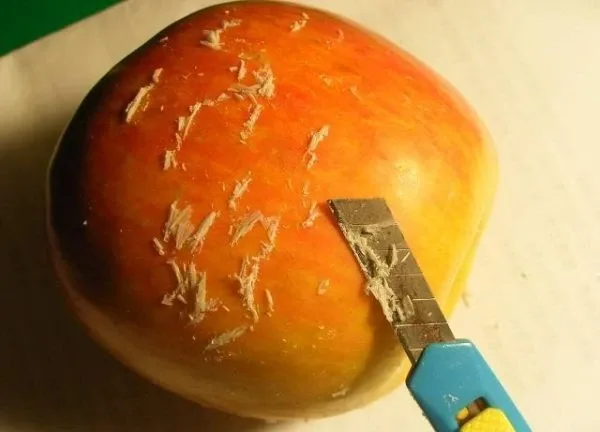
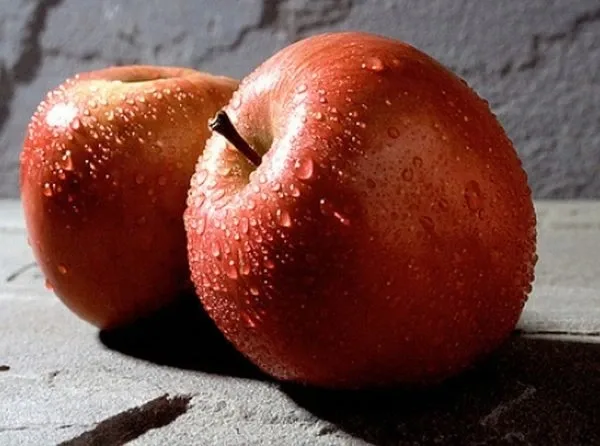
Of course, a car is not a living creature, although it contains no less iron than an apple. Nevertheless, American experiments give reason to believe that wax acts as a preservative: it preserves color and extends the service life of the body. This is especially noticeable in the case of greasy film. When you try to wash it off with water, the liquid collects into droplets resembling mercury balls. In motion, water does not linger on such a coating, quickly drains off, and leaves no streaks. This effect is easy to test on an apple: to remove the wax layer, the fruit needs to be washed with warm water and thoroughly wiped dry. When it comes to the body, wax fills microcracks and pores in the paintwork, preventing moisture and salt from penetrating inside, which prevents corrosion.
There is also liquid wax. It is often included in the cost of a car wash or offered for a small extra charge. There is no point in seriously considering this option: it rather increases the price of the service than protects the body.
Sergey Kapustin, car wash owner
«Liquid wax refreshes the appearance of the car, but not for long. You should not count on anything more: its layer is too thin and disappears either after the first rain or after the next wash. Therefore, the price of such treatment is 5-15 hryvnias».
Solid wax is a completely different matter. At Ukrainian car washes, such a service costs from 100 hryvnias to several thousand. This price range is explained by different application technologies and the cost of the material itself, which can reach up to 4000 dollars per jar!
Fun for millionaires
We are talking about one of the most expensive waxes in the world. It is sold in a special container resembling a crystal casket. The packaging has a serial number stamped on it, and the compound is applied exclusively by hand — the warmth of the hands activates its components.
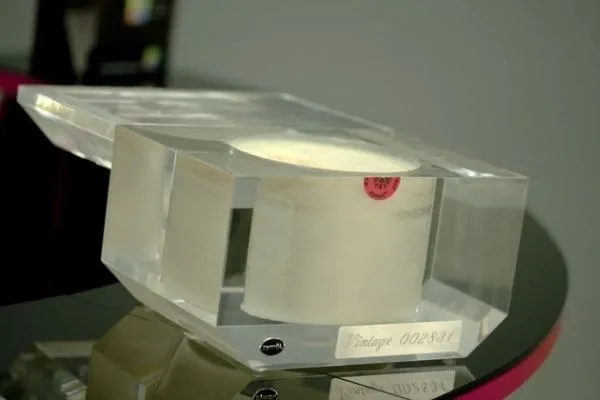
In Ukraine, there is at least one such precious jar. The manufacturer, Zymol, claims that its contents are safe even if they get into the mouth. But this is just for general knowledge, since such services are not in demand here. Confirmation of this is the only detailing studio in Kyiv that offered particularly careful car care — it closed without operating for even a year. And this is not surprising: our people, even very wealthy ones, do not fully understand why they should pay huge money for an exclusive approach. After all, you can pretend that everything is top-notch for 500-600 hryvnias, rather than 3-8 thousand, as they asked in that very closed studio.
Sergey Moskalenko
Detailing specialist
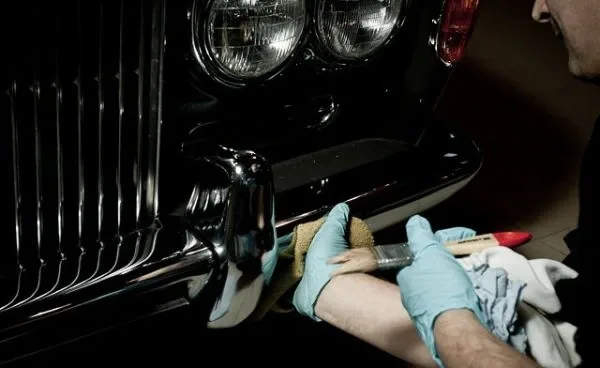
«In our country, the culture of car care is absent, regardless of the owner's wealth. Probably only in Ukraine can you see a Bentley or Ferrari with a spider web of scratches. Abroad, owners of expensive or rare cars often turn to specialized car washes that offer detailing — very careful care using expensive, often natural products, without chemical additives».
Detailing is an interesting topic, but not for the mass consumer. Moreover, its task is not so much protection from the external environment as giving the car a showroom look. So let's return to more down-to-earth services. For broadening your horizons, it can be noted that one of the most expensive detailing specialists is considered to be Gurchan Sahota. He spends up to 250 hours washing one car, and uses 100 different cleaners and polishes. Such pleasure costs up to 11 thousand dollars. This amount includes five-fold polishing and sanding of every centimeter of the body, outside and inside. Sahota even uses a computer microscope, usually used by forensic experts, to study the smallest scratches invisible to the eye.
Here are his tips for washing a car and preparing the body for waxing or polishing:
- Wash with warm soapy water: in one bucket — water with pH-neutral shampoo, in the other — just clean water.
- Use a sheepskin mitt — it cleans better than any sponges.
- Always wash from top to bottom.
- Use separate sponges for the body and for the wheels.
- Do not clean wheels with acidic or alkaline cleaners, as well as silicone-based products, so that no stains remain.
- Before starting cleaning, check the detergents for contaminants.
- Wipe the body dry so that no streaks remain.
What you need to know about wax
If Ukrainian rich people did not want to pay for expensive and supposedly effective treatment, why does waxing for 100-300 hryvnias flourish? The answer is simple: affordable price and noticeable effect. After solid wax, the color becomes deeper and brighter, and if the car wash employee also has imagination — you can effectively throw a rag on the hood, and it will slide down. This should mean approximately the following: «water and dirt also flow off — the car is protected for winter». True, the price of such protection is a penny if it is done without following the technology. But first, about the wax itself.
It is unlikely that any car owner will memorize or write down a list of chemical components that should not be in the composition of truly effective wax. Therefore, let's focus on the main thing.
First of all, pay attention to the inscription «contains/does not contain abrasives». Products with abrasives are suitable for cars with problematic paintwork — faded paint, small scratches, and the like. That is why solid waxes with abrasives are rarely used on new cars: abrasives thin the paint layer and are not suitable for frequent use. Without going into details, it is enough to know that the presence of aggressive solid abrasives (soft ones are not so scary) is easy to determine by eye or by touch — they look like grains of sand that can be felt if you rub the wax between your fingers. If you feel them, it is better to refuse such a product for a new car or a car with good paintwork.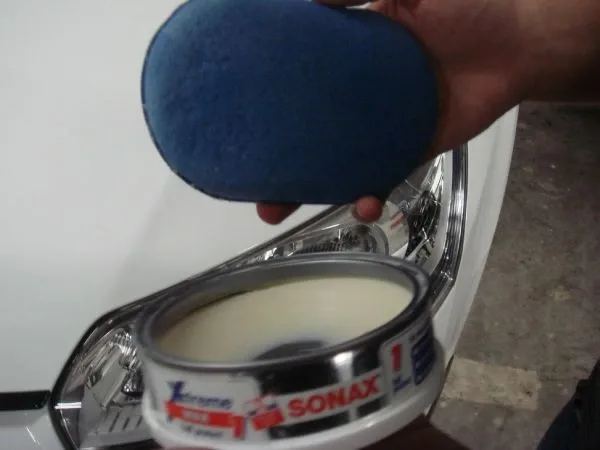
If we talk about waxes in general, they are:
- vegetable (carnauba)
- animal (beeswax)
- mineral
- synthetic
Despite the complexity and differences in chemical formulas, the properties of different waxes are largely similar. Therefore, we would not advise worrying too much about the origin of the wax — one way or another, with proper application, even an inexpensive product will give an effect. True, the cheaper the wax, the faster it loses its properties, and the more often it has to be renewed. So it is better to choose a trusted manufacturer. And most importantly — not Chinese, there are more and more of them now! If it says Made in China on the packaging, refuse the service. Among trusted brands of auto cosmetics at Ukrainian car washes, «Chemical Guys», «Turtle Wax», «Liqui Moly», and «Sonax» are most often found. Less often — Dodo Juice and ABRO, but they also belong to the category of reliable ones.
What automakers advise
Unfortunately, due to the Slavic mentality, few of us read the car owner's manual, which often contains details about caring for your particular car. Do not be lazy to look into it before you decide to do «waxing». With the right choice of solid wax and compliance with the technology, your car will really shine in a new way and be protected in the autumn-winter period. Here is what is said in the care recommendations for the Skoda Octavia: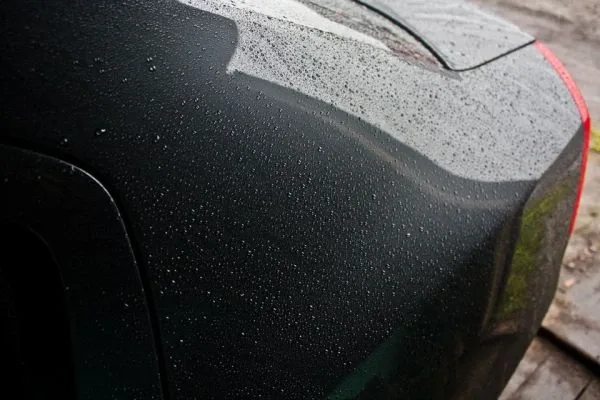
«Good preservation protects the car surface from harmful environmental influences and mechanical damage. A new layer of high-quality preserving agent made of solid wax can be applied to the cleaned Octavia body only after the body is completely dry. Even if you regularly use a preserving agent for washing, it is recommended to apply a protective layer of solid wax to the paintwork at least twice a year».
How not to throw money away
We hope that in the comments to the article you will share your impressions and experience of using solid wax. For our part, we consider it advisable to apply it for winter, especially on relatively new cars up to five years old. Those that are older or have defects on the body can be refreshed and protected with abrasive waxes or polishes. The task of polish is primarily to restore shine by removing the top layer of varnish. Wax, on the contrary, creates a thin protective layer.
But in any case, when treating the body, it is imperative to follow the technology, otherwise it will be wasted money. And first of all, you should not blindly trust the car wash employee. You can trust, but you need to check.
Before agreeing to solid wax treatment, it is worth clarifying several important points:
1) Ask to show the product. The goal is to find out the manufacturer.
Beware of Chinese manufacturers, suspicious packaging, and the absence of information about the product composition.
2) Study the composition. The goal is to determine the presence or absence of abrasives. If the body of your car is in perfect condition, refuse a product with abrasives. Pay attention to the country of origin and read the instructions for use. If the car wash employee does not intend to follow it, do not hesitate to point out the nuances of using solid wax to him.
3) Look at the storage conditions of the proposed product. The goal is to find out whether it is stored closed and whether it has been subjected to temperature effects.
There are frequent cases when employees do not even bother to close the jar of wax, as a result of which your car will be treated with dust as well during application. As for temperature, the main thing is that the product is not frozen and thawed.
4) Examine the wipes and sponges that will be used for applying and removing the wax. The goal is to determine their condition and cleanliness. At many car washes, solid wax is applied with the first rag that comes to hand. Not only may it be unsuitable for this operation, but it may also be dirty or wet. Both are unacceptable. Ask to unpack new ones!
5) Clarify with the car wash employee the necessary time for the operation.
If you are promised to do a «protective makeup» in 20-30 minutes, you can safely turn around. Washing, drying, applying wax, and removing it take at least an hour, and preferably at least two. According to waxing specialists, this procedure takes 3-4 hours. This time is spent on washing, thoroughly removing defects (bitumen, traces of ingrained dirt and insects, etc.), applying and removing wax.
6) In connection with the rules from point No. 5, you need to find out whether bitumen stains, traces of insects, and the like will be removed. Clarify whether this is included in the cost of the service. If not, agree on the price in advance.
The most important thing is compliance with technology
If automakers themselves recommend solid wax, then it makes sense to listen to their advice. Although, of course, everyone has the right to their own opinion. But it will be possible to achieve the expected effect only if the following rules are observed:
1) Thoroughly wash the car.
2) Make sure that there are no traces of insects, bitumen stains, etc. left on the paintwork.
3) Insist that the car wash employee closes all doors in the room so that dust and dirt do not get on the body. Almost sterile cleanliness must be ensured.
4) Thoroughly dry the car and prepare a clean, dry sponge for applying the wax. Do not allow the car wash employee to start application before the body is completely dry in order to save time.
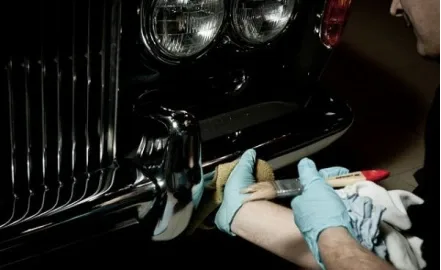
5) Apply the wax in an even thin layer using a special sponge (or a small piece of soft cloth) on a previously cleaned area.
6) Apply the wax so that it is evenly distributed over the surface of the body. If you order the service at a car wash, make sure that the worker does not skimp too much on the wax.
7) Wait for the wax to dry (until a matte film forms on the paintwork). When the product begins to harden, it will take on the appearance of an opaque haze — it is time to remove the excess.
8) Polish with a soft cloth to a shine.
9) Treat the entire car in the same way.
It is undesirable to apply wax:
1) in the sun or in heat, as well as in high humidity and cold weather (below +6°C)
2) using hard wipes and sponges
3) so that transitions between polished parts of the surface are clearly expressed.
If you follow the above tips, applying solid wax to the body of your car will help keep it in the best condition. However, you should not believe the promises of the car wash or manufacturer about 6 months of protection. It all depends on the frequency of visits to car washes, methods of cleaning the car, weather, and operating conditions, which in our country are not at all the same as in many European countries. It is better to check the remaining layer of protective coating yourself. If water droplets collect and roll off the surface, it means the solid wax continues to work. If the surface is easily wetted, it is time to treat it with the miracle product again.