During power outages, a car can power charging devices, but prolonged use of sockets with the engine off drains the battery. We advise limiting the time of such charging and adhering to the permissible load.
Charging devices in the car: check the socket's power
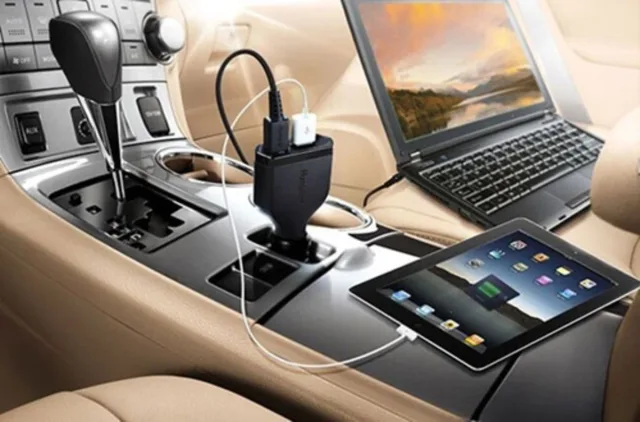
For a phone, use the standard USB or a compatible car adapter in the 12 V socket. A laptop needs an appropriate charger or an inverter whose specifications meet the device's requirements.
Check the permissible load in your car's manual. For example, certain Ford models specify a 180 W limit for the 12 V socket. Exceeding it can cause the fuse to blow.
An inverter does not increase the capabilities of the car's wiring. Powerful devices may require a direct connection to the battery. In particular, BLACK+DECKER provides for this method for its inverters from 750 W.
Car battery: how to reduce the risk of discharge
Do not leave charging devices connected longer than necessary. Ford warns that powering devices without the engine running can drain the battery.
"Charging is best combined with a planned trip. And before connecting an inverter, check the socket's limits and the charger's requirements," advises the author of the material, Oleksii Astapov.
If you start the engine to power devices, the car must be outdoors. In a garage, carbon monoxide can accumulate to a dangerous concentration even with the gate open.