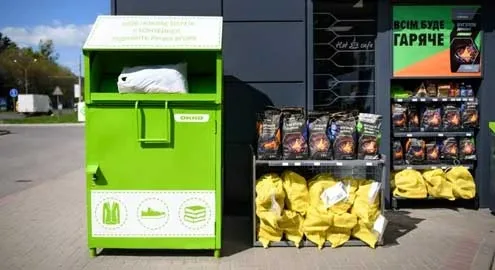
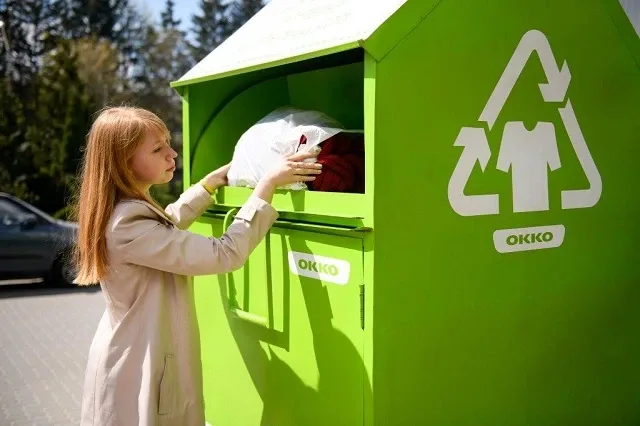
To collect items, the OKKO network has installed special containers where every customer, while stopping at a gas station, can leave used clothing, shoes, and bed linen that may still be useful to others. Such containers can now be found at 18 company gas stations (full list and addresses – here) in Kyiv, Lviv, Odesa, Dnipro, Kharkiv, and Vinnytsia. In 2019, it is planned to install 6 more containers, two of which will start operating in Mariupol already in January. OKKO's partners from public volunteer organizations pick up the collected items, sort them, and distribute them free of charge among those in need.
Recipients of assistance include residents of orphanages and geriatric institutions, hospice patients, internally displaced persons, and other low-income individuals. Thanks to the responsiveness and support of Ukrainians, they find it easier to overcome difficult life circumstances and feel that society has not left them to fend for themselves. In the spring of 2018, it was in the "Reducing Inequality" category that the OKKO project for collecting used items became the winner of the 9th National Business Case Competition on Corporate Social Responsibility "Business that Changes the Country."
According to Anna Tikhovska, the sustainable development manager of the OKKO gas station network, the effectiveness and efficiency of this project are due to the fact that it organically combines the efforts of responsible business, caring citizens, and volunteer associations. In particular, OKKO's partners in 2018 included the following charitable foundations and public organizations: "Ukraina bez mezh" and "Caritas" (both – Kyiv), "Emaüs-Oselia" (Lviv), "Dobryi Samarianyn" (Odesa), "Dopomahaiemo" (Dnipro), "Caritas Ukraine" (Kharkiv), and the Ukrainian Volunteer Movement (Vinnytsia). Most of them have been cooperating with the company for several years and are committed to further long-term joint work.
"Containers at OKKO gas stations are two in one: both support for socially vulnerable people and a new life for old items," says Olha Vorobiova, project coordinator from the "Ukraine without Borders" foundation. "For example, a dress that your daughter has outgrown may be needed by a child from a low-income family. And your unfashionable jeans might be worn by someone else for several more years. At the same time, this is a chance to make our planet cleaner, because we don't throw things away carelessly but learn to use them wisely."