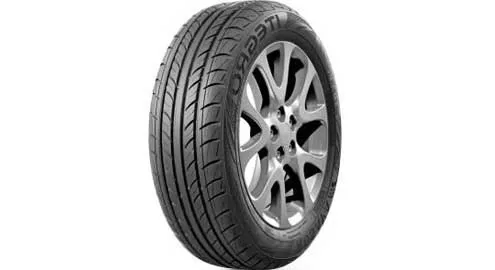
Every car enthusiast knows that winter tires are much softer than summer tires, so it is impractical to use them at high temperatures. Summer tires become quite stiff at temperatures below 7°C, which negatively affects not only driving comfort but also road grip.
The choice of tires is influenced by their characteristics:
- tire size;
- tread pattern;
- speed index;
- load index;
- carcass construction.
And in order for your car to be as manageable and predictable as possible, you need to know exactly what each parameter affects.
Tire size of summer tires
This is the starting point in selecting tires, which always indicates the ratio of width, height, and inner diameter. The latter must fully match the diameter of the wheel disc, while the first two indicators can be selected depending on operating conditions.
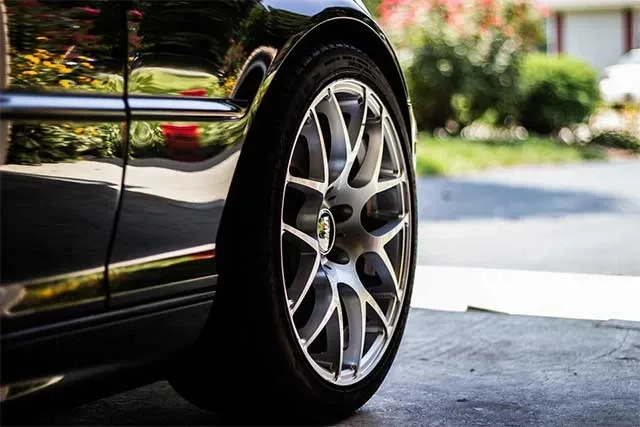
The profile width of summer tires affects the contact patch area of the wheel with the road surface, which in turn affects:
- handling;
- fuel consumption;
- braking distance;
- directional stability;
- resistance to aquaplaning.
A wider profile provides better acceleration, directional stability, and braking. Disadvantages include increased fuel consumption, increased weight, and a higher risk of aquaplaning on wet roads. In addition, overly wide tires may rub against the front wheel arches when turning. It is worth noting that this indicator is relative. Therefore, to determine it for your car, you need to consult the manufacturer's instructions, which will specify the optimal value and permissible modifications.
By height, tires are:
- low-profile – up to 55%;
- high-profile – 60-75%;
- full-profile – from 80%.
Increasing the profile height within reasonable limits makes the ride softer and, accordingly, more comfortable. However, a significant excess of the recommended values entails:
- increased fuel consumption;
- difficulty in handling – the braking distance increases, the car becomes more prone to rolling, and cornering performance worsens;
- additional load on suspension components and a reduction in their service life.
When reducing the profile height, handling improves and braking distance decreases. At the same time, the car becomes stiffer, the load on the suspension increases, and the chance of puncturing the tire from an impact against the rim rises.
Tread pattern on summer tires
There are 3 types:
- symmetric non-directional;
- symmetric directional;
- asymmetric.
Symmetric non-directional tires are most often included in the basic configuration of all budget cars. Their advantages are versatility of use, minimal noise level, installation on either side, and low cost. Disadvantages include deteriorated handling at high speeds, reduced directional stability, increased risk of aquaplaning, poor self-cleaning, and increased braking distance.
A distinctive feature of the second type is the V-shaped pattern, which improves water drainage from the contact patch with the road surface. That is why this type of tire is also called rain tires. They perfectly resist aquaplaning and are suitable for high-speed driving. They are installed strictly according to the direction of the arrow on the side of the tire.
The asymmetric pattern combines the properties of the previous two and is suitable for driving in any weather. The tire consists of 3 zones – the inner and outer zones increase grip, thereby improving cornering, and the middle zone is responsible for water drainage.
Speed and load index parameters
These 2 parameters indicate the permissible speed and load per 1 wheel, so to determine the maximum load on 4 tires, the indicator must be multiplied by 4. It is important to remember that the higher the speed index, the softer the rubber and, accordingly, the shorter its service life. However, road grip will be significantly better than those with a low speed index.
Tire carcass construction
By carcass construction, tires are divided into:
- diagonal;
- radial.
Diagonal tires consist of 4-10 carcass layers located at a certain angle to each other. This design makes the tires stiff and heavy. In addition, at high speeds, the tire profile heats up greatly and becomes almost round. This leads to a reduction in the contact patch with the road surface and an increase in braking distance. Therefore, wheels with this design are best used when driving at low speeds.
Unlike the diagonal design, the radial construction has only 1-2 carcass layers. In addition, the radial tire is characterized by the presence of a layer of twisted steel cords. This design provides a constant contact patch with the road. Even at high speeds, the tire increases in diameter without violating its cylindrical shape. This makes the car more manageable both on a straight road and in corners.