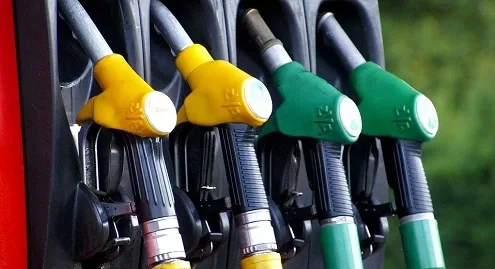
Then violations were found in 30 percent of the samples, and it was quite logical that experts were almost sure that this year the situation would only get worse. But pessimistic forecasts did not come true – the results turned out to be incredible, especially since it was decided to pay maximum attention to regional gas station networks, where there were traditionally many chances to run into surrogate fuel. Such a sad picture was due to weak control by local authorities, as well as the fact that it is easier for "mixers" to penetrate small networks than large national ones. <\/p>
The main attention of experts was focused on the center and eastern regions of our country. Both large networks such as Parallel, BRSM-nafta, Shell, Amic, KLO, SunOil, and relatively small ones like Nadezhda, Marshall, Tatneft, Luxwen, Route 20, and the research debutant Ukrgazvydobuvannya were checked. The Kharkiv network deserves special mention. This is a branded network belonging to the country's largest extraction company, which owns the Shebelinka refinery, once famous for its "eternal" production of Euro 2 fuel. But a real miracle happened – in just one year, the plant was modernized to such a depth of processing that fuel produced in Ukraine for the first time began to meet Euro 5 standards! Mass production of modern fuel started not long ago, but judging by the growth in sales volumes, interest among wholesale buyers is very high. It was all the more interesting to test the new "Shebelinka" gasoline, which owners of foreign cars shied away from just a couple of years ago. <\/p>
Samples were sent to a certified laboratory, where they were tested for compliance with the relevant DSTU 7687:2015 standard (A-95-Euro5 gasoline). Let us remind you that Euro standards set requirements both for engine operation and gasoline quality, which are taken into account in new European car models. That is, to get the declared performance characteristics of a car, you need to fill it with appropriate fuel. <\/p>
The samples were checked according to the most "telling" parameters – octane number, sulfur content, volume fractions of benzene and aromatic hydrocarbons, chemical composition of gasoline, and content of aromatic amines. The result was stunning – almost all samples turned out to comply with Euro 5! At the same time, only one sample was found to be off-spec in terms of alcohol content, and gasoline of Ukrainian production in the Ukrgazvydobuvannya network showed a quality level identical to Belarusian and European producers! <\/p>
But let's take it in order. First, the most important parameter for engine operation was checked – the octane number, which characterizes the fuel's resistance to detonation – premature combustion of gasoline in the combustion chamber. Detonation is harmful to the engine not only due to increased fuel consumption and reduced power, but also due to premature engine wear from extra loads. The octane number was measured by the motor method. According to it, the standard is set at no less than 85.0 units. All samples not only met the standard but also demonstrated a considerable "safety margin." The largest was in the Ukrgazvydobuvannya and Parallel networks (87.4 units). An extra 2.4 octane units will help the driver save money without losing any power. <\/p>
Next, experts checked another crucial indicator – sulfur content. Extracting it from oil is an expensive process requiring modern equipment. If there is too much sulfur in fuel, it leads to carbon deposits, clogging of fuel injectors, and "kills" catalysts. Moreover, the exhaust becomes "dirtier," and very dangerous oxides enter the air we breathe. DSTU for A-95-Euro5 requires no more than 10 mg\/kg. There was practically no sulfur in the samples from Ukrgazvydobuvannya, Parallel, and Amic (4 mg\/kg), with KLO, LUXWEN, SunOil, Route 20 samples in the second group of leaders (5 mg\/kg). The other participants also had no sulfur violations. And these are standard gasolines sold at gas stations at the minimum price! <\/p>
Another important parameter is benzene content. This substance can wash away the oil film, leading to increased engine cylinder wear. DSTU regulates the volume fraction of benzene content at no more than 1%. All complied, with the least harmful substance found in the "ninety-five" from Ukrgazvydobuvannya (0.38%), which again indicates a serious technological production culture. <\/p>
When checking the volume fraction of aromatic hydrocarbons, no exceedances were found. For reference: with an increase in "aromatics" content, exhaust toxicity rises, and more carbon deposits form in the combustion chamber. All participants had this indicator within the tolerance, again with a significant margin. <\/p>
The study of the chemical composition of gasolines threw a fly in the ointment – gasoline purchased at the Tatneft station consisted of a quarter isobutyl alcohol, while the other participants showed a complete absence of this substance. This same sample also "distinguished itself" in terms of the presence of aromatic amines. According to the standard, they should not be in fuel, but Tatneft's A-95 had as much as 2.8 percent. <\/p>
 <\/p>
<\/p>
As a result, it turned out that the quality of the most popular fuel in the country has quietly become almost European. The trend is such that now you can safely fill up even at small gas stations, saving a hryvnia or two per liter compared to the prices of big players. Special mention should be made of the most "eastern" networks, Parallel and the very small Route 20, which operate in difficult conditions close to the ATO zone, but their quality is up to par. And, of course, the results of the Shebelinka refinery cannot but please, whose products have made a giant leap, shaming skeptics. As it turned out, Ukraine knows how to produce high-quality European fuel that will pose serious competition to the practical monopolists of our market – the Belarusians. <\/p>
Vadim Krivenko<\/p>