The ascania-shina.com website answered these questions and gave some advice on installing winter tires. So...
Why change car tires when the season changes?
Even novice drivers know that tires come in winter and summer varieties. But not everyone can explain how they differ. Some are even convinced that this division was invented by tire manufacturers to sell a trusting consumer two sets of tires instead of one.
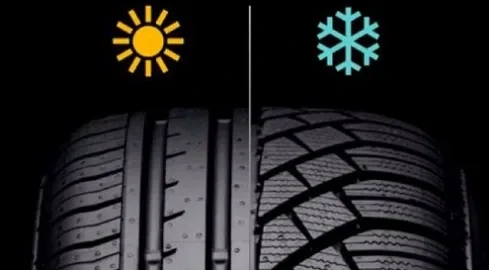
In fact, there is a difference between these two types of tires. And it is not at all in the tread pattern, as many motorists believe, although summer and winter tires do indeed have different treads. If you carefully study the catalog of the online store "Ascania-Shina", you can see that the tread of tires intended for winter is always larger, with many lamellas (slits). This is done to improve the removal of snow and water from under the wheels, ensuring reliable grip on the road.
However, the main and defining difference between summer and winter tires lies elsewhere. Tires for the warm season are made of a fairly hard material, so they:
• do not deform;
• do not "float" even when the asphalt gets very hot;
• do not wear out as quickly.
At the same time, they provide reliable grip on the road surface, ensuring good handling and stability in corners. However, at low temperatures, such tires literally "harden", and the car goes out of control. Driving such a vehicle is pure extreme. Unfortunately, there is no clause in the traffic rules that would prohibit driving on summer tires in winter. And it's a pity. But insurance companies have stepped in. They pre-write a clause in the contract and refuse to compensate for damage if the car was operated with tires that do not match the season.
Soft rubber is used to make winter tires. Therefore, they do not lose elasticity when the temperature drops below zero, and provide the necessary grip even on very slippery roads.
Some drivers, in order to save money, use so-called all-season tires. However, in the conditions of our winter, this option is hardly suitable. It's like demi-season shoes: they are comfortable for a fairly short period of time. The same goes for all-season tires. In their properties, they are inferior to summer and winter tires, and should be used at temperatures from -5 °C to +25 °C. Only in this case can good driving performance be guaranteed.
The conclusion suggests itself: to feel safe on the road, not to create problems for yourself and others, the car should be "re-shod" in a timely manner, which will also extend the service life of the car's wheels.
When should you "re-shoe"?
Of course, no one will give you an exact date, as it entirely depends on weather conditions. As soon as the average daily temperature drops below +7 °C, the iron horse should be "re-shod". The figure is approximate, and in practice it can be slightly reduced, since when the temperature drops, summer tires lose their properties not as rapidly as winter tires do when the temperature rises. On dry asphalt, you can drive without "re-shoeing" even at zero temperature. However, you shouldn't delay this procedure either, especially considering the possible rush at tire fitting shops in the first days after the cold snap. When the temperature drops from 0 °C to -5 °C, you need to change the tires as soon as possible, even if there is no snow or ice. After all, driving on summer tires becomes simply dangerous. But which manufacturer to choose tires from, the motorist decides for himself, based on the budget and personal preferences.