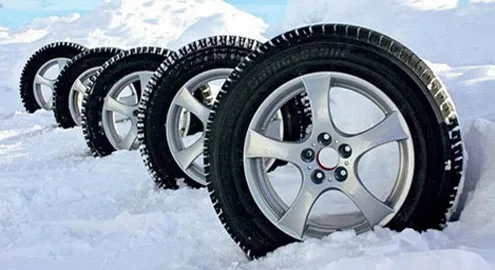
First of all, it is worth reminding: summer and winter tires differ significantly in their properties, and this is directly related to the conditions of their use. The task of tires is to ensure traffic safety in different weather conditions, so both the approach to their production and the design for different seasons differ noticeably.
What is the risk of driving on summer tires in frost and when it is time to switch to winter tires — experts of the online store «4shiny» explained.
Winter tires begin to show their best qualities already at +5-7°C, and their advantages are fully revealed at sub-zero temperatures.
Summer tires, on the contrary, are designed to work at temperatures above +5-7°C (while in heat the asphalt can warm up to +50-60°C). When the thermometer drops below this threshold, the tread rubber becomes harder, and its characteristics noticeably deteriorate.
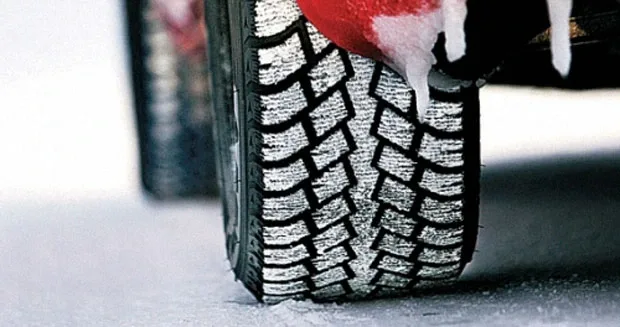
In addition to the composition of the rubber compound, there is another key difference between winter and summer tires — the tread pattern.
Winter tires have a tread with a special pattern adapted to cold. Many grooves and ribs improve handling on snow and icy roads, and traction increases due to a larger contact patch with the road surface.
The tread of summer tires is designed for grip on hard and rough roads. Its pattern has a pronounced longitudinal character. The grooves here are much narrower than those of winter tires — their task is only to drain water.
Obviously, each type of tire is designed for its own specific operating conditions. At temperatures below +5-7°C, summer rubber loses elasticity. This increases the risk of skidding even on dry asphalt, and in case of a puncture, the wheel may simply tear apart. The tread pattern of a summer tire is not intended for driving on snow and ice; it does not cope with removing snow slush from the contact patch. The result — the car practically does not obey the driver: it holds the trajectory poorly, reacts slowly to steering wheel turns, and the braking distance significantly lengthens. In addition, fuel consumption increases due to higher rolling resistance.

That is why it is best to change tires when the air temperature crosses the +7°C mark. This rule applies both to switching to winter tires and to the reverse spring replacement. Since the weather is often unpredictable, it is difficult to catch this moment exactly, so there is another recommendation: it is worth installing winter tires in mid-October, but no later than the first days of November.
By the way, experts of the online store «4 shyny» suggested that those who have not yet chosen winter tires visit their website www.4tyres.ua. There you can quickly and easily select tires for your car and get a pleasant bonus — a 20% discount on tire fitting services. Also, as a gift when purchasing tires, special bags for their storage are provided. In addition to a wide range of tires from brands such as Bridgestone, Continental, Dunlop, Fulda, GoodYear, Hankook, Nokian, Pirelli, Michelin, Toyo, Yokohama, Rosava and many others, you can also choose rims to suit any taste. The choice of rim manufacturers is impressive — more than forty.
You can place an order for any product from the site any day from Monday to Friday from 9:00 to 18:00, and tire fitting and order pickup work around the clock.