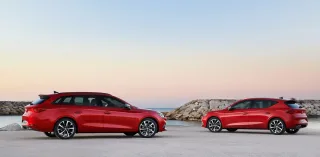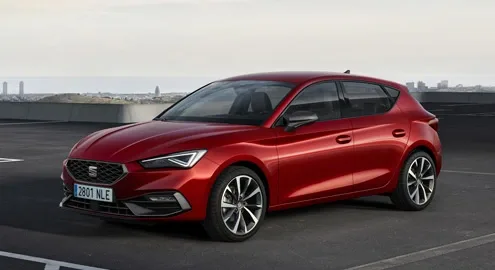
The presentation showcased the hatchback and station wagon, with both body types immediately available to order with the FR sport package.
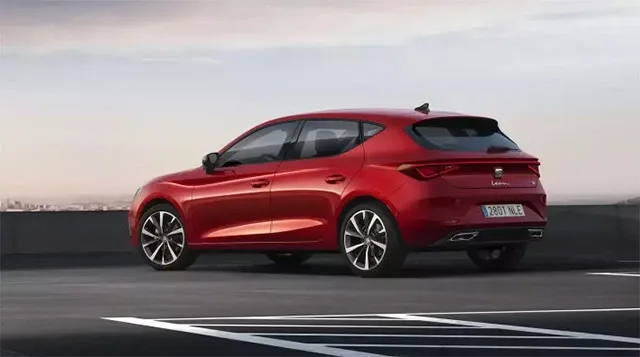
The Seat Leon remained faithful to the MQB architecture, so the closest "relatives" of the model remain the Volkswagen Golf and Skoda Octavia. At the same time, it is significantly larger than the Golf: the difference in body length reached 84 millimeters, and in wheelbase the Spanish hatchback and station wagon caught up with the Octavia — the distance between the axles is as much as 2686 millimeters. The length of the Leon Sportstourer station wagon increased the most — compared to its predecessor, the distance from bumper to bumper grew by 93 millimeters.
The Leon is positioned as the most "youthful" model in the golf class, and Seat designers managed to create a recognizable and bold image. A distinctive feature of the family is the memorable design of the optics. LED headlights are included in the base configuration, and for an additional cost, Leons can be equipped with matrix ones.
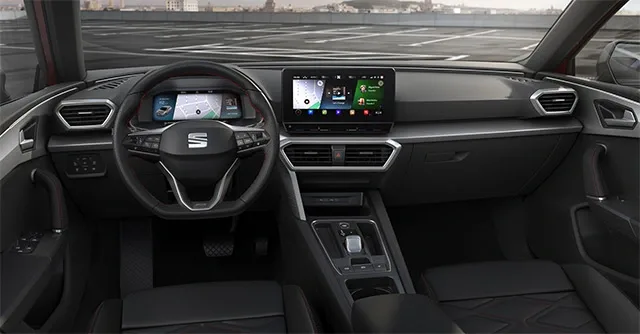
The interior concept is identical to the platform-sharing Volkswagen Golf and Skoda Octavia: a virtual 10.25-inch instrument panel without the ability to change graphics is included in standard equipment, and the fixed automatic transmission selector has given way to an electronic joystick.
In addition, already "in the base" there is an electromechanical parking brake, an engine start button, and an 8.25-inch multimedia system screen. For an additional cost, the Leon can be equipped with an infotainment system with a 10-inch touchscreen and a built-in SIM card, as well as voice and gesture control functions.
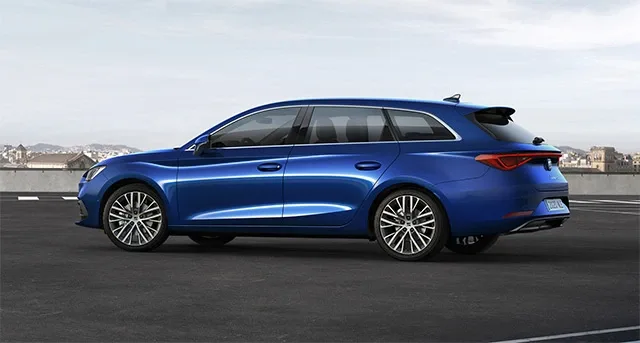
The developers of the new Leon claim that the model has become noticeably more spacious than its predecessor. Thus, the trunk volume of the Leon Sportstourer station wagon has grown by five percent, to 617 liters, so the "Spaniard" yields only 23 liters to the segment record holder — the Octavia Combi.
The engine range of the Leon is familiar from the Volkswagen Golf: the lineup includes three- and four-cylinder gasoline and diesel turbo engines with power from 90 to 190 horsepower and a displacement of 1.0, 1.5, or 2.0 liters. The units are combined with a seven-speed DSG "robot" or a new six-speed manual. All-wheel drive 4Drive is offered only for cars with a 2.0 TDI with 150 horsepower; 48-volt starter-generators can be equipped on gasoline engines with 110 and 150 horsepower.
Standing apart is the methane-powered Leon with a 130-horsepower gas engine 1.5 TGI, as well as the 204-horsepower plug-in version Leon eHybrid, which is driven by a power plant consisting of a 1.4 gasoline turbo engine, a six-speed "robot," and an electric motor. According to the manufacturer's calculations, without using the internal combustion engine, such a Leon can travel up to 60 kilometers on the WLTP cycle.
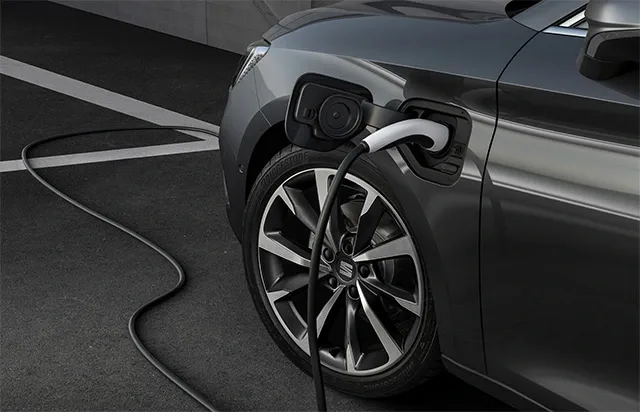
From the very start of sales, Leons with the FR sport package will be available to order — such hatchbacks and station wagons are distinguished by different bumpers, a radiator grille pattern, 17-inch wheels, and a more "driver-oriented" suspension tuning.
There is no official information about the "hot" Leon Cupra yet, but they will likely switch to a 245-horsepower plug-in hybrid power plant following the Golf GTE and Skoda Octavia RS.
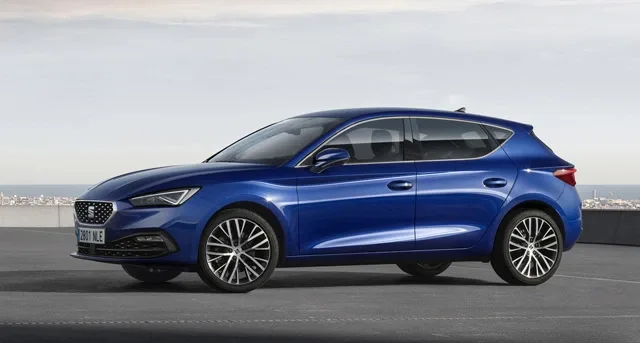
Seat claims that 1.1 billion euros were invested in the production of the new generation of the Leon. The investments are justified, because the model accounts for more than 25 percent of all brand sales, and the total production of the family since 1999 has exceeded 2.2 million units.
European sales of the new model are planned for spring 2020. Prices will be announced later.