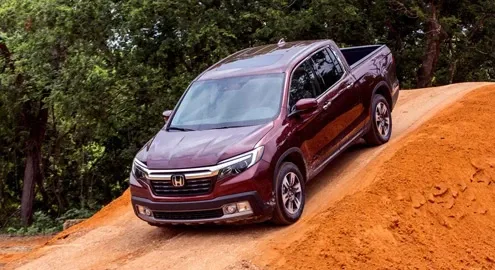
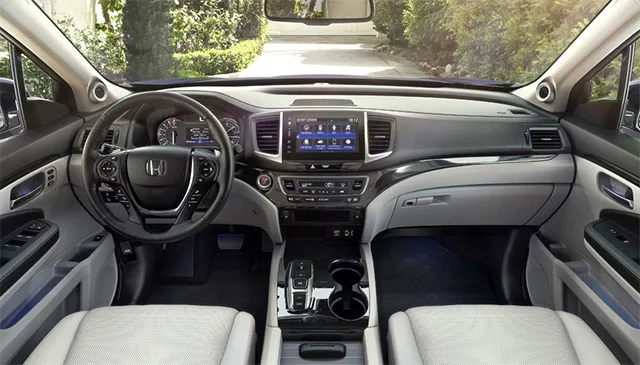
The interior of the updated Ridgeline has lost the traditional automatic transmission lever — the new nine-speed automatic, new for the model, is controlled via a push-button selector. Even in the base trim, the pickups received an infotainment system with an eight-inch display and support for Apple CarPlay and Android Auto. In addition, Honda promises rear doors that open at a wider angle and the ability to remotely lock the tailgate.
The list of standard equipment includes Honda Sensing electronic assistants, which include automatic braking, adaptive cruise control, and lane keeping assist. Additionally, for the less expensive Ridgeline versions, you can now order LED low-beam headlights and a driver's seat with 8-way adjustment and lumbar support adjustment.
Otherwise, the Ridgeline has not changed: the pickup is still equipped with the only 3.5-liter 284-horsepower (355 Nm of torque) gasoline V6, the rear suspension is independent, the simplest versions have front-wheel drive, and for the rest, the i-VTM4 all-wheel drive transmission is provided, which can transfer torque not only between axles but also between the rear wheels. In essence, it is the Acura SH-AWD, but with different settings. The Intelligent Traction Management (ITM) system with four driving modes remains the same.
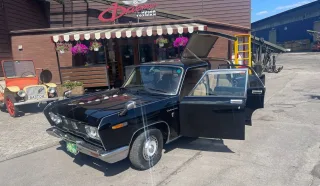
After the facelift, the Ridgeline retained the versatility of the tailgate opening — the cover can either fold down or swing open to the left, making loading easier — and the ability to install an inverter in the bed.
The starting price of the Honda Ridgeline in the US after the elimination of base versions has increased by almost 4,000 dollars. Now the most affordable front-wheel-drive pickup will cost 35 thousand dollars.