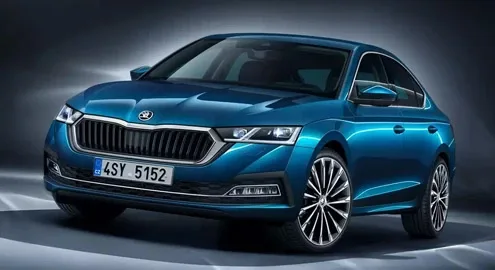
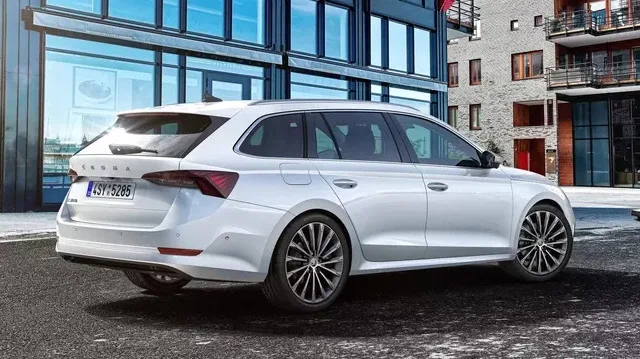
Skoda has unveiled the Octavia in two body styles at once, with the estate hitting the European market a few weeks earlier than the liftback. The priority given to the two-box body is no coincidence: in Europe, the Combi version accounts for more than 50 percent of Octavia sales. The new model has slightly grown in size: width has increased by 15 millimeters to 1829 millimeters, length — to 4689 millimeters (+22 millimeters compared to the previous estate), with an unchanged wheelbase.
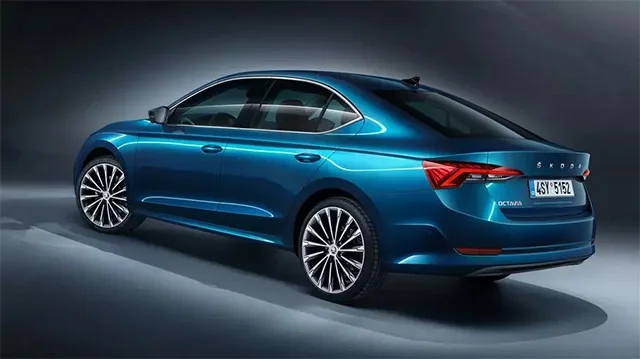
Externally, the Octavia has become closer to the flagship — the facelifted Skoda Superb: the resemblance is evident in the design of the bumpers, the styling of the rear lights, and the overall proportions. Engineers and designers managed to reduce the drag coefficient by 0.05: now the Cx of the liftback is 0.24, and that of the estate is 0.26.
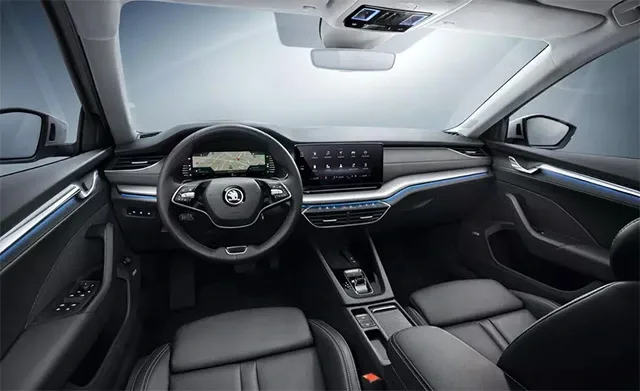
The interior of the new Octavia is technologically similar to the eighth-generation Golf: from Volkswagen, it borrows 10.25-inch screens for the instrument cluster and multimedia system, a head-up display, touch control for the panoramic roof, and a miniature non-locking selector for the robotic transmission. The new infotainment system can be controlled via voice commands and provides internet access.
Despite digitalization, physical buttons have not disappeared: above the air vents, a block of eight buttons remains, and the familiar rotary light switch to the left of the steering wheel has been replaced by a remote control. Options have increased: the Octavia can now be ordered for the first time with matrix headlights, ventilated front seats with massage, and three-zone climate control.
In addition, the fourth generation has become even more spacious: Skoda promises greater comfort for second-row passengers and claims an increase in trunk volume by 30 liters to 640 liters for the estate.
So far, Skoda has revealed the engine lineup only for the European market. The range of petrol turbo engines consists of a 1.0-liter three-cylinder unit with 110 horsepower, a 1.5-liter four-cylinder with 150 horsepower, and a 2.0-liter four-cylinder with 190 horsepower. The base engines are paired with a 6-speed manual or a 7-speed DSG, while the top version can only be ordered with DSG-7. On the entry-level petrol versions with the DSG, you can save up to 10 percent on fuel by opting for the mild-hybrid version with a 48-volt starter-generator.
The diesel Octavia is available with a single 2.0-liter turbo engine in three power outputs — 115, 150, or 200 horsepower. The most powerful versions of the Octavia can be ordered with all-wheel drive. The bi-fuel Skoda Octavia G-Tec has also debuted, featuring a 130-horsepower 1.5-liter engine and equipped with both methane cylinders and a petrol tank.
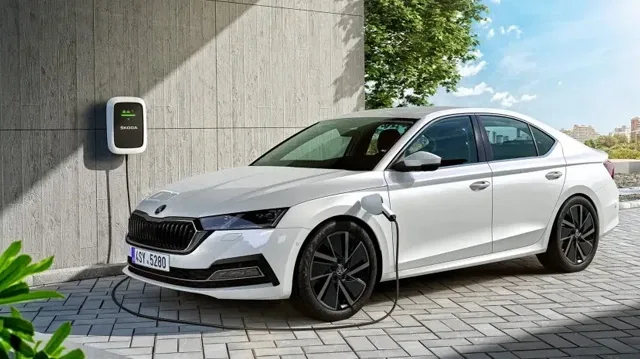
Standing apart is the Octavia iV version — a plug-in hybrid capable of traveling up to 55 kilometers on pure electric power according to the WLTP cycle. Under the hood of the Octavia iV is the familiar turbocharged 1.4 TSI engine, working in conjunction with an electric motor integrated into the 6-speed DSG. The powertrain delivers a peak of 204 or 245 horsepower. The drawback of the Octavia iV is a trunk that is approximately 25 percent less spacious.
Sales of the new Octavia in Europe will begin in early 2020