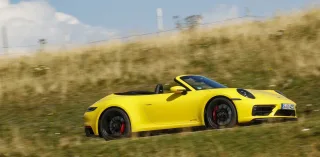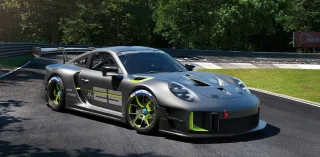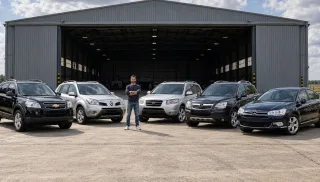
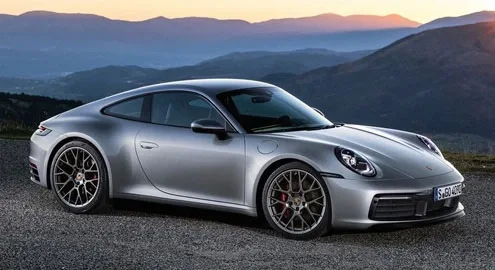
The "eighth" 911 is built on the previous, heavily modernized platform with an increased share of aluminum usage, mainly in the rear part of the body, which had a positive effect on the axle weight distribution and the car's stability at high speeds. The most noticeable design changes are the new hood and different headlights with matrix LEDs.
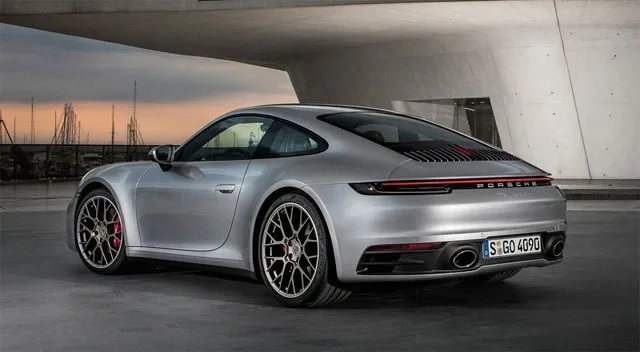
The first to debut were the 911 Carrera S and 911 Carrera 4S modifications. The sports car retained the classic rear-engine layout with a horizontally opposed engine.
Porsche 911 Carrera S and 911 Carrera 4S are equipped with a significantly revised three-liter engine with a different turbocharger arrangement, improved fuel injection and charge air cooling systems. The engine produces 450 hp, which is 30 hp more than its predecessor.
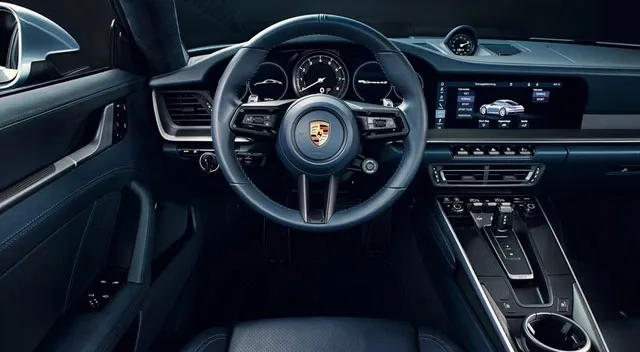
The unit is paired with a new 8-speed dual-clutch "robot". However, in some markets, the model will be available with a 7-speed manual transmission.
The 911 Carrera S can accelerate from 0 to 100 km/h in 3.7 seconds, while the all-wheel-drive 911 Carrera 4S does it in 3.6 seconds, which is 0.4 seconds faster than its predecessor. With the optional Sport Chrono package, acceleration time can be improved by another 0.2 seconds. The top speed of the rear-wheel-drive version is 308 km/h, and the all-wheel-drive version is 306 km/h.
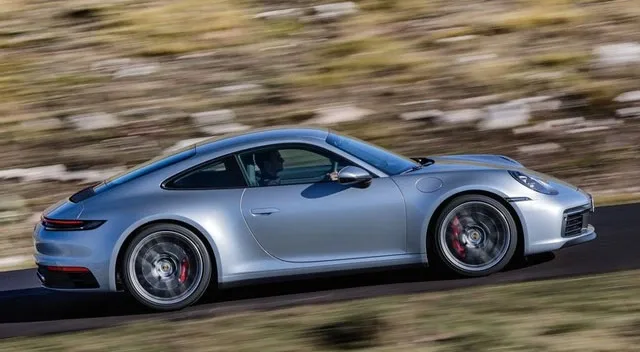
The model has a new special mode Wet Mode, designed for driving on wet roads. The system detects the presence of moisture and applies optimal settings for the engine, transmission, stability control, steering, and other systems.
The base configuration of the new Porsche 911 includes an emergency braking system based on a front camera with the ability to recognize moving objects, as well as a night vision system. For an additional cost, adaptive cruise control with full stop and automatic resume function is available.