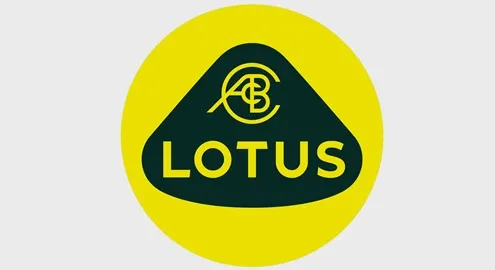
As stated by the company's marketing director Simon Clare, they slightly modified the original 1948 logo and added "a bit of lightness" to it.
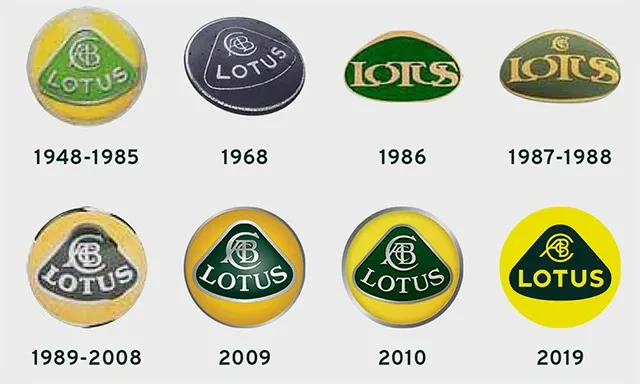
The first Lotus logo was used by the company from 1948 to 1985. In 1968, for the only time in the company's history, the badge was made in black and white. Later, the company decided to abandon the traditional letters ACBC (Anthony Bruce Colin Chapman) on the logo. This abbreviation returned to the brand's badges in 1987.
The first car to receive the new logo was the super-powerful hypercar Evija. Production of the car will begin only next year, in 2020. The cars will be assembled by hand in English Norfolk. The Evija is equipped with four electric motors and a battery with a capacity of 70 kilowatt-hours. The total power of the hypercar is about 2000 horsepower. Thus, the new product could become the most powerful production passenger car. The maximum speed of the hypercar is more than 320 km per hour. The car will be able to accelerate to 100 km/h in less than 3 seconds.
Later, the logo will also debut on the brand's first crossover, which will be built on the scalable SPA architecture borrowed from the Volvo XC90 and XC60. Most likely, the car will get a hybrid system with the ability to recharge batteries from a household power grid and will be able to move exclusively on electric traction.
Recall that the British manufacturer of sports cars Lotus came under the control of the Chinese company Zhejiang Geely Holding Group, which also owns the Swedish brand Volvo. The company from China bought 51% of Lotus shares from the Malaysian company Proton. The remaining 49% belong to the Etika Automotive group.