His daughter announced his death, noting that the cause was complications from Parkinson's disease.
Iacocca's career began in 1946: right after Princeton, he joined Ford as an engineer, and later switched to management. It was during that period that the familiar name Lee Iacocca stuck — in phone conversations he shortened his own name because for Americans "Lido" evoked associations with a brothel.
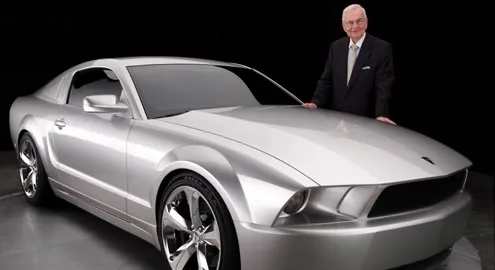
Later, Iacocca rose to the position of one of the corporation's directors. Under his leadership, Ford created the Mustang. Also among his achievements is the appearance of front-wheel-drive compact cars in the lineup, including the Ford Fiesta. However, in 1978, Henry Ford II, the founder's grandson, fired Iacocca. As the top manager later recalled in his memoirs, Ford decided to do this because the creator of the "Mustang" began to overshadow the company head's own popularity.
However, the real reason for the dismissal could lie elsewhere — the 1973 Ford Pinto had a serious defect: a rear-end collision could cause an explosion. Iacocca knew that due to the car's compact dimensions and the unfortunate placement of the fuel tank, the risk was real, but he did not stop production. As a result, in 1978, Ford recalled about two million Pintos and platform siblings from the Mercury sub-brand. A month later, Iacocca lost his position.
After leaving Ford, Iacocca was offered to head Chrysler, which was then teetering on the brink of collapse. Under his leadership, the concern strengthened its position: Iacocca managed to repay the U.S. government a $1.2 billion loan seven years ahead of schedule.