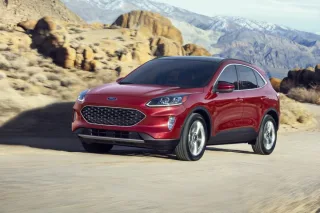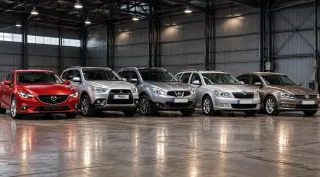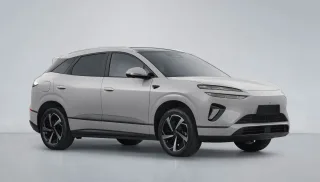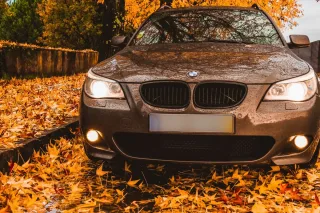
There are also native electric cars on our market, purchased at official dealer showrooms. Just like similar models with internal combustion engines. AUTO-Consulting found out how both lose value with age on the domestic market.
It is clear that electric cars do not always have "similar" models with internal combustion engines. Therefore, in some cases the comparison is quite conditional. Especially considering that in used cars, the condition, mileage, trim level, involvement in accidents, and clean documents play a big role. Nevertheless, it is indicative. Especially when we sell both the electric model and the same one with an internal combustion engine. Here are some examples.
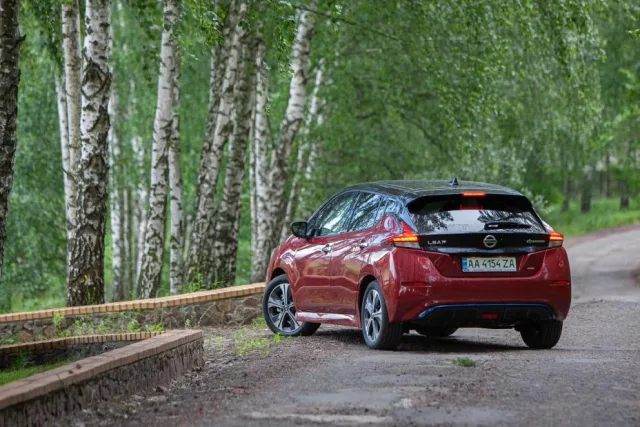
The most famous electric car. At least in Ukraine, which was the first to be imported from other markets, is the Nissan Leaf. A 2012 model is offered today for $5,000. Although some 2011 models are priced at $8,500. Here, the ability of the seller and buyer to negotiate comes into play. For a five-year-old "Leaf" of average age, 2016, they ask from $11,400. And a new model from a dealership costs from $30,000. It turns out that over 10 years, the Nissan Leaf loses about $25,000 in value. Or more than 80% of its cost. At the same time, the Nissan Tiida with an internal combustion engine, which, of course, can be quite conditionally called an analogue of the "Leaf", does not lose value so rapidly. For example, an unaccidented 2008 model is offered for $4,500. And a 2012 car for $10,300. That is, over 4 years, this model became cheaper by about 40%.
If we do not take options for cars "in good condition, but without a battery", then prices for the first official electric car in our country, the Renault ZOE, start from $8,300 for a 2013 model. 2019 models are offered from $18,500, although some ask more for 2018 cars. It turns out that over 5-6 years, the electric car loses just over 50% of its value. A conditional analogue, the budget hatchback Renault Sandero, 2009-2010, is offered today from $4,000, and 2021 models from $15,300. It turns out that over more than 10 years, the car loses about 75% of its value.
The urban crossover Hyundai Kona Electric is an almost ideal model for comparison, since it also has an analogue with an internal combustion engine. The electric "Kona" 2021 is offered from $37,345. And the earliest electric models available on our market, 2018, from $27,500. That is, over 3 years, the electric "Kona" loses about $10,000 in value, or about 18% of its cost. At the same time, the Hyundai Kona with an internal combustion engine, 2018, can be found from $15,300, and a 2021 model is offered from $24,500. That is, over the same 3 years, the car with an internal combustion engine loses almost twice as much in value, 38%.
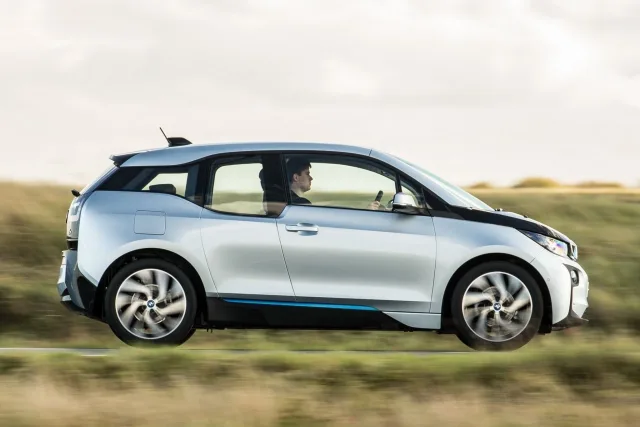
The popular premium electric car BMW i3 has been sold here for quite a long time, so today 2014-2015 models can be found from $13,000. At the same time, almost new models of this electric car, 2019-2020, with almost no mileage, are offered from $41,000. It turns out that this model loses up to 70% of its value over 5 years. A very approximate analogue of this electric car is the front-wheel-drive BMW X2. For 2018 models they ask from $18,000, and for 2020 cars from $37,500. For the all-wheel-drive version, prices are higher, but still the X2 loses more than 40% of its price over 2-3 years.
The notorious Tesla Model 3 in an unaccidented (as they write) condition, 2019, is offered from $30,000, and for 2021 models they ask $65,000. That is, the American electric car loses more than half its price over 2-3 years. A conditional analogue, the BMW 3rd series 2019, is offered from $30,000, and 2020 from $33,000. Thus, the "three" with an internal combustion engine practically does not lose value. And here, apparently, a big role is played not by the type of power unit, but by the purchase from an official importer.
The electric Jaguar I-Pace, 2018, is offered here for just over $50,000. And this is a car brought to us from the EU. The price for a new similar 2021 model starts from $80,000. That is, in fact, over 3 years, the Jaguar I-Pace loses about $30,000. That's $10,000 a year. Or more than 37% of its value over three years. At the same time, the analogue, the Jaguar E-Pace with a 2-liter petrol engine, has a slightly different price ratio. A 2018 model is offered from $32,500, and a new 2021 model costs from $64,000. It turns out that over 3 years, the E-Pace with an internal combustion engine lost almost half its price.
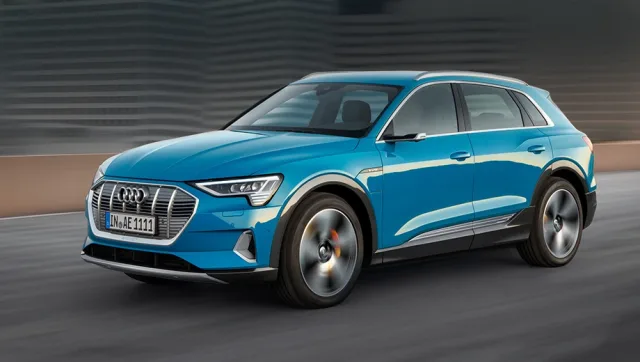
The Audi e-Tron 2019 can be found from $60,000. For 2021 models, prices can reach $102,000. The conditional loss of value over 2 years is more than 50%. The analogue with an internal combustion engine, the Audi Q8, is offered 2019 from $70,000, 2021 from $118,000. The loss in price over 2 years is about 40%.
The first mass (conditionally) electric sports car, the Porsche Taycan, appeared here quite recently, just a couple of years ago. In addition, the supply of such models is limited. Today, the Porsche Taycan 2020 is offered from $116,000, and for a similar model (408 hp) 2021 they ask almost the same, from $117,500. Although more powerful versions of this electric car can cost twice as much.
If we sum up, it turns out (incredibly, but a fact) that some car models with internal combustion engines lose more in value than their electric analogues. But it all depends on the popularity of the model and whether it is a premium brand or not. Premium depreciates faster in the first years. And here again it must be repeated that in each specific case, a lot depends on the condition of the car, its actual mileage, trim level, battery capacity/engine power, involvement in accidents, and the availability of clean documents. Nevertheless, the trend that electric cars depreciate a little slower than cars with internal combustion engines is evident.