In many ways, such a noticeable increase in the indicator over the year is explained by the low base effect for comparison: in September 2018, the number of registrations dropped sharply (-23.5%) due to the introduction of an updated certification procedure for cars according to WLTP emission and efficiency standards.
Thus, in the reporting month, all EU member states recorded growth in registrations, except for Bulgaria. The four leading EU car markets showed double-digit dynamics: Germany added 22.2%, Spain — 18.3%, France — 16.6%, Italy — 13.4%. Britain, however, showed only modest recovery (+1.3%) — consumer confidence there still suffers due to uncertainty related to Brexit.
Nevertheless, it was the United Kingdom that, following last month's results, overtook Germany and became the leader in the number of new passenger car registrations — 343,255 units.
In Germany, the September figure was 244,622 registered cars.
France took third place in the top three, where 173,443 new passenger cars were sold.
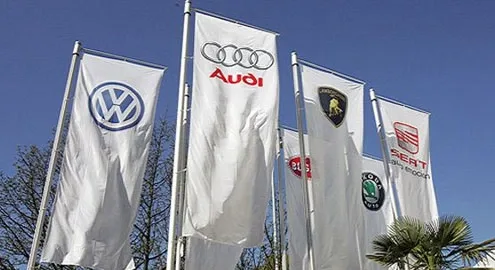
Among European manufacturers, as before, VW Group holds the first line — over the month, the concern sold 250,402 cars in EU markets, which is 47% more than in September last year.
The second position is occupied by PSA Group with a volume of 205,742 sold cars — this is 3.9% higher than the result of a year ago.
The third indicator is for RENAULT Group — 121,461 units (plus 28.1%).
Overall, for nine months of 2019, the number of new car registrations in the European Union decreased by 1.6% compared to the same period last year. And although demand across the EU was recovering in September, Germany turned out to be the only major market that managed to show positive dynamics over the year (+2.5%). In the remaining significant car markets of the union, demand declined.