Advertising
Ford Fiesta: prices and specifications
13 generations Country of origin: United States

History
Henry Ford II personally chose the name "Fiesta" for his new compact city hatchback from 13 options proposed by the creative team. It means a national holiday traditionally celebrated in Latin America and Spain. This choice was not accidental: the founder's descendant wanted the car to be perceived as a celebration on wheels.
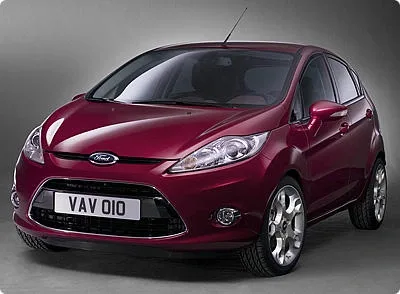
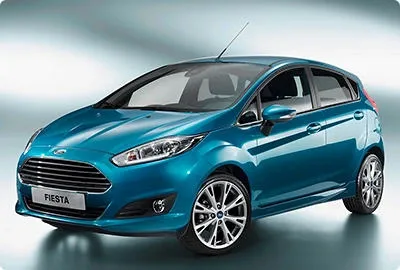
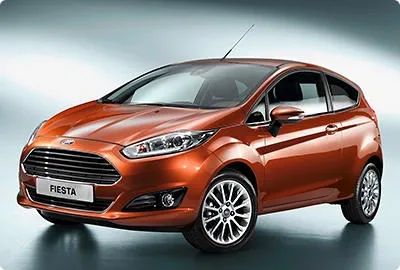
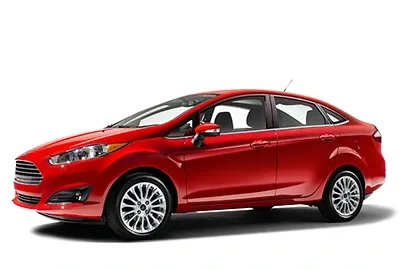
Work on the future model began in 1972. Four years later, Ford's European division officially introduced the first generation Fiesta. Initially, the car was produced in two body styles: a three-door hatchback and a van. Since then, the model has gone through six generations, the sixth of which debuted in 2007 at the Frankfurt Motor Show. In 2012, the Fiesta underwent another facelift, gaining a new corporate style with a grille reminiscent of Aston Martin. Currently, the car is assembled in Germany, Spain, Mexico, Thailand, China, Venezuela, and India. The model is available in four body versions: three- and five-door hatchback, sedan, and two-door van.
On the Ukrainian market, the Fiesta is supplied only as a three- and five-door hatchback. The model is equipped with three petrol engines (1.25, 1.4, and 1.6 liters) and two diesel engines (1.4 and 1.6 liters). For the Ukrainian market, two petrol engines (1.25 and 1.4 liters) and one diesel engine (1.4 liters) are available. They are paired with a five-speed manual or a four-speed automatic transmission. Drive — front. The car is built on the global Ford "B-car" platform.
Ford has been producing the Fiesta model since 1976. The geography of production and sales is impressive: Europe, Brazil, Mexico, China, India, and South Africa. The Fiesta is considered one of the company's most successful projects.
In the early 70s, demand for compact, high-quality, and city-friendly cars grew in Europe. The energy crisis also influenced consumer preferences. The company needed a car capable of competing with the Fiat 127 and Renault 5. After extensive research, the world saw a new project — an inexpensive subcompact Ford Fiesta. However, the name did not appear immediately. According to company legends, they initially chose from a list: Amigo, Bambi, Bebe, Bravo, Bolero, Cherie, Tempo, Chico, Fiesta, Forito, Metro, Pony, and Sierra. Henry Ford II preferred "Fiesta".
Since its launch, the model has gone through eight generations:
- (MK1) first generation (1976—1983)
- (MK2) second generation (1983—1989)
- (MK3) third generation (1989—1995)
- (MK4) fourth generation (1995—1999)
- (MK5) fifth generation (1999—2002)
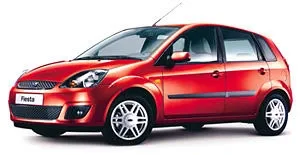
- (MK6) sixth generation (2002—2008)
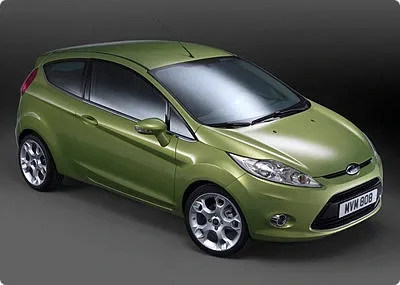
- (MK7) seventh generation (2008 - present)
First generation
The Fiesta was launched in 1976. For Ford, this was a breakthrough, as the car turned out to be successful. Considering that this was the company's first new car after five years of crisis, it was a real achievement. The model was sold worldwide, including the USA.
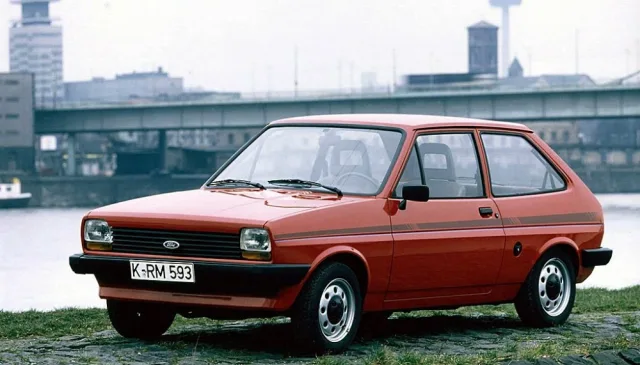
Production was established at plants in Valencia (Spain), Dagenham (England), and Cologne (Germany). Already on January 9, 1979, the millionth car was produced.
Buyers were offered several petrol engines paired with a four-speed manual transmission. Engine displacement ranged from 1.0 L (40 hp) to 1.6 L (84 hp). For that time, this was an excellent indicator.
Second generation
On the wave of the first generation's success, the Mark II modification appeared.
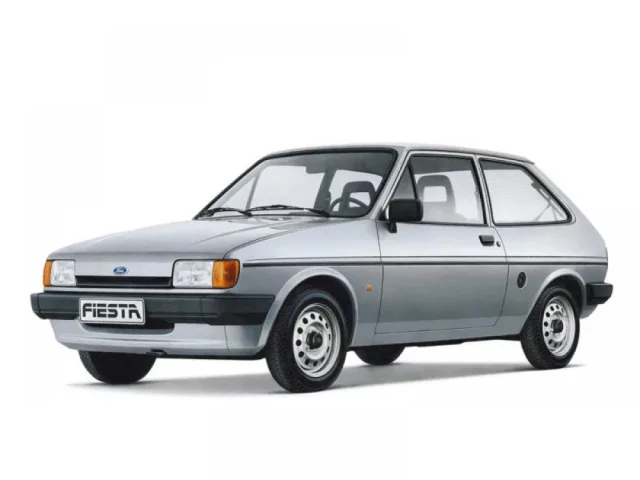
The 1.4 L engine replaced the 1.3 L, and the 1.2 L engine became more powerful. Depending on the trim, not only the engine changed but also the front panel with the instrument panel and seat upholstery. Until the end of the 80s, the Fiesta remained one of the sales leaders, especially in the UK.
In this generation, the XR2 version appeared with a turbocharged engine producing 125 hp, turning the light car into a sporty "hot hatch".
Third generation
In 1989, the third generation Fiesta was released. Technically, it was almost the same car but with a new body. The main innovation was the introduction of a five-door variant, whereas previously only three-door hatchbacks were available. The XR2 version received a fuel-injected engine, and the 1.0 L and 1.1 L engines were modernized. The gearbox remained the same. The model's popularity was high: 2,000,000 units were sold in two years.
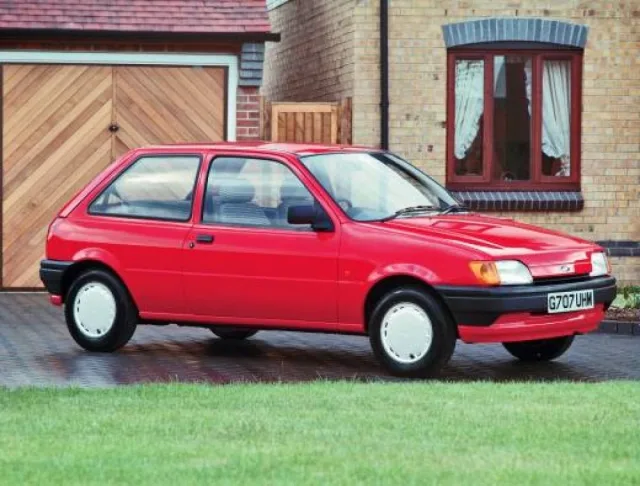
In the 90s, trims improved. High-end versions featured ABS, power windows, and driver and passenger airbags. A version with a diesel engine from the Escort and a cargo-passenger version, the Ford Courier, also appeared.
In 1994, the XR2 modification was replaced by the ST version with a 1.4 L or 1.6 L Zetec engine.
The third-generation Fiesta remained competitive until the end of production. The Ford Ka was based on it.
In 1990, the sporty Ford Fiesta RS Turbo appeared with a 1.6 L engine producing 133 hp. It accelerated to 100 km/h in 7.9 seconds, with a top speed of 212 km/h.
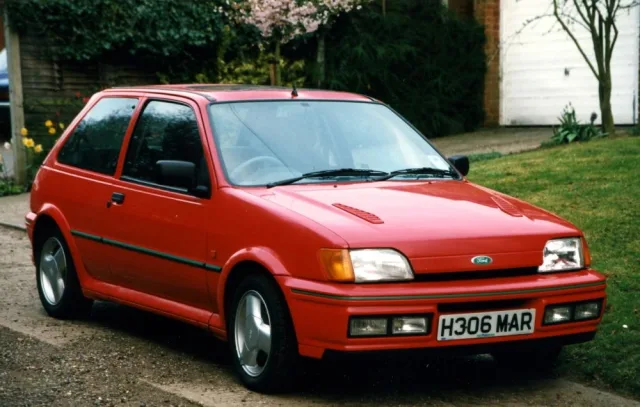
In 1992, the turbo version was replaced by a naturally aspirated 1.8 L engine with 128 hp. Acceleration to 100 km/h worsened to 8.4 seconds, but the engine became more reliable.
Fourth generation
In September 1995, the fourth generation Fiesta was presented at the Frankfurt Motor Show. It received a new Zetec-SE engine, a completely new body, and suspension. The old engine was retained but completely reworked and renamed Endura-E.
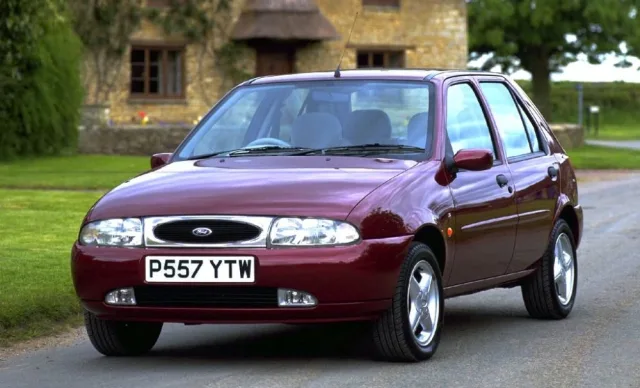
The new suspension and its settings could satisfy even the most demanding owner.
In Brazil, a pickup truck called Courier began production based on the Fiesta. In some markets, the model with minor changes was sold as the Mazda 121, Mazda Soho, and in the USA as the Ford Festiva.
Engines with displacements of 1.0 L and 1.1 L remained in the lineup along with 1.4 L and 1.6/1.8 L Zetec. The petrol 1.3 L and diesel 1.8 L also remained unchanged. A new 16-valve Zetec with a displacement of 1.25 L was added to the lineup.
The transmission used was the same as in the previous generation, and a CVT version appeared.
Safety requirements led to the addition of 4-channel ABS with brake force distribution and electronic stability control.
The interior was modernized, although it was similar to the previous model. The exterior was also updated.
Fifth generation
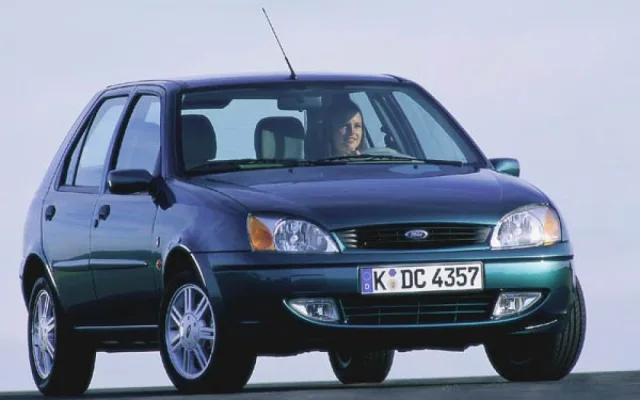
The fifth generation was essentially an updated fourth generation but with a new chassis. This allowed experts to call it a benchmark for handling. The engine range expanded: engines of 1.25 L, 1.4 L, and 1.6 L appeared. Since the model was too similar to its predecessor, a facelift was carried out in 2000. This was a temporary measure in preparation for the new generation.
Sixth generation
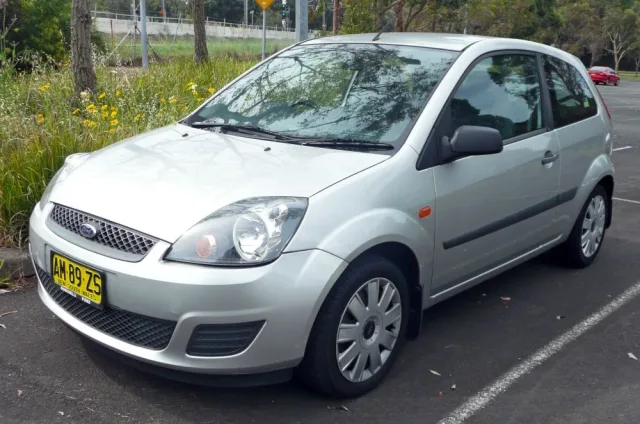
In 2002, the sixth generation Fiesta debuted in Frankfurt. During its development, engineers focused on interior space, styling, safety, and handling.
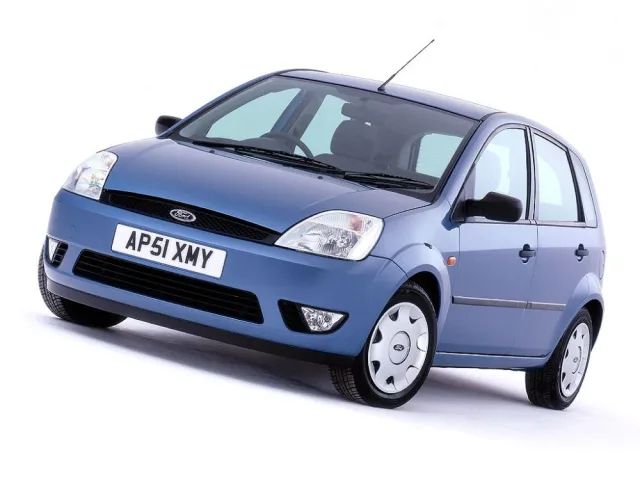
Compared to its predecessor, the Fiesta became larger, slightly heavier, and gained a longer wheelbase. The car became more stable in corners. Designers managed to increase space in the rear row — both for shoulders and legs.
The new design added solidity to the model. The main features of the exterior and interior were more balanced proportions, maintaining a connection between generations.
In 2005, the Fiesta underwent a minor facelift.
Seventh generation
The most global update among all generations is the seventh. The model shared a platform with the Mazda2. The car was first shown in 2007 at the Frankfurt Motor Show, and sales began in 2008 in Germany and the UK.
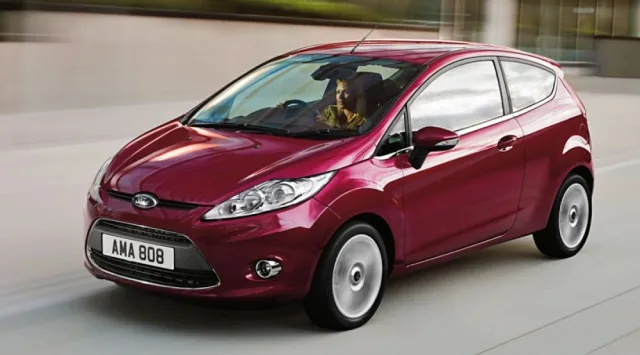
Currently, the seventh generation Ford Fiesta is sold in Europe, Asian countries, South America, and the USA.
The five-door hatchback is available in all markets except India. The sedan is sold in China, India, South and North America, and Australia. The three-door hatchback exists in Europe, Australia, and some Asian countries. The van version is only found in Europe.
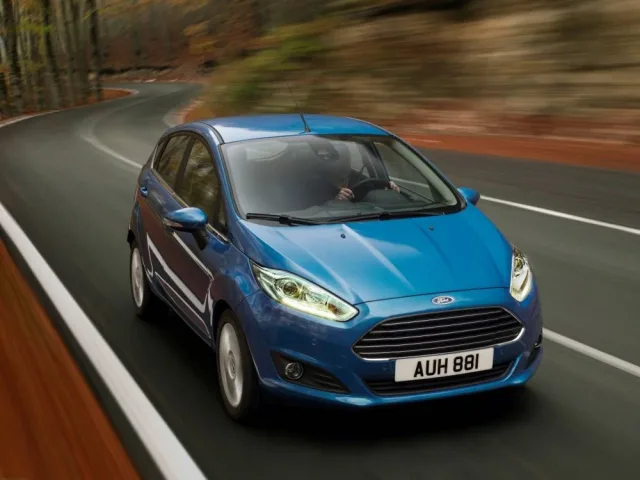
In 2012, the model underwent a facelift.
Exterior
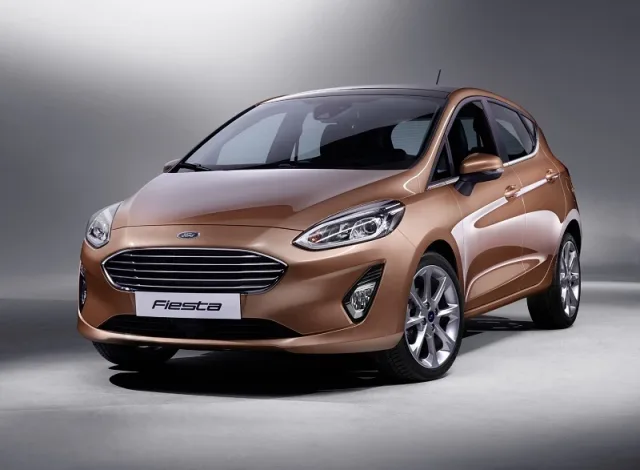
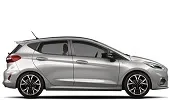
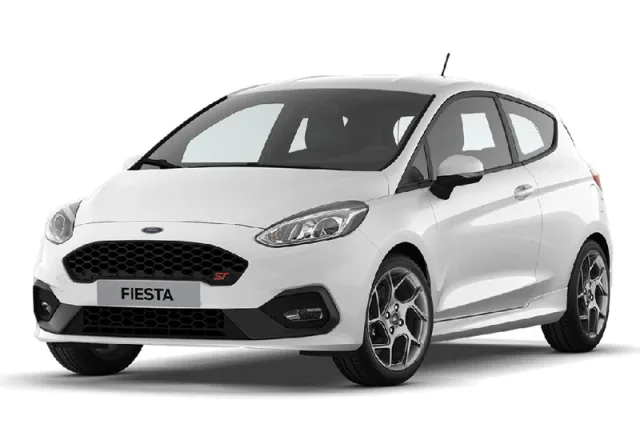
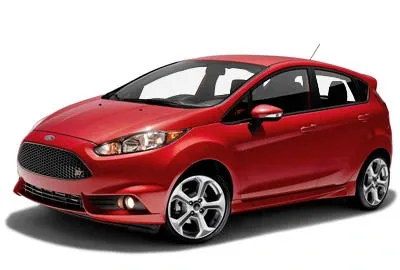
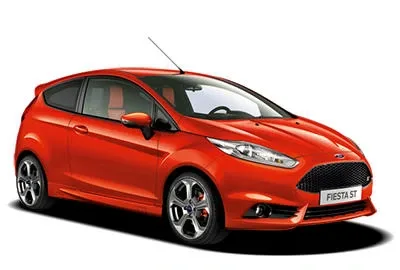
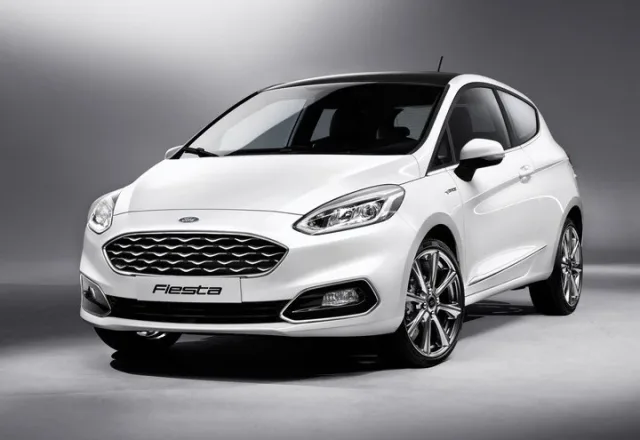
When looking at the latest generation Fiesta, a sense of deja vu arises: the front resembles an Aston Martin. Of course, it is not a complete copy. Some may find this solution controversial for a compact car, while others may like it. Thanks to this design, the Fiesta has become more aggressive and, to some extent, more masculine. The overall styling of the compact has acquired sporty notes.
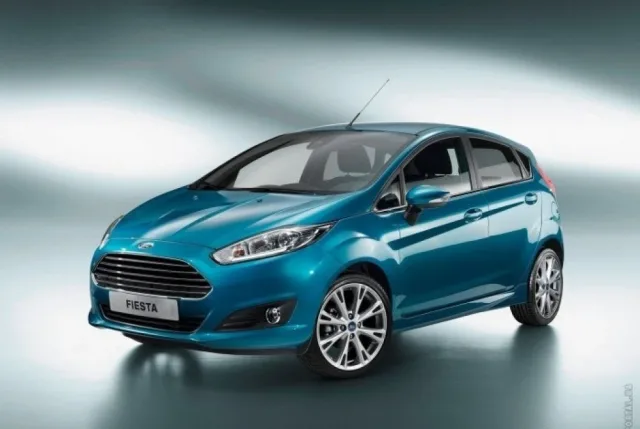
The swift cone-shaped silhouette, faceted stampings on the three- and five-door versions — all emphasize dynamics. The perception is enhanced by modified mirrors, rear lights with a new aggressive pattern, and a spoiler at the rear. The updated color palette is aimed at young people.
Interior
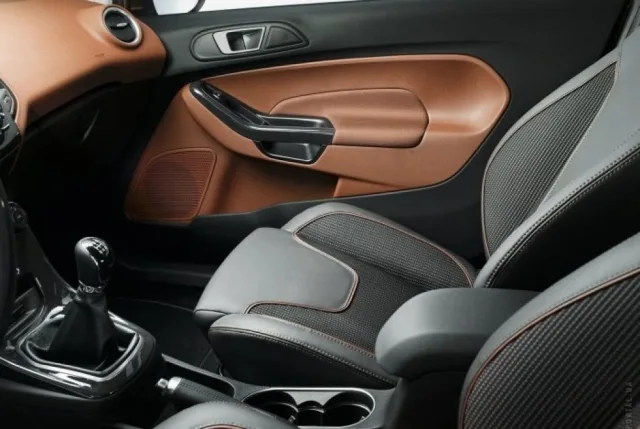
The interior design intersects with the exterior and creates a feeling of a modern car. Lacquered details on the door cards and dashboard make it more expressive. Ergonomics are fine: all controls are at hand, and there is almost no need to get used to them. Sometimes it seems that you are in a car of a higher class. Decorative details that look like metal are indeed metal.
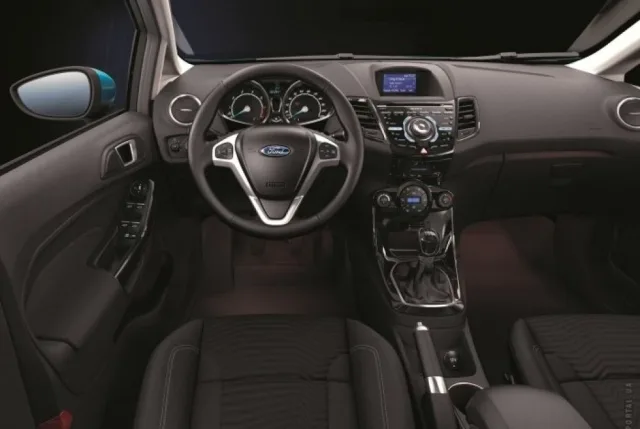
The door cards are also ergonomic, with many compartments for small items. The steering wheel adjusts in two directions. The same can be said about the wide range of adjustments for the front seats.
Engine and transmission
On the Ukrainian market, the Ford Fiesta is offered with several engines: 1.0 Ecoboost with varying power outputs — 80, 100, and 125 hp. A petrol engine of 1.25 L with 82 hp is available on order.
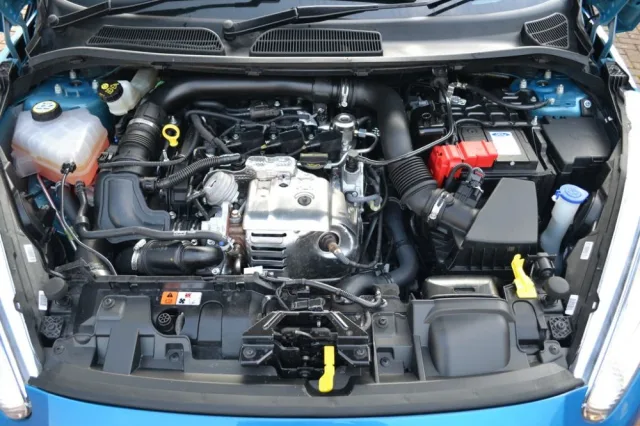
Market specifics predetermined the availability of only one diesel engine — 1.6 L with 75 hp.
For the 1.0 engines, a five-speed manual and a six-speed dual-clutch automatic are offered. For the 1.25 L engine and the diesel, only a manual gearbox is available.
Safety
Ford takes safety seriously regardless of class. In the Euro NCAP crash test, the new Fiesta received the maximum five stars. It showed good results: 14.9 points out of 16 for frontal impact and 15.6 points for side impact.
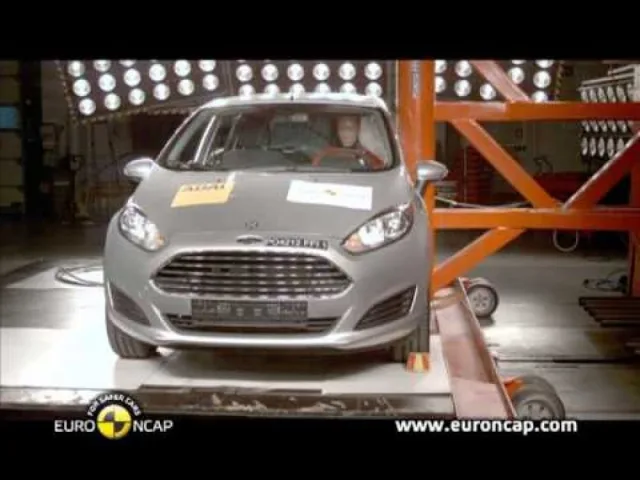
The same applies to child safety in special seats. For pedestrian safety, the Fiesta received three stars out of four.
Even in the base version, the car is equipped with airbags, ABS with brake force distribution, and emergency brake assist.
Features
Most experts call the Ford Fiesta, like its older brother the Ford Focus, a benchmark for handling. The car is intuitive on the road and obedient in any conditions. Even during unexpected maneuvers at high speeds, the car predictably follows the steering wheel, and body roll is minimal.
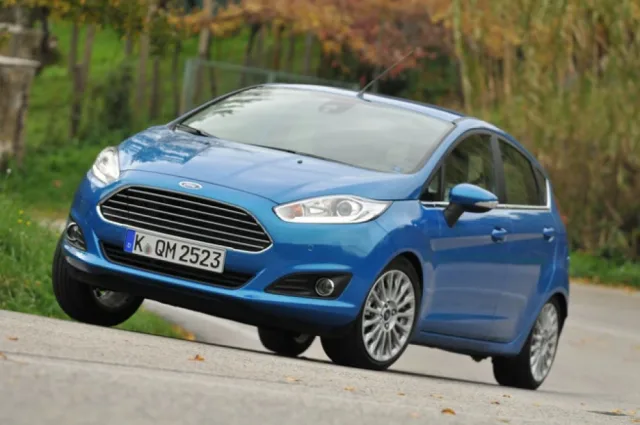
The steering feedback gives a clear idea of the position of the driven wheels and allows you to feel the limits of grip. The car holds its trajectory well on straight roads and long curves. Even on poor surfaces, handling does not deteriorate. Bumps are felt remotely. The suspension may seem stiff, but it is energy-intensive.
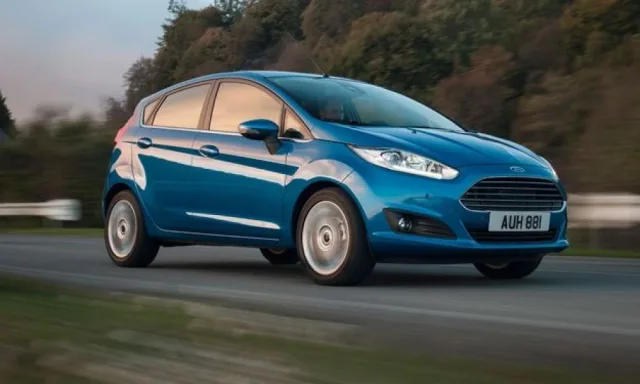
Good sound insulation of the cabin and engine is noted. To hear the engine, you need to reach maximum revs. With the diesel, the car vibrates a bit more at low revs, but on the move it is almost indistinguishable from the petrol version. Road noise is also barely audible.
Popularity in Ukraine
The car sells well on the Ukrainian market.
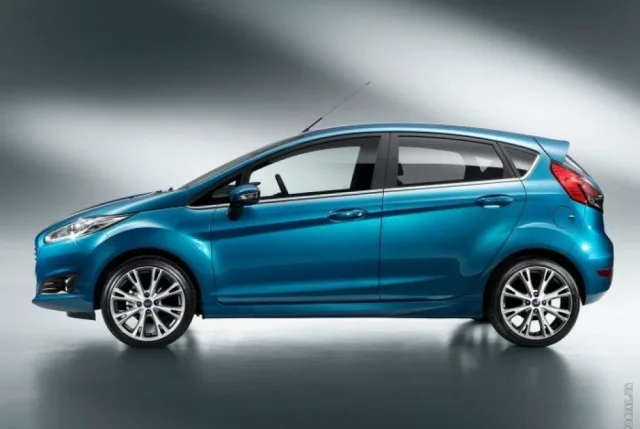
Ukrainian buyers more often choose five-door versions. According to new car sales ratings, the Ford Fiesta is considered one of the bestsellers in its class.
Our verdict
The Ford Fiesta is a car for an active driver who values sharp, precise handling, reliability, and good economic performance. Several types of trims allow you to choose an option according to budget and needs. However, the buyer must understand that a small but well-handling car cannot be cheap.
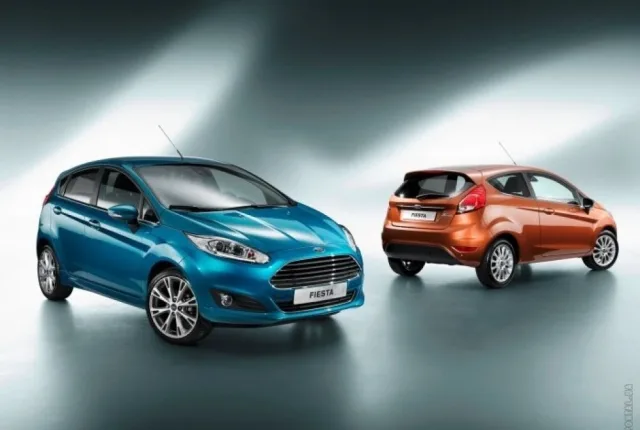
Ford has a wide network of service stations in Ukraine and throughout Europe, so servicing the car is hassle-free. The cost of maintenance cannot be called budget-friendly, but it is offset by moderate fuel consumption. Cars for the Ukrainian market are produced in Germany.
The warranty on the Fiesta is structured interestingly: the European warranty is 2 years without mileage limit, after which an extended Ukrainian warranty is added for another year, but with a limit of up to 100,000 km. Technical support service operates throughout Ukraine.