As previously reported on Autoportal at the end of December, samples of winter diesel fuel of the "Arctic" category from well-known Ukrainian brands were decided to be tested in the harsh conditions of the north of Russia — in the Komi Republic.
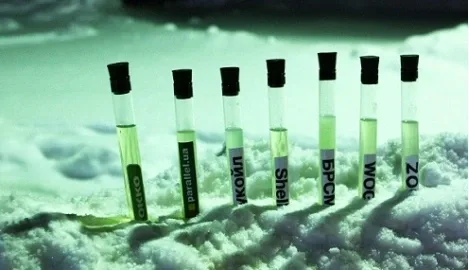
The task was simple: to find out how diesel fuel behaves in severe frost. For this purpose, fuel was purchased at gas stations "OKKO", "Parallel" (a network popular in the east), "Lukoil", "Shell", "WOG" and "BRSM". The Zaporizhzhia local brand "ZOG" was not ignored either. Sellers assure that their "Arctic" fuel works without problems at temperatures down to -320C, and this is exactly the information they place on the information boards of their gas stations.
At "BRSM" stations there was no "Arctic" fuel, so they took regular winter diesel fuel of the Euro standard there. The station staff claimed that it was designed to operate down to -290C. But even such fuel can be considered "arctic", because according to the domestic DSTU, arctic conditions begin already at -260C.
In addition to field tests, samples were sent to an accredited laboratory. There, the cold filter plugging point, as well as the flash point in a closed cup and density, were determined.
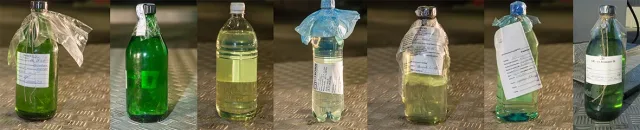
Let's say right away: the test results were a complete surprise to us.
How samples were collected
At "OKKO", "Parallel", "Lukoil" and "Shell" gas stations, the sampling process went without a hitch — the companies were warned a day in advance, so operators had no unnecessary questions.
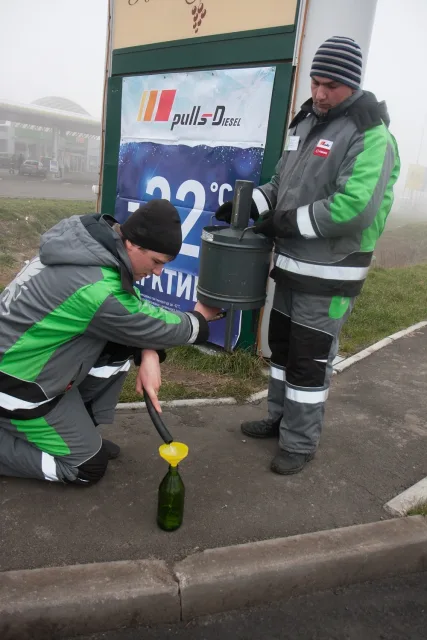
We had to go to the others without warning, as we could not contact them in advance. At "WOG", the staff reacted instantly and without unnecessary delay: "if you need it, take it." They found a container, sealed it, and, like others, did not take money. But at "BRSM" everything did not go so smoothly — long negotiations with management led to nothing: "If you need a sample, buy fuel in a canister and pour it into your own container." We had to fulfill this condition. True, we warned that it would be in the company's interests to keep a copy of the sample for themselves, but we were ignored.
At all other gas stations, samples were sealed by employees in accordance with legal requirements. We gave one sample to the laboratory, and poured the second into a test tube and took it north.
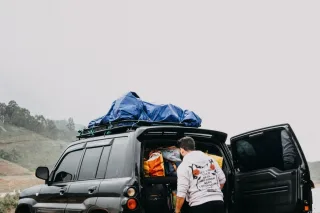
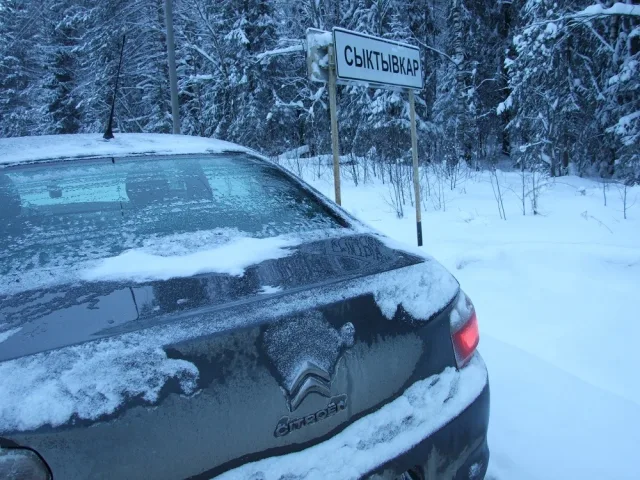
What journalist would go to get important information in their own car? Of course, only in a test car! A diesel Citroen C-Elysee was provided to us by "Citroen Ukraine", agreeing to send the Frenchman to be tested by the harsh conditions of the Russian north. Everyone who knew about the upcoming experiment was eagerly awaiting the outcome — who would return and in what condition?
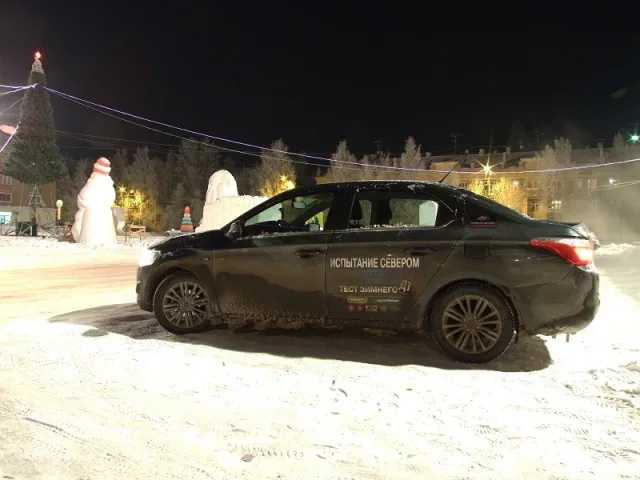
There was one unresolved problem — no photographer agreed to go on this expedition after learning about the "northern" features. Therefore, the crew consisted of one person, which gave the event a special charm — one driver, a test car with 30,000 km mileage, winter, Russia, diesel. Ahead were 6,000 km of road, the border, the Moscow Ring Road, snowy northern roads...
Accurate calculation
An unexpected problem arose: a warm cyclone covered both the European part of Russia and Ukraine, which jeopardized the entire experiment. In Komi, where in December the frost is usually below -200C, forecasters promised autumn weather of -5-100C. At the same time, their forecasts were accurate only for three to four days.
The start of the project was postponed several times. We had to be ready every day to rush off and wait for a signal from meteorologists. And since the temperature fluctuated within 200C over several days, it was necessary to plan the arrival in Komi very accurately.
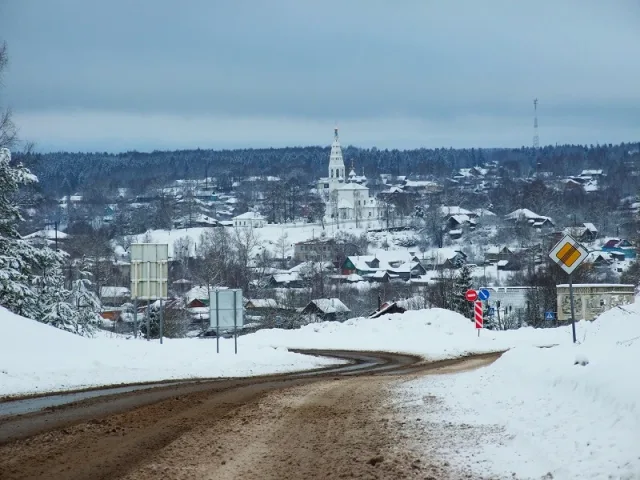
Initially, we planned to go to Murmansk — it seemed that beyond the Arctic Circle there would definitely be the right frost. But the warm Gulf Stream provided that region with a mild winter. Therefore, the choice fell on the Komi Republic, namely the city of Ukhta — the farthest city of the republic to which Google Maps can build a route. As it turned out later, it was here, at the origins of Russian oil production — on the Ukhta River, that oil was first extracted. Komi also has the world's northernmost oil refinery. To get to Ukhta, we had to pass Moscow, Yaroslavl and Kirov, then through Syktyvkar — the capital of Komi — to reach the final point. Easier said than done! Of the known obstacles on the way were the border and the Moscow Ring Road. It was also expected that the northern roads would be snowy.
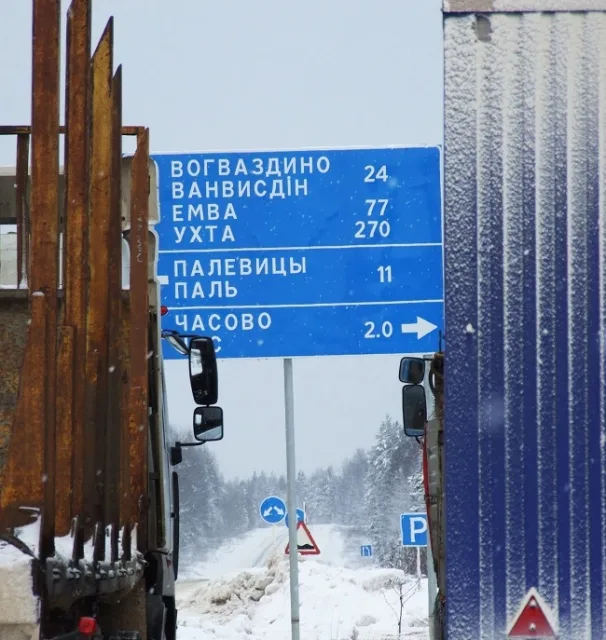
The border on the Kyiv-Moscow highway, where travelers usually lose about four hours, was decided to be crossed through a neighboring, less busy checkpoint. A detour of 70 km allowed us to cross the border in 30 minutes.
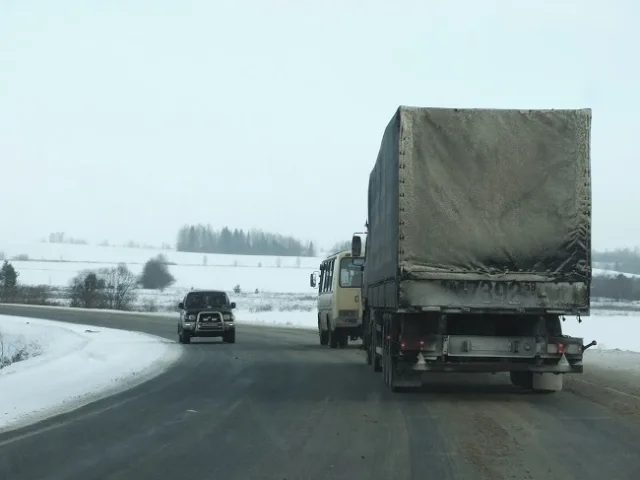
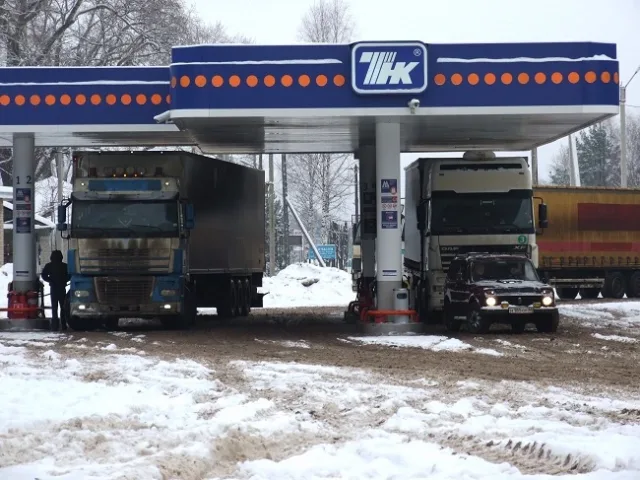
The road to Moscow turned out to be unexpectedly unpleasant — the lack of infrastructure familiar to Ukrainian drivers and dirt almost spoiled the first impressions. It took a little more than 5 liters of washer fluid to get to the capital. At rare gas stations, coffee cost one and a half times more than ours. And the gas stations themselves, even of large brands, were dirty and unkempt.
Before Moscow, traffic noticeably thickened — the good condition of the road was compensated by a large number of cars. By the way, when entering populated areas, all drivers reduce speed to 70 km/h. As experienced people later told, the size of fines and bribes has a frightening effect even on wealthy drivers.
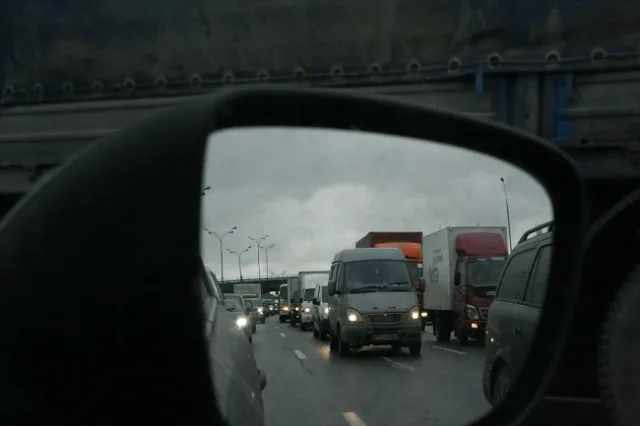
Here is the Moscow Ring Road — wide, congested and dirty. I need to cover half of it — the navigator says there are 45 km ahead. The most problematic sections are near the exits. Between them, you can accelerate to 100 km/h. Locals move calmly, but there are always racers who chaotically change lanes, cut off those trying to change lanes, and so on. In general, an unpleasant place. In total, I spent 4 hours on the Moscow Ring Road.
Further to Yaroslavl, the road is good — there is even a short section of highway. But to Kirov — continuous tension. 700 km of night road without markings, with shaking and a large number of trucks. Outside +20C, rain with snow, wet road dirt hanging in the air.
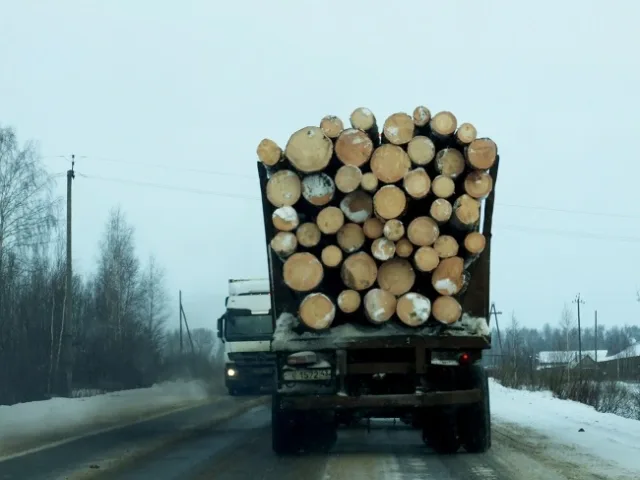
For the sake of fairness, it is worth noting that in Russia they treat car headlights much more culturally — very rarely did anyone drive with blinding low beam. There is nothing to say about "garage xenon", it is practically absent there. Meanwhile, the Citroen C-Elysee was covered with a dense layer of dirt — it was impossible to get into the cabin without getting dirty. In Kirov, the car was washed in the hope that further (we had to go strictly north) at low temperatures the road would be cleaner. No such luck. After 100 km, there was no trace of the C-Elysee's shine. And then the frost began. Even before reaching Syktyvkar, from which Ukhta is two hundred kilometers away, the on-board computer began to show a sharp drop in temperature.
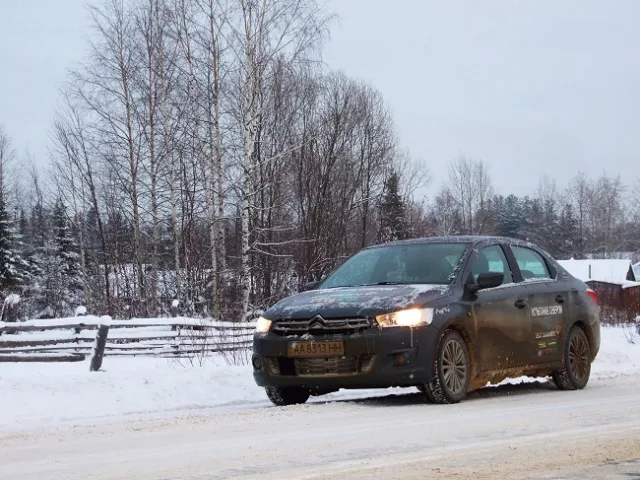
Literally in a few minutes, the temperature dropped from -100C to -250C. And that's despite the fact that two days ago, when I was leaving Kyiv, forecasters promised no more than -200C in Syktyvkar!
Frost and samples
It was dark outside, the daylight ended at 3 pm local time. A dilemma arose: risk and drive further to Ukhta in the hope that it would not get warmer, and conduct the experiment there, or take advantage of the frost and start here. Locals said that yesterday the temperature was -50C with a snowstorm. Given the instability of the weather, it was decided to start the experiment immediately. In the darkness, some gas station appeared. Fortunately, it was well lit. Samples overboard, the car's heater on full, let's begin. The thermometer steadily holds at -250C.
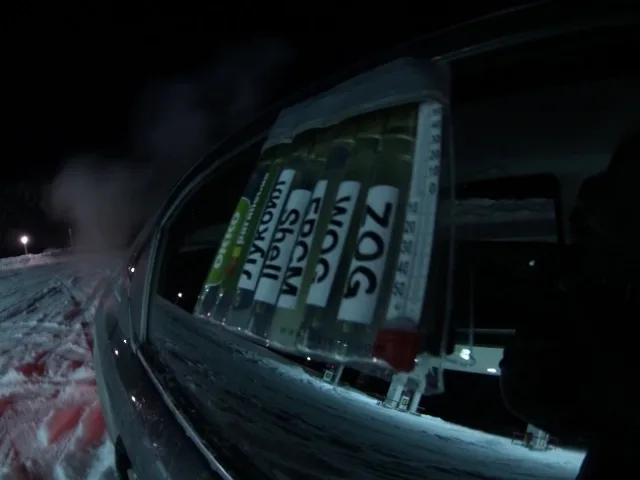
The first to react to the cold was the test tube with diesel fuel from "BRSM" — it began to uniformly turn white and thicken. Then Lukoil diesel gave a sediment, which caused surprise. The other samples behaved normally. After two hours, the temperature dropped to -290C. It became more interesting. Diesel from "BRSM" finally turned white and became viscous. Diesel from "Lukoil" increased the sediment, but the upper part of the sample was normal — liquid and transparent. After static checks, the samples traveled outside the car for about an hour, attached with tape to the side window. The result did not change.
In principle, it was possible to end the expedition and return. However, I wanted to freeze all samples, and for this, a temperature of -320C and below was needed. I went further north, to Ukhta. Unfortunately, in Ukhta the temperature turned out to be -250C. And the next day it rose to -100C — "Tashkent". On the way back, at the place of the experiment, it was even warmer — minus 20C! There's your north.
Laboratory research
Knowing the results of the experiment in the north, it was especially interesting to find out the results of laboratory tests. I especially wanted to see the condition of the Lukoil sample and the one from the "BRSM" gas station. Surprisingly, the "winter" indicators of the "Arctic" diesel fuel from the "Lukoil" gas station were normal — they were no worse than the other samples of the leading market players. It turns out that if we had not taken the fuel north and limited ourselves to laboratory tests only, we would not have identified the unusual behavior of the diesel.
I contacted "Lukoil-Ukraine" for comments: "The color stratification is related to the physics of the process; it happens exactly this way when larger particles of the paraffin fraction accumulate at the bottom, creating the appearance of a 'sediment'. Consumers may be alarmed by this, but those specialists who have encountered diesel fuel more than once — not at all. In such cases, there can be many assumptions, the main thing is the result shown by the analysis of the sample for the filterability temperature, it is this that characterizes the penetration of diesel fuel through the filter into the car engine for subsequent ignition. In any case, the signal has been received and is being processed separately according to the procedure agreed in the company..." — explained Dmitry Florinsky, Director of Retail.
The results of the study of the sample from the "BRSM" gas station also surprised, only the polarity of the surprise was different — a significant "deviation" of the sample from the indicator for the flash point in a closed cup. In the BRSM company, they refuted the data obtained. They claimed that the diesel fuel at their gas stations is of good quality and complies with the current DSTU. In confirmation of their words, they offered me to visit any BRSM gas station at any convenient time and re-sample the diesel fuel. Within an hour, I was at the nearest gas station and demanded a sample. I immediately gave it to the laboratory and stood over the specialists' souls. I personally observed the process of determining the flash point. This time, the flash appeared when the diesel fuel temperature reached 580C, that is, it met the requirements of DSTU.
Keep the instructions
And one more violation was identified among fuel brands. Thus, at "WOG" and "Lukoil" gas stations, samples were issued in plastic containers, which is a violation of the instructions for quality control of oil and petroleum products, which specify the nuances of sampling. In particular, it says that sampling should be carried out in glass containers. A trifle, but unpleasant.
| Gas station name | Fuel name | Behavior in the north | Sampling with/without violation of instructions | Laboratory indicators | ||
| ρ, kg/m3 at 150C | Flash point in closed cup, 0C, not lower | Cold filter plugging point, 0C | ||||
| 820-845 | 55 | Grade F= -20 | ||||
| OKKO | Diesel Pulls (Arctic) | No changes | No violations | 829 | 61 | -36 |
| Parallel | Diesel Perfekt (Arctic) | No changes | No violations | 833 | 59 | -35 |
| BRSM | Diesel Euro | Changes: white, thick | Refusal* | 832 | 38** | -29 |
| Lukoil | Diesel Ecto (Arctic) | Changes: white sediment | With violation | 824 | 63 | -34 |
| Shell | Diesel V-Power (Arctic) | No changes | No violations | 831 | 58 | -36 |
| WOG | Diesel Mustang (Arctic) | No changes | With violation | 830 | 60 | -36 |
| ZOG | Diesel Euro (Arctic) | No changes | No violations | 832 | 59 | -34 |
*at BRSM gas station they refused to give a sample
** repeated analysis of a new sample did not reveal non-compliance with DSTU