
Who is behind the ad
AutoPortal: All sellers can be divided into two groups. The first are owners who put their personal car up for sale. The second are resellers: those who bought someone else's car, or those who take a percentage for its sale. Traditionally, buying directly from the owner is considered the most reliable and profitable option. An ordinary owner rarely knows how to sell properly: he is often unable to mask the car's flaws and present its strengths favorably. As a result, this often affects the final price. A reseller, on the other hand, lives by the principle "buy cheaper - sell dearer," so the risk of running into a car that has been in an accident or survived a flood and has undergone cosmetic preparation is significantly higher.
Stas: A car from a professional reseller is not always bad. In my practice, I have come across excellent examples at adequate prices. The question is where to look. Ordinary people also often sell problematic cars. If the buyer knows their stuff - asks the right questions and knows the weak points of a specific model - the reseller will not waste their time and will not take them to see a knowingly problematic option. But you shouldn't bombard the seller with general questions either: this gives away your lack of knowledge on the topic. It's better to think through what exactly you are asking.

How to spot a reseller among owners - we'll tell you further.
Looking for a car: studying the photos
AutoPortal: Once you have decided on the model and trim level, the search begins. Almost always, photos are attached to the ad. First of all, make sure they show exactly the car described in the listing. If the photos are not taken in studio conditions but in an everyday setting, they show the license plate or VIN, and the ad has several different angles - that's a good sign. Most likely, you are looking at a real car that is actually for sale.
Stas: But there is another side. A seller who knows at least a little about photography and how to present a car will always shoot it from a favorable angle to hide flaws. I am often asked to consult online via photos. And when I look at half of such photos, it's immediately clear: the shooting was done so that the flaws wouldn't get into the frame. I can assume that this is where the problem is hidden - for example, there was a repaint here. But I won't claim it for sure, because the photo was taken in good light and at the right angle.

What to look for in photos
AutoPortal: The following details may indicate that the car has been in an accident: gaps between body panels noticeably differ in width; the paint shade on adjacent parts differs; non-original elements are installed - headlights, bumper, fog lights; markings on the side and rear windows indicate a different year of manufacture that does not match the car's year.
Stas: Pay attention to illogical, at first glance, styling. If non-standard headlights or a bumper with a body kit are installed, in 80% of cases the car received a front impact, and the original optics turned out to be too expensive to replace. The seller presents this as "tuning," although in reality you are looking at a crashed car. However, there are exceptions. If the ad states that factory parts come with the car, most likely the owner is into styling and knows about cars. He removes the original hood, bumper, or headlights and stores them in the garage so that when selling, he can show: the car was not in an accident.

How to estimate the real mileage
AutoPortal: The mileage stated in the ad often does not match reality. Even if the odometer readings match the seller's words, it doesn't help: changing the readings costs only about 50 dollars. Pay attention to the edge of the hood, trunk lid (especially on hatchbacks and station wagons), and the lower part of the doors - that's where rust most often appears.
Stas: The first hint of high mileage is the condition of the headlights and hood: yellowed optics and paint covered with chips. But in our conditions, the hood has long become a consumable item - it's either painted or covered with protective film, as are the headlights. So these parts don't always give accurate information.
Next, you should look into the wheel arch. The plastic splash guard suffers greatly from sand on our roads. Also look at the hub: how much rust and dirt is on it. Not everyone washes the suspension. The ratio is approximately 90 to 10: only one in ten owners washes the arms, wheels, and arches at least once a year to protect ABS sensors and bearings from excess dirt.

The interior deserves no less attention than the body. It can also give an approximate idea of the mileage.
Stas: The first sign of wear is the steering wheel. True, you need to consider whether the owner wears rings and whether there is a decorative trim. With rings on fingers, the leather, plastic, or wood on the steering wheel wears out much faster. I have more than once seen cars with fifty thousand mileage whose steering wheel looked like two hundred. So also look at the seller's hands if it's really the owner.
AutoPortal: The second indicator is the seats. By how much the cushion has sagged, you can tell a lot about the car's fate. Pay attention to creases in the side bolsters and whether the foam structure has retained its shape. If the padding is looser than it should be, and the owner doesn't weigh 120 kilograms, then the car was used actively.
Stas: Each model has its own wear rate and its own features. For example, Mazdas traditionally have a high degree of wearability: by sixty thousand, the seats are already crushed, and the steering wheel is worn. The "sixes" are especially known for this. In cars with a high seating position - crossovers and SUVs - the outer part of the lower cushion is almost always broken. If you press on it, it just sinks in.
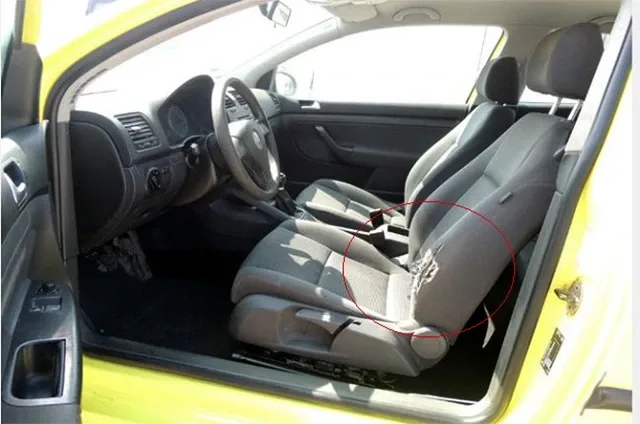
AutoPortal: Aging and deformation of seats is a natural process. By 50-80 thousand, this happens in 90% of cars. But for each model, this happens at different times and looks different. There is no universal way to assess the condition of the interior. You need to know in advance how a specific model behaves, and such information is usually not on the surface.
Stas: It's worth finding an owner of the model you're interested in - on a forum or in a car club. Pay attention to how he is dressed: neat, clean clothes usually indicate his attitude toward the car. Ask the owner to show the interior. It's better to look at not one but several cars with different owners and mileage. This way, you'll get a picture of how the interior condition correlates with mileage.
Another indirect sign is the condition of the pedal pads. True, for different models, it also differs.
Stas: Also look at the plastic of the gear selector handle, as well as the plastic interior parts and the headliner. A dirty headliner without traces of carrying "potatoes" indicates high mileage. Dustiness of the interior, especially in corners that are hard to reach with a cloth, also gives away intensive use: with closed windows, dust doesn't get inside. Look under the seats and into the rails - the vacuum cleaner rarely reaches there. But the trunk is not suitable for assessing mileage: many don't consider it part of the interior and don't particularly clean it. Sometimes you come across good cars with low mileage but a ruined interior. When asked what was done with the car, they answer: nothing, just drove it. Then it's worth looking at the person themselves - how neat they are.
What's written in the ad and whether to trust service stations
Stas: I don't believe the phrases "not crashed, not painted" at all. "Ready for checks at any service station" is already 50/50. In the past month, I've had four cases where I arrived for an inspection, and the seller assured me the car was perfect and ready for any expert examination. But there was nothing to look at: a repainted, crashed car with a terrible interior. What do such people count on?
AutoPortal: Many think that a check at a service station gives a complete picture of the car's condition. But is that really so?
Stas: A check at a service station guarantees absolutely nothing. Everything depends on the specific mechanic. I never trust service stations with a big name. Many masters work there, including students who may simply not notice what sellers carefully hide. I also don't trust large dealers: they can say "the car is excellent," although it's far from the truth. The human factor works everywhere. And there's no one to file claims with afterward - at large service stations, usually no one wants to take responsibility.
Only a familiar master who answers to you personally can give some confidence.

If a seller has many ads registered on the site with different cars, it's certainly a reseller or a platform.
Talking to the seller
AutoPortal: When you've found a suitable option, the next stage begins - calling the seller. It's the phone conversation (apart from an in-person inspection) that will give the most information about both the car's condition and who is in front of you: an owner or a reseller, and how they treated their car.
Stas: First of all, ask: "If the car is as perfect as you describe, why are you selling it?" Sometimes people let it slip that something happened to the car, but it's already been repaired. Most often they answer that they need money or are waiting for a new car.
AutoPortal: It's important to listen to how the person speaks: whether questions stump them, whether they pause. To distinguish an owner from a reseller, ask simple questions: how long they've owned the car, how much they've driven, and what they've done with it. If the answers are general - either you're dealing with a reseller, or the person bought the car recently and doesn't know its nuances themselves.
Stas: Ask when they did the wheel alignment, changed the oil or spark plugs, and whether they have winter tires. Ask leading questions like: "I know this model has a problem with brake hoses..." If you yourself have or had a car, just recall all the service operations and ask the seller about them.
A real owner will tell you everything about the service life of their car, even more than you asked.
If a person doesn't remember when they changed the oil, there are three possible options:
a) it's a reseller (although an experienced reseller will answer any question without hesitation, such ones are hard to spot);
b) the owner didn't take care of the car - I wouldn't get involved with such a car;
c) the car was maintained not by the owner himself. I have several times picked up cars from very wealthy people whose fleets had several cars. Naturally, they didn't know when the oil was changed. But they had a filled service book, work orders, maintenance was done at "official" dealers or good masters, and scheduled maintenance was done on time. From the documentation, you can read the entire history.

Don't be afraid to ask questions and request additional photos of parts that raise doubts.
Stas: Another decisive moment is the seller's agreement to pay for my return trip if I find discrepancies between the stated condition and reality. A person confident in the car will agree. If the seller speaks carelessly, condescendingly, I would think twice about going for a viewing. Most likely, it's a reseller. Although, I repeat, they also have good cars.
AutoPortal: The ad's lifespan can also tell a lot. Search for information about this car on the Internet. If the car has been for sale for six months and still hasn't found a buyer, there's probably something wrong with it.
Stas: The selling time doesn't always indicate problems with the car. Maybe there were many calls, but only a few came for the inspection, and those turned out to be resellers with a lowball price. Besides, each model sells differently: some are more in demand, some less. And here, the price is set by the person themselves, whatever they want. In Israel, for example, prices are set by the state: a car of a certain model and year cannot be sold, say, for more than a thousand shekels or less than eight hundred.