Наш портал уже касался темы мобильных заправочных станций для сжиженного бытового газа. В этом материале, по просьбам читателей, рассмотрим их конструкцию детальнее.
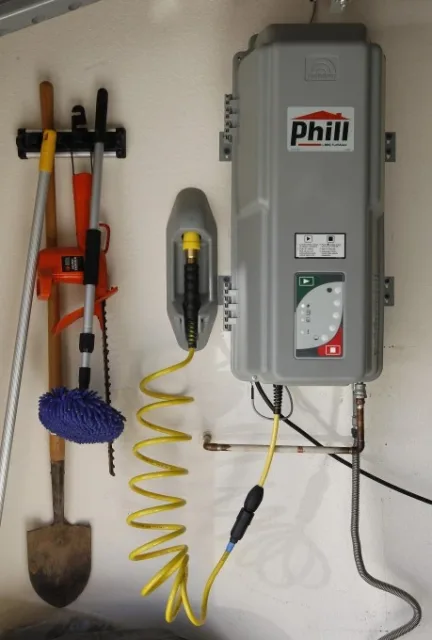
Назначение такого оборудования очевидно: оно позволяет заправлять легковые машины, автобусы, сельхозтехнику и прочий транспорт, переоборудованный для работы на метане. Смонтировать подобную станцию можно практически где угодно, лишь бы поблизости была подводка бытового газопровода. Это может быть частный дом, загородный участок или территория гаражного кооператива.
Общеизвестно, что для населения цена газа существенно ниже, чем на обычных АГНКС. Возможность заметно сэкономить на топливе наверняка заинтересует многих автовладельцев. Подробнее об этом можно прочитать в нашем материале «Заправляем машину метаном дома».
Здесь же мы разберем устройство такой мини-станции.
В стандартной газовой магистрали, идущей к плите, котлу или колонке, давление держится на уровне около 0.05 атмосферы. В баллоне же высокого давления этот показатель достигает 200 атмосфер. Значит, нужно устройство, способное поднять давление до требуемых значений. Эту функцию выполняет компрессор, входящий в комплект такой заправочной станции.
Его конструкция заметно отличается от привычных бытовых компрессоров. Обычный одноконтурный агрегат может выдать максимум 20–25 атмосфер, а для заправки баллона нужно все 200. Инженеры решили эту задачу, добавив в систему несколько дополнительных контуров. По сути, это набор последовательно соединенных компрессоров, где каждый следующий дожимает газ до более высокого давления, чем предыдущий.
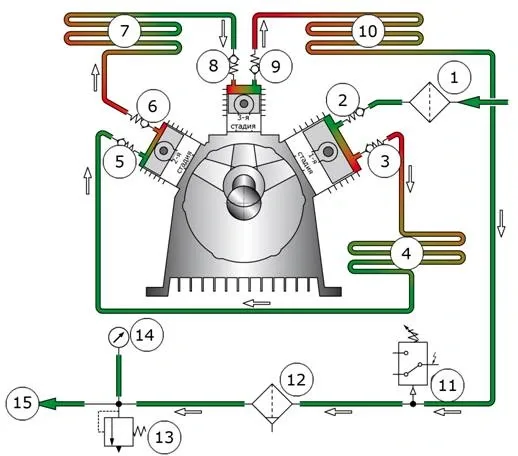
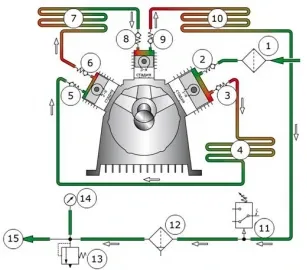
1 Фильтр для входящего газа. 2 Впускной клапан 1 стадии. 3 Выпускной клапан 1 стадии. 4 Охлаждающая трубка между 1-ой и 2-ой стадиями. 5 Впускной клапан 2 стадии. 6 Выпускной клапан 2 стадии. 7 Охлаждающая трубка между 2-ой и 3-ей стадиями. 8 Впускной клапан 3 стадии. 9 Выпускной клапан 3 стадии. 10 Трубки охлаждения на заключительной стадии выхода газа. 11 Выключатель для давления. 12 Активный углеродный / молекулярный фильтр. 13 Клапан безопасности. 14 Датчик давления. 15 Выход к шлангам.
Разберем, как работает этот компрессор, на примере схемы:
Метан из бытовой сети через входной фильтр (1) попадает в цилиндр первого контура через впускной клапан (3). Там он сжимается и через выпускной клапан (3) направляется по трубопроводу с радиатором охлаждения (4) в цилиндр второго контура. На этой стадии газ, уже сжатый в первом контуре, дополнительно сжимается до более высокого давления. Затем процесс повторяется уже в третьем контуре. В целом число контуров может доходить до пяти, хотя в описанной схеме их три. Принцип работы от этого не меняется.
После достижения нужного давления (в нашем случае 200 атмосфер) газ проходит через выключатель по давлению (11), очищается в молекулярном фильтре и через предохранительный клапан поступает в баллоны заправляемого автомобиля. Сколько времени займет заправка, зависит от производительности установки. Для домашнего использования сегодня допускаются агрегаты, заправляющие со скоростью до 5 кубометров в час.
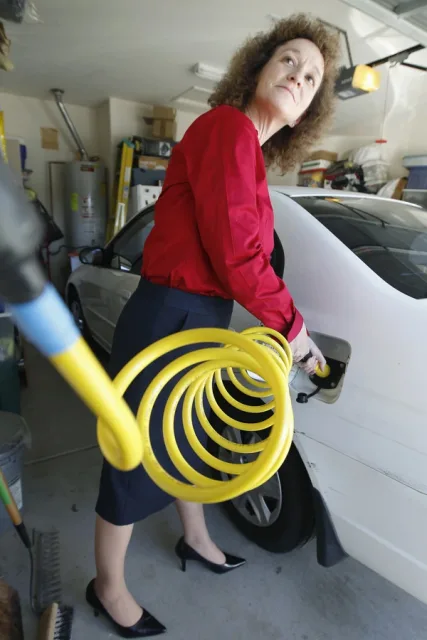
Таким образом, баллон объемом 80 литров, вмещающий 18 кубометров метана, будет наполнен примерно за 3 часа 40 минут.
Чтобы процесс шел быстрее, можно обустроить станцию с ресивером. Работает она просто: компрессор постоянно нагнетает газ в стационарные баллоны, а когда нужно заправить автомобиль, метан перегоняется непосредственно из них. Так время заправки машины можно сократить до 10–15 минут.
Насколько такие станции приживутся в Украине, пока неясно, однако в Европе и Америке они уже набирают популярность.