Чтобы понять, к чему приведет установка коробки передач от дизельного автомобиля на бензиновый мотор, необходимо разобраться в технических нюансах и выяснить, в чем именно заключается разница между такими агрегатами.
Передаточные числа и количество ступеней
Подробно о принципах работы трансмиссии мы рассказывали в статье «Что будет если... при движении вперед включить заднюю передачу». В данном же случае остановимся на таком параметре, как «передаточные числа».
Передаточное число — это один из ключевых параметров зубчатой передачи, который определяет величину крутящего момента, передаваемого на колеса.
При переключении передач в автомобиле (то есть при зацеплении определенных шестерен) меняется как передаваемый крутящий момент, так и соотношение скоростей вращения ведущей и ведомой шестерен.
Передача крутящего момента на примере двухвальной коробки передач:
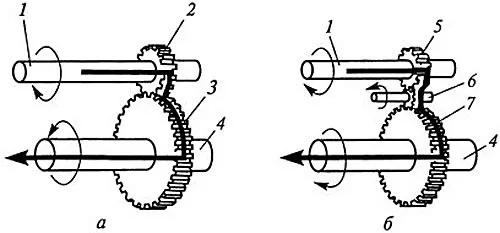
а — движение вперед; б — движение назад; 1 — первичный вал; 2, 3, 5, 6, 7 — шестерни; 4 — вторичный вал
Передаточное число — это результат деления количества зубьев на ведомой шестерне на число зубьев ведущей шестерни.
Например, если ведомая шестерня (3 или 7) оснащена 60 зубьями, а ведущая (2 или 5) — 20, то передаточное число пары будет равно 3 (60:20): вторичный вал вращается втрое медленнее первичного, а крутящий момент на нем будет втрое выше, чем на первичном валу.
Крутящий момент двигателя не является постоянным — он меняется в зависимости от числа оборотов коленвала, и для обеспечения уверенного движения на разных скоростях применяется коробка передач с различными передаточными числами.
О том, как крутящий момент влияет на динамику машины, мы писали в материале «Зачем автомобилю крутящий момент». Если коротко, то:
- крутящий момент определяет способность авто разгоняться и преодолевать препятствия,
- мощность мотора отвечает за максимальную скорость,
- обороты двигателя добавляют сложности, ведь на разных оборотах мощность и момент имеют разные значения.
Стоит добавить, что чем больше передаточное число коробки, тем выше крутящий момент на колесах.
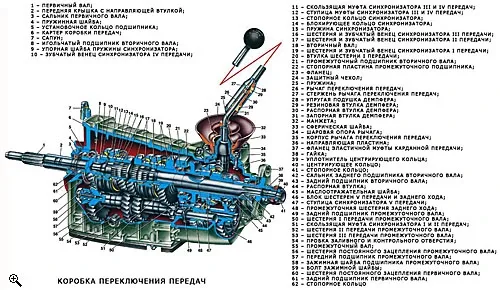
Таким образом, можно вывести следующую закономерность:
- Большее передаточное число дает лучший разгон, но ограничивает максимальную скорость. Это «тяговитая», но не быстрая передача.
- Меньшее передаточное число ухудшает динамику разгона, но позволяет развить большую скорость. Такая передача «длинная», но не рассчитана на активные ускорения.
Чтобы повысить динамические характеристики, производители применяют коробки с 6, 7 и даже 8 «короткими» передачами, у которых на старших ступенях передаточные числа максимально возможные. И чем ближе друг к другу передаточные числа соседних передач, тем плавнее и быстрее происходит разгон при последовательном переключении.
Обратной стороной медали становится необходимость чаще переключаться водителю.
Для размеренной и спокойной езды, без резких ускорений, по-прежнему используют 4-ступенчатые коробки с «длинными» передачами, которые позволяют двигаться в широком диапазоне скоростей на одной передаче.
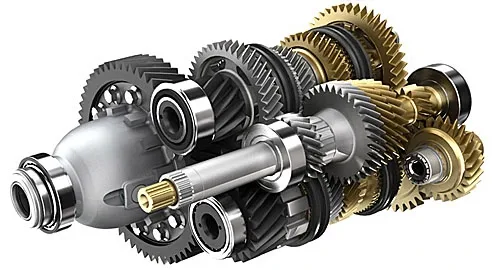
Чем отличается «бензиновая» коробка от «дизельной»
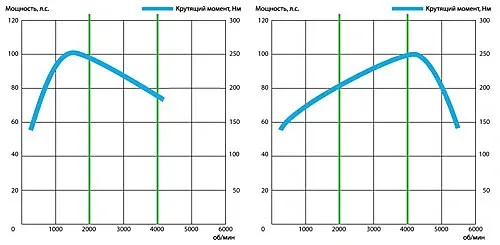
Теперь о двигателе: основные параметры мотора — это мощность, крутящий момент и обороты, при которых эти показатели достигают пиковых значений.
Мощность и момент не являются постоянными величинами — они зависят от оборотов двигателя, и эта зависимость для каждого мотора описывается сложными графиками.
Дизельные двигатели выделяются высоким крутящим моментом на низких оборотах, тогда как бензиновые моторы развивают максимальный момент на высоких оборотах:
Передаточные числа трансмиссии подбираются производителем с учетом мощностных и моментных характеристик двигателя, диаметра колес, возможностей тормозной системы и других факторов.
Отсюда вытекает и основное различие в коробках: для дизельных и бензиновых авто используются КПП с разными наборами передаточных чисел.
«Тяговитым» дизельным моторам, которые уверенно тянут с низов, не нужны большие передаточные числа на низших передачах — они и так способны сдвинуть машину с места и быстро разогнать ее. А вот бензиновому двигателю на низких оборотах требуется помощь трансмиссии в виде больших передаточных чисел. На высоких оборотах ситуация меняется на противоположную.
Стоит отметить, что производители выпускают огромное количество различных коробок передач с самыми разными характеристиками, и разница между КПП для дизеля и бензина может быть как очень заметной, так и минимальной. Более того, иногда на автомобили с разными типами двигателей устанавливают абсолютно одинаковые коробки.
Итак, что же будет
Если на бензиновое авто установить коробку от дизеля, то трогаться с места будет заметно сложнее из-за относительно небольшого передаточного числа на первой передаче.
На второй передаче также будет ощущаться нехватка крутящего момента.
Третья передача, скорее всего, будет сопоставима с аналогичной у бензиновой КПП, а вот на высших передачах машина с такой коробкой станет заметно динамичнее.
Если же сделать наоборот — поставить коробку от бензиновой модели на дизель — автомобиль получит огромный крутящий момент на низких оборотах, но при этом на высоких скоростях разгон станет очень вялым. К тому же такая трансмиссия долго не прослужит: нагрузки от дизельного мотора будут для нее чрезмерными.
Зачем ставят «дизельную» КПП на бензиновое авто
Напомним, что главные отличия КПП для разных типов двигателей — это набор передаточных чисел и прочность коробки (дизельные агрегаты рассчитаны на более высокие нагрузки).
При тюнинге, когда мощность двигателя увеличивают (см. материал «Что будет если... сильно увеличить мощность двигателя»), всегда усиливают коробку передач и перенастраивают передаточные числа. В ряде случаев разумнее установить коробку от дизельной версии.
В итоге автомобиль получает улучшенную динамику на высоких скоростях, а на низких оборотах мощности форсированного мотора достаточно, чтобы чувствовать себя уверенно.
С той же целью «дизельную» коробку ставят и на стандартные, нетюнингованные автомобили, но с условием, что двигатель достаточно мощный, чтобы без проблем сдвинуть машину с места в новых условиях.
Резюме
- Установка «дизельной» КПП на бензиновое авто улучшает динамику на высоких скоростях, но затрудняет трогание с места и движение на низших передачах.
- Проблемы на низших передачах можно решить форсированием двигателя.
- Ставить коробку от бензиновой модели на дизель не рекомендуется — она быстро выйдет из строя.