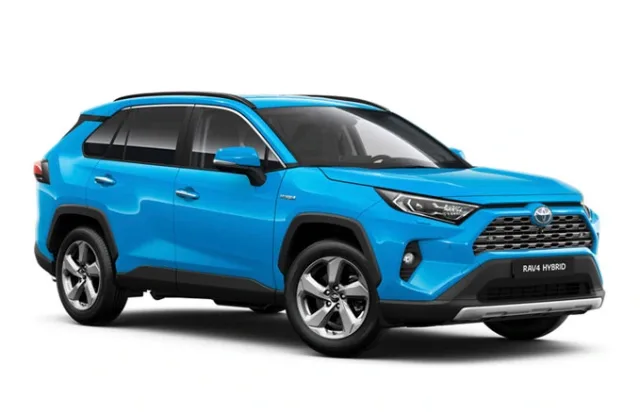
Advertising
Toyota RAV4: prices and specifications
8 generations Country of origin: Japan

Toyota RAV4: model history
The Toyota RAV4, which debuted in 1994, became the world's first pseudo-SUV, giving rise to a class later called "crossovers." The name stands for Recreation Active Vehicle, and the number 4 indicates all-wheel drive.
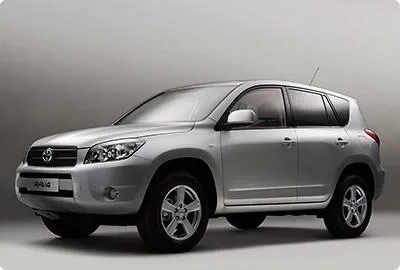
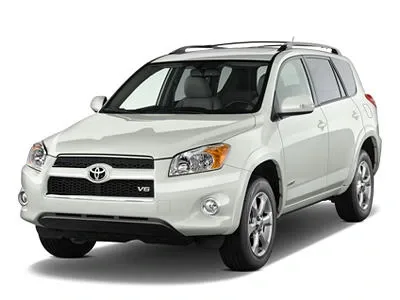
The third generation, introduced in 2005, received a lengthened five-door version instead of the discontinued three-door variant.
The first RAV4 was quite modest. It appeared in 1994 and ushered in the era of compact crossovers for Toyota. Sales were rapid: in the first month alone, 4,500 units were sold.
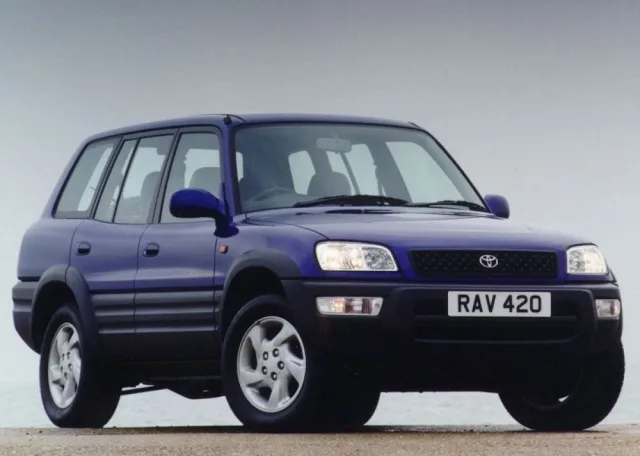
The second generation came out in 2000,
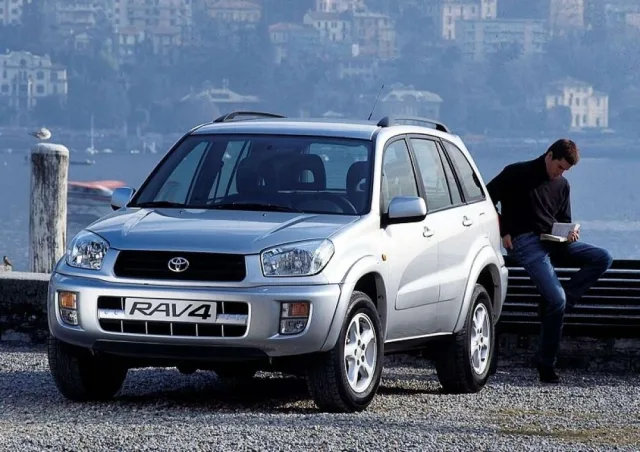
and the third in 2006.
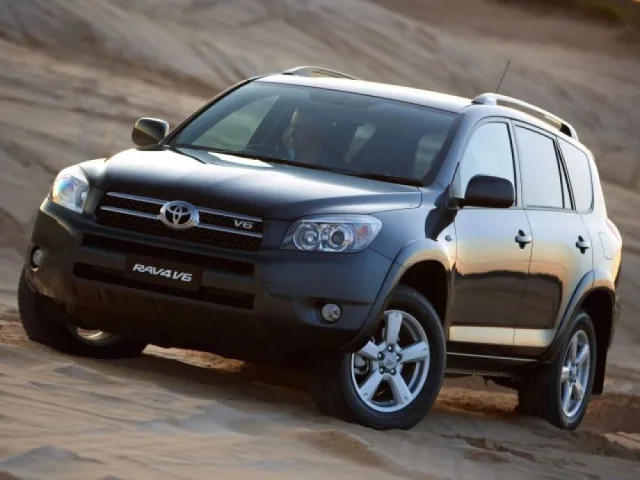
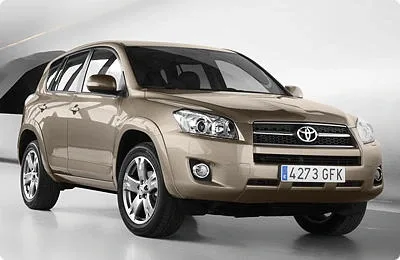
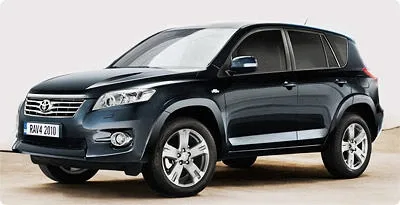
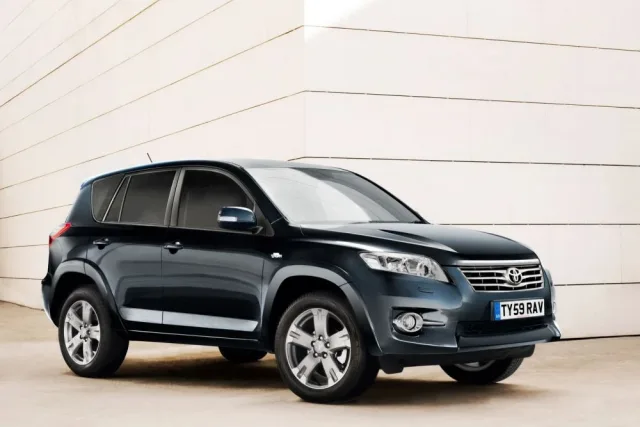
In 2010, the crossover underwent significant changes: it grew in size, received innovative lighting, a different grille, and additional steering wheel controls.
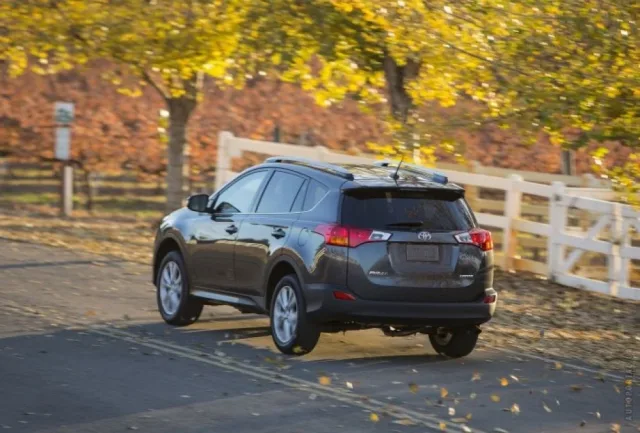
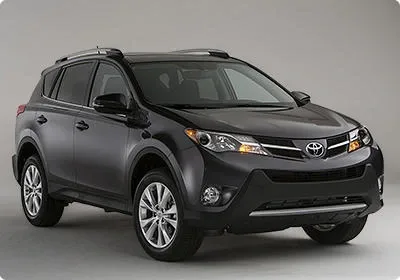
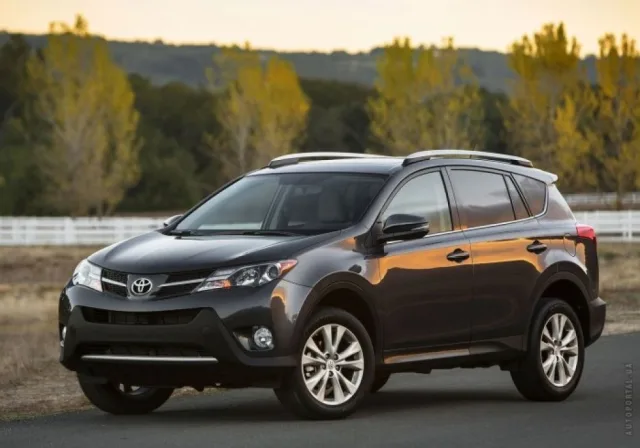
The world premiere of the fourth-generation RAV4 took place in November 2012 at the Los Angeles Auto Show.
Exterior
While the second and third generations inherited the style of the first, merely increasing in size, the fourth generation was designed almost from scratch, primarily targeting the US market.
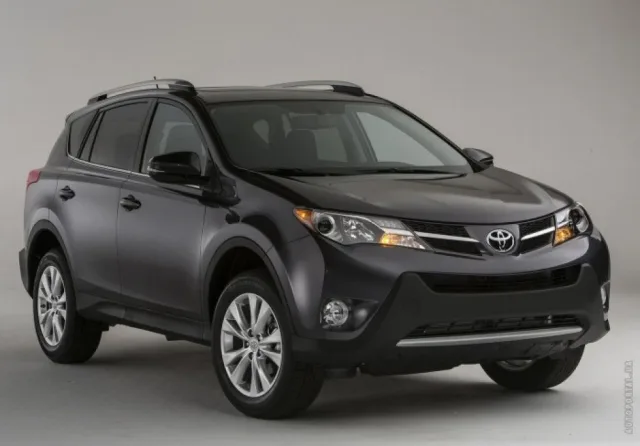
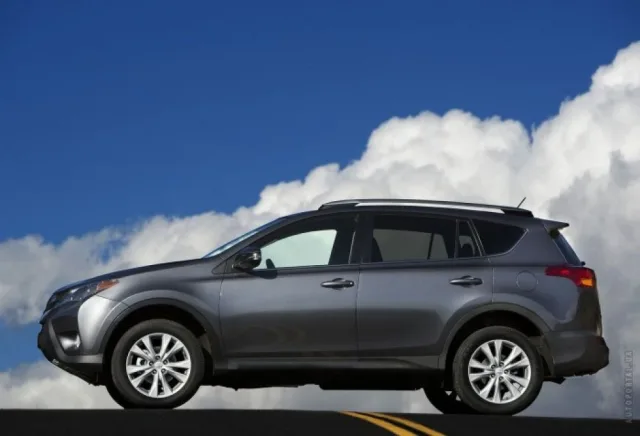
The appearance turned out to be controversial. However, compared to its predecessor, the new RAV4 lost its femininity. The latest generation exhibits refined aggression.
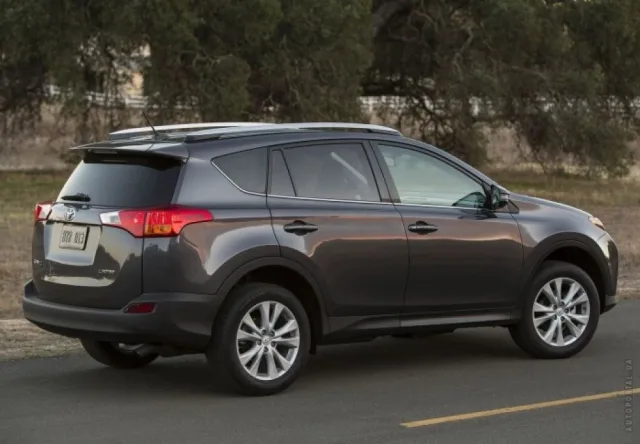
Compared to the previous generation, the wheelbase increased by 100 mm, overall length by 175 mm, and width by 30 mm.
Interior
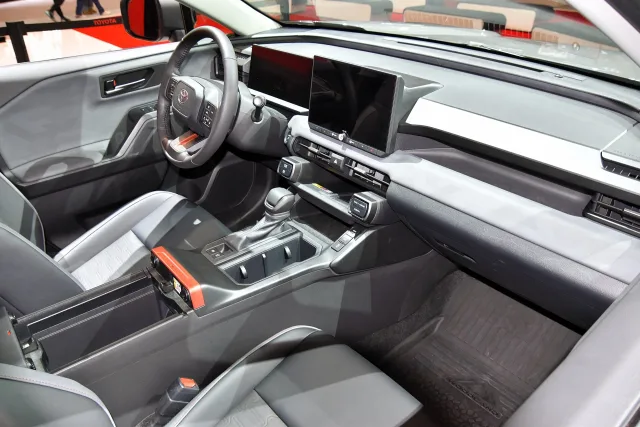
In the new RAV4, the plastic remains hard, but it doesn't look cheap and is pleasing to the eye. The raised control panel for navigation, audio, and climate is very convenient.
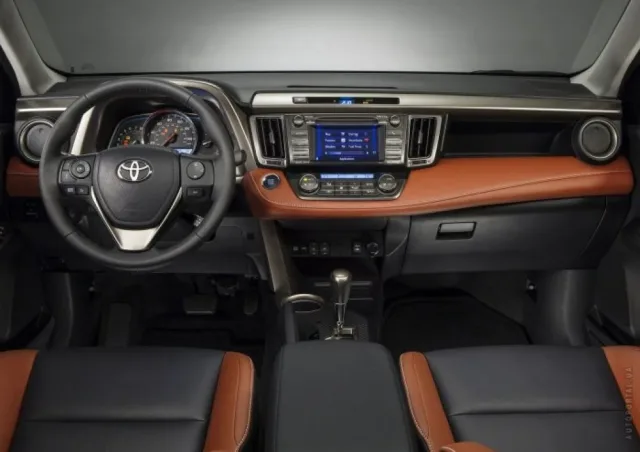
Carbon fiber inserts may cause confusion, but that's a matter of taste.
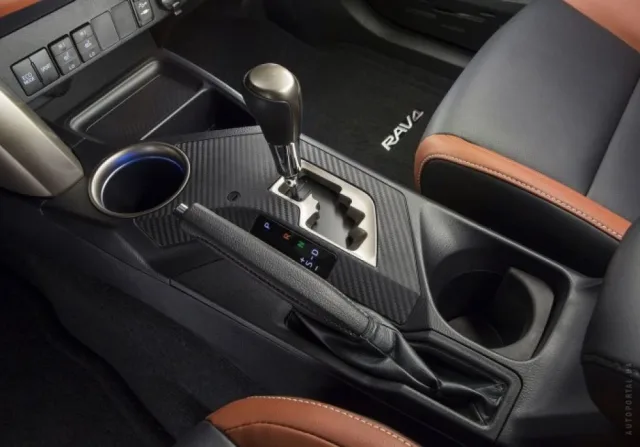
Fit and finish are good, ergonomics are decent. The front seats are comfortable and sit high enough. Visibility is good, especially thanks to large side mirrors, but when parking in tight spaces, the dimensions are not as easy to gauge as one might like. However, this drawback is compensated by the rearview camera.
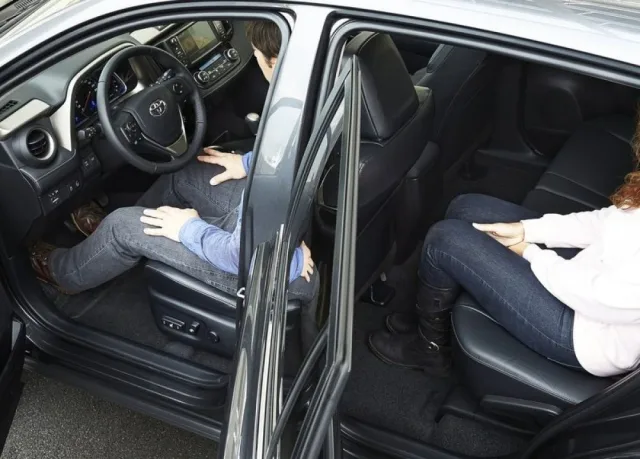
Rear seat space has increased compared to the previous generation. Even a very tall passenger can sit there without issue. Three people could fit width-wise, especially since there is no transmission tunnel, but the bench is shaped such that the middle seat is uncomfortable. Two passengers will have more than enough room. Any child seat installs easily—there is plenty of space, and the Isofix anchors are conveniently located.
The spare tire, which made this crossover instantly recognizable, has disappeared from the trunk lid. The door itself has become larger, making the car look more like a minivan from the rear than a crossover. The trunk door opens upward instead of sideways and comes standard with an automatic open-close mechanism with adjustable lift height.
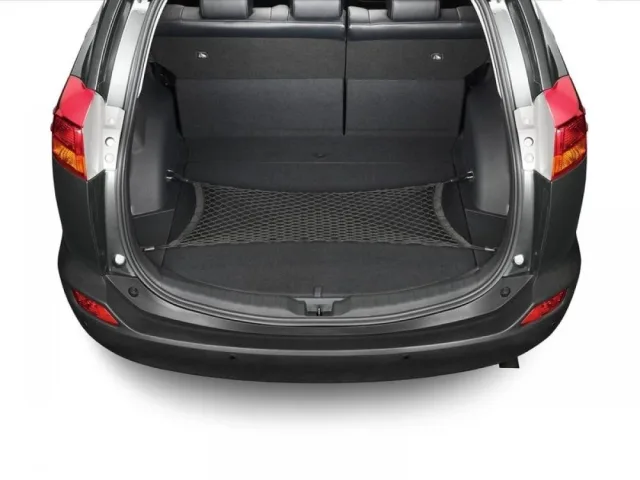
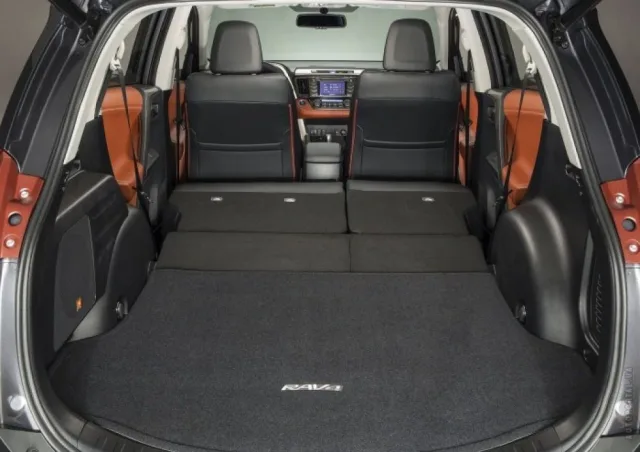
European and American versions of the RAV4 come without a spare wheel at all. For Russia and Ukraine, a large cover was made in the trunk, raising the floor, where a full-size spare could be placed. As a result, the originally low loading floor became noticeably higher. The standard trunk volume of 547 liters decreased to 506 liters. The included cargo net with struts becomes useless as it can only be positioned in one way. Despite this, the trunk remains spacious enough for a picnic or a family trip. If needed, the rear bench can be slid forward or fully folded, providing 2079 liters of volume and a flat floor.
Engine and transmission
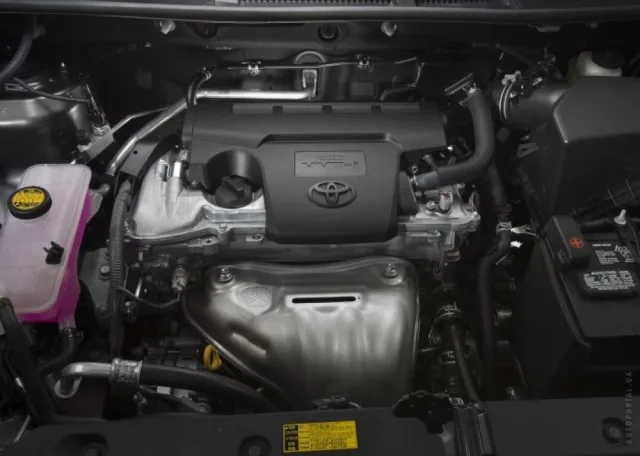
Three engines are available: 2.0L and 2.5L gasoline, and a 2.2L turbodiesel. Versions with the 2.0L and 2.2L engines have a real ground clearance of 197 mm, while the 2.5L version has 165 mm. The clearance was not deliberately lowered: its front overhang is as high (230 mm) as other modifications, but a poorly positioned exhaust system hangs along the entire underbody, reducing actual clearance.
Fuel consumption is quite acceptable. The diesel with automatic transmission consumes 8.5 L in the city and 5.5 L on the highway; with manual transmission, 7 and 5 L respectively. The 2.5L version (180 hp) with automatic and all-wheel drive averages 12–13 L in the city and 8.5–9 L on the highway. The 2.0L all-wheel-drive 145-hp version with CVT consumes up to 11 L in the city and about 7.5–8 L on the highway.
On the road, the RAV4 behaves decently, holds the road well, but body roll and slight lateral sway are noticeable in corners. Compared to competitors, these indicators are within normal limits. When switching from a passenger car, you'll need to get used to this crossover behavior. The "Eco" and "Sport" modes don't add much meaning. In "Eco" mode, consumption is slightly lower than without it, and aerodynamics are slightly worse—in city conditions, it probably makes sense to use it, as the difference in responsiveness is unnoticeable, but savings are tangible. On the highway, standard mode is sufficient. Switching to "Sport" makes the steering sharper and the transmission shifts later, but the difference in dynamics is minimal, while consumption noticeably increases.
Safety
The new RAV4 received 5 stars according to EuroNCAP and 89 points out of 100 for adult occupant protection. However, the 2013 model year RAV4 failed the stringent test by the American Insurance Institute for Highway Safety—a collision with a non-deformable barrier at 60 km/h with 25% overlap. The result was similar to the Camry: the passenger compartment failed, and the steering wheel and pedal assembly shifted significantly into the cabin, leading to a high probability of leg injuries.
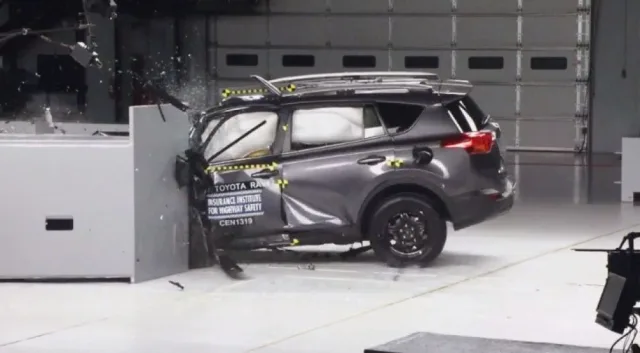
However, the RAV4 should not be considered unsafe—most of its competitors also failed this test, including the Volkswagen Tiguan, Ford Kuga, Honda CR-V, Kia Sportage, Hyundai ix35, and even the BMW X1.
Features
The first two generations of the RAV4 had decent off-road capabilities, but the new RAV has moved away from that. The drive here is on-demand with the possibility of forced locking and torque distribution 50/50 at speeds up to 40 km/h. This allows driving on light off-road terrain. If you get stuck in mud, the lock won't help—the clutch will quickly overheat, and the car will become front-wheel drive. Also, keep in mind the real ground clearance of the 2.5L version (165 mm vs. 197 mm for other modifications).
Popularity in Ukraine
At the end of 2013, the RAV4 not only pushed aside competitors (Nissan Qashqai, Kia Sportage, Hyundai ix35, VW Tiguan) but also significantly outperformed them.
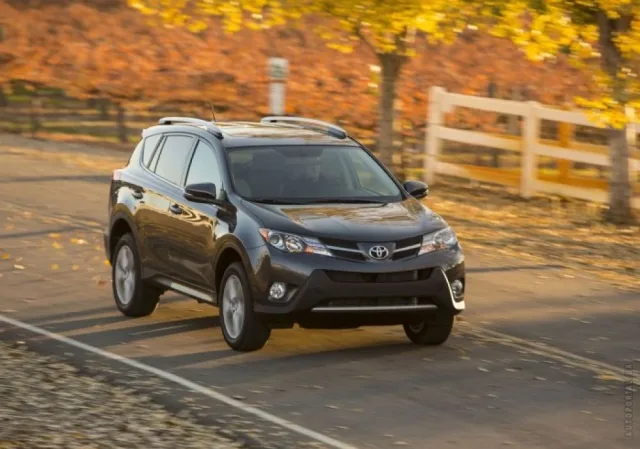
The success of the new version was determined by the diesel engine—it accounted for 66% of buyers. While the RAV4 was previously perceived as a women's car, the new generation with its angular shapes is quite suitable for men as well.
Verdict
Overall, despite its controversial appearance, the new RAV4 is a quite worthy car. It has become more spacious, handles better than its predecessor, and is an excellent option for trips into nature and driving on rough terrain.