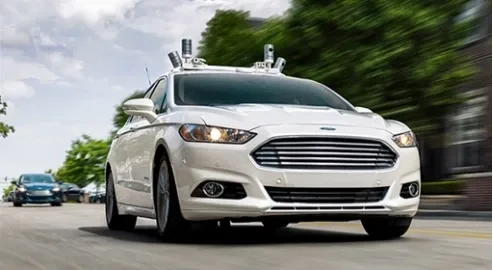
According to Motor1, self-driving cars will lose their steering wheels and pedals. It is expected that the first Ford cars without a driver will be used in mobile taxi services, including platforms such as Uber and Lyft.
"We are investing significant resources in creating autonomous vehicles that can improve road safety and help solve social and environmental challenges for many people," shared Ford CEO Mark Fields.
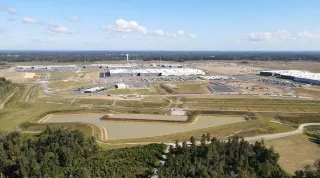
Currently, the company is testing its own self-driving cars. For this, Fusion models without a driver are used. They are equipped with front cameras, radar, and ultrasonic sensors. In addition, each car has received four lidars. Testing is conducted at the dedicated Mcity site, located at the University of Michigan. For experiments with self-driving cars, a reduced-scale city was built on an area of 13 hectares. The zone is divided into several districts, where standard road conditions are recreated, intricate interchanges with overpasses are constructed, signs are placed, and road closures are simulated. The road environment in Mcity is as close to real as possible: in some places, the markings are worn out, and signs are damaged by markers.
For navigation, self-driving cars rely on detailed 3D maps, which indicate the type of road, markings, geographic coordinates, terrain, and key objects — signs, buildings, trees. Lidars scan the space using infrared beams to record the car's exact location on the road in real time. The sensors produce 2.8 million laser reflections every second, providing high-precision scanning of the surrounding environment.