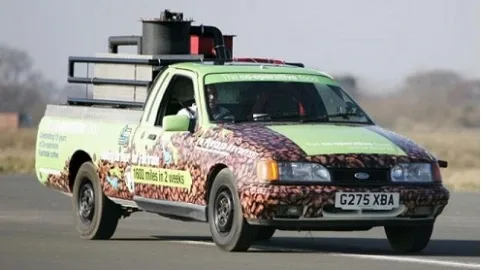
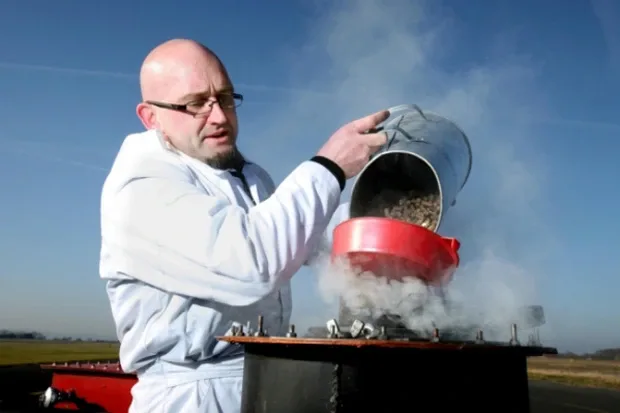
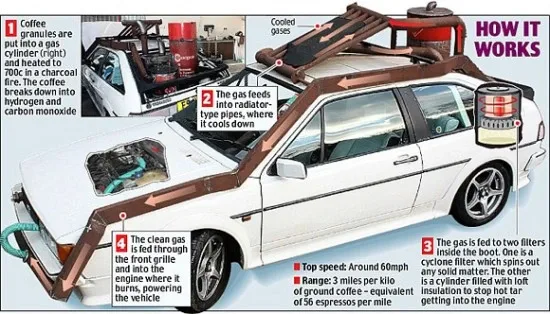
The fuel production process is based on treating coffee waste with an organic solvent. The resulting product undergoes a chemical reaction of exchanging structural elements of fats, after which biofuel is extracted.
The developers conducted tests with various coffee varieties and found that the origin of the raw material practically does not affect the result.
According to scientists, from eight billion kilograms of coffee, which is how much is produced annually in the world, up to 1.6 billion liters of biofuel can be made.
If we assess the figures more down-to-earth, each small coffee shop provides waste for making two liters of fuel per year. Within one point, this is not much, but on a global scale, it results in an impressive number. It remains only to work out the technology for collecting waste.
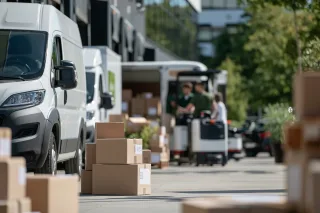
According to the proposed scheme, fuel could be produced in small batches for refueling delivery vehicles belonging directly to coffee shop chains. It is these cars that could collect waste from establishments and deliver it to a processing plant. There, the fuel itself would be produced on an industrial scale.