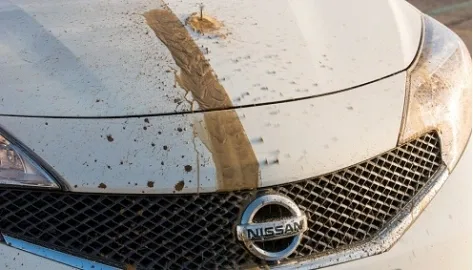
A body treated with such compounds has amazing oleophobic and hydrophobic properties. Moreover, while water-repellent properties are easier to achieve, greasy dirt poses much more of a problem. Regular car polishes are not quite what Nissan specialists are aiming for. They need to be reapplied periodically, and they don't last long. At most, for three or four car washes. In the best case, for two or three months.
Ultra-Ever Dry works somewhat differently. A thin layer of air is created between the paintwork and dirt, preventing them from coming into contact. Accordingly, nothing stays on a surface treated in this way.
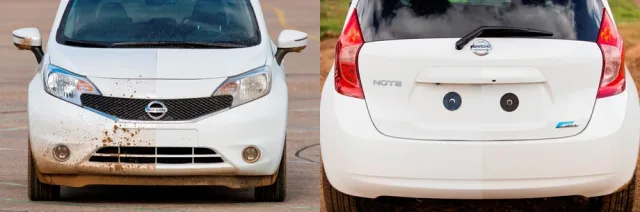
Interestingly, Nissan is using and testing not its own development, but technology from UltraTech International. The task is to introduce it at the production stage. Final conclusions have not yet been made, and there is no talk yet of extending Ultra-Ever Dry to standard Nissan cars. But it is quite possible that it will be included in the after-sales service package.
Now and in the near future, Nissan specialists plan to test Ultra-Ever Dry in a wide variety of vehicle operating conditions.
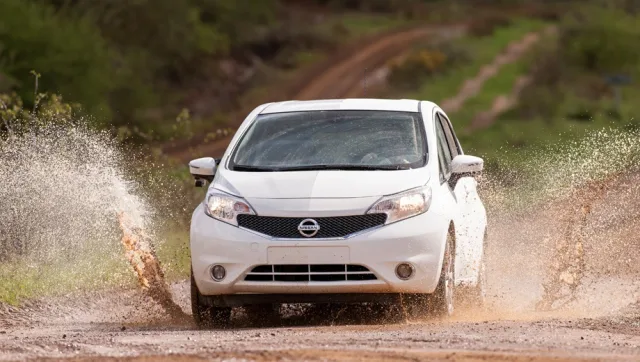
The substance will be applied to body panels in a regular paint booth, using a technology similar to applying standard automotive enamel.
Recall that back in 2005, Nissan, together with the University of Tokyo and Advanced Softmaterials, developed a paint capable of self-healing. Various minor scuffs and scratches disappear under the influence of temperatures up to 60-80 degrees. Currently, such paint is applied to the bodies of some Nissan and Infiniti models in serial production.
The self-healing material is called Scratch Guard Coat. In the image below, you can see a section of the hood with scratches, and the same section a week later. The restoration process can be accelerated by pouring hot water over the surface.

All that remains is to wait for the Ultra-Ever Dry technology to pass all necessary tests and be introduced into production on the company's assembly lines.