

The Japanese executive sedan Mitsubishi Debonair of the first generation has appeared at the "Faeton" museum in Zaporizhzhia. The car from the 1960s stands out for its unusual door hinge placement. At the time, the model was created for the domestic market of Japan, where it competed with the Toyota Crown and Nissan Cedric. This is reported by AC Garage News.
The unusual doors of the Mitsubishi Debonair open in the opposite direction
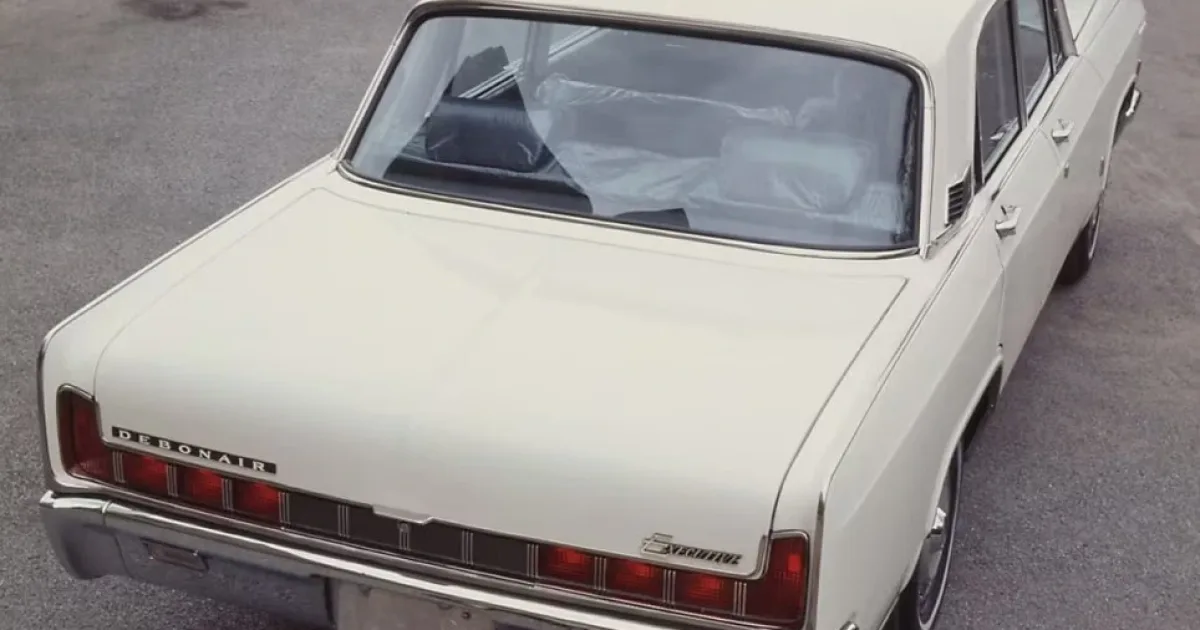
The main feature of the museum's Mitsubishi Debonair is hidden in the design of the rear doors. Their hinges are located at the rear, so the doors open toward the front ones rather than in the same direction as them.
This layout provides a wide opening for passengers to get in. It is precisely this feature that has been preserved by the Mitsubishi Debonair that has joined the exhibition of the Zaporizhzhia museum.
The exterior of the sedan was designed by Hans Bretzner, a former General Motors designer. In its styling, the Mitsubishi Debonair resembled American cars of that era, in particular the Lincoln Continental.
The Japanese Mitsubishi sedan was produced for 22 years
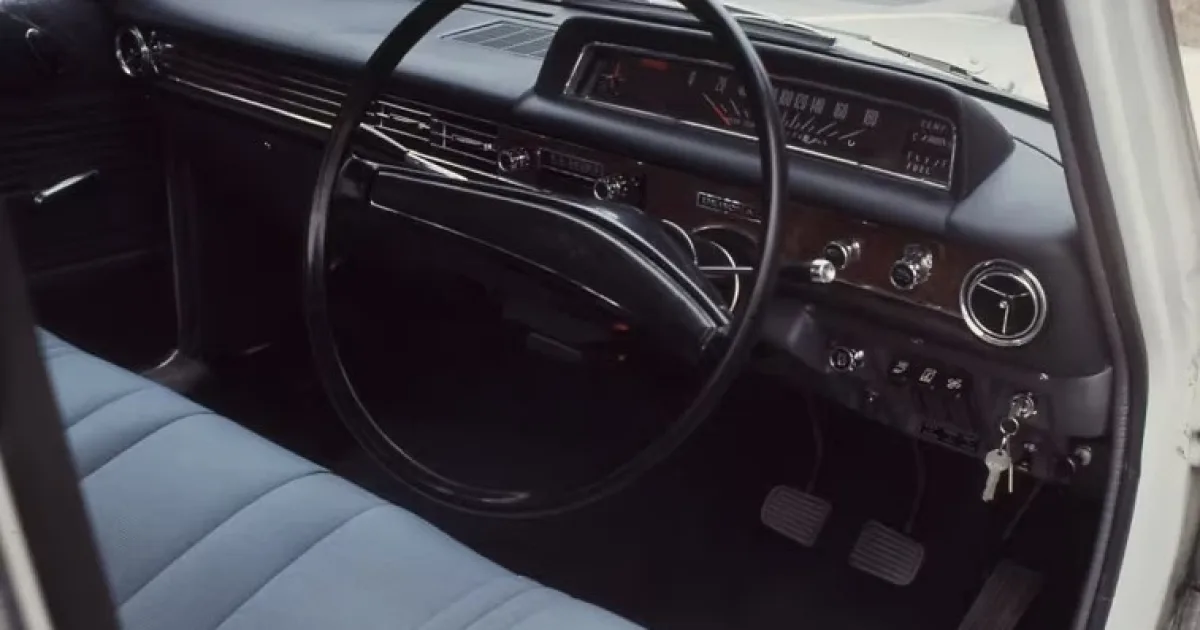
The Mitsubishi Debonair debuted in 1964. The body length of the first-generation A30 was 4670 mm, and the wheelbase was 2690 mm. The model had rear-wheel drive and was offered with a manual or automatic transmission.
Initially, the Mitsubishi Debonair was equipped with an inline six-cylinder KE64 petrol engine of 2.0 liters. It developed 105 hp and allowed the sedan to reach a top speed of 155 km/h.
The car was offered with a four-speed manual gearbox or a three-speed Borg-Warner automatic. Later, a six-cylinder 2.0 6G34 and a four-cylinder 2.6-liter unit appeared in the engine range.
The first generation of the Mitsubishi Debonair was produced until 1986 without a radical update of its exterior. After 22 years of production, it was replaced by the Debonair V. The model itself remained in the Mitsubishi lineup until the end of the 1990s.