The Lexus ES sedan was named the winner in the "Large Family Car" category. Based on test results, the new model scored 91% for driver and front passenger safety, 87% for child protection, 90% for pedestrians, and 77% for the performance of electronic assistants.
During crash tests, experts identified a high risk of serious lumbar injuries for rear-seat passengers in a full frontal impact. Electronic systems, including autonomous braking, performed adequately, but the report noted that the lane-keeping system fails to handle complex situations. Additionally, the Lexus ES also took first place in the "Hybrids and Electric Vehicles" category.
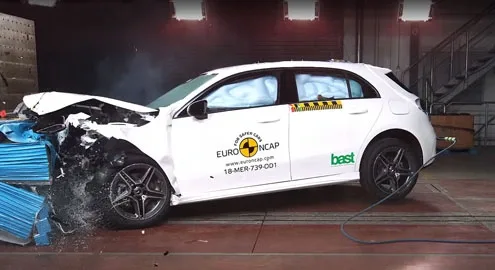
Among compact family cars, the Mercedes-Benz A-Class hatchback came out on top. The model passed all tests almost flawlessly, with the only criticism being the mediocre performance of the lane-keeping system due to shortcomings in the blind-spot monitoring function. Driver and adult passenger protection was rated at 96%, children at 91%, pedestrians and cyclists at 92%, and the effectiveness of assistance systems at 75%.
The title of the safest large crossover went to the compact SUV Hyundai Nexo. During tests, it was found that in a collision with a deformable barrier, the driver's legs are insufficiently protected, and in a rear-end collision, serious whiplash injuries are possible. The Nexo scored 94% for driver and adult passenger safety, 87% for children, 67% for pedestrians and cyclists, and 80% for electronics performance.