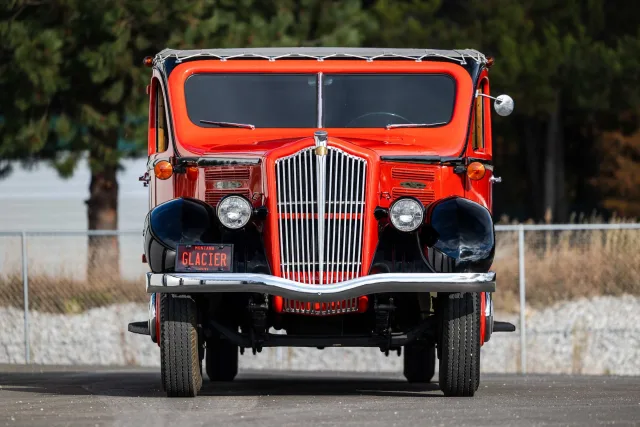
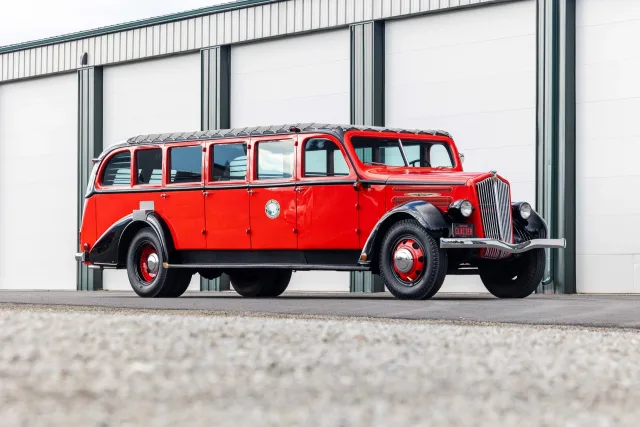
The White 706 was produced from 1935 to 1939, and during that entire period, only 500 such vehicles came off the assembly line. These buses were created exclusively for tourist transportation in the largest national parks of the USA, where they quickly became a recognizable symbol of that era.
Ukrainian roots of the White 706 design
The author of the elegant exterior of the White 706 was the talented Ukrainian artist and automotive designer Oleksiy Sakhnovsky. His mother came from the family of the famous philanthropist Tereshchenko, and his father was a descendant of Mykola Gogol and Pavlo Polubotok. After the revolutionary events of 1917, Sakhnovsky left Kyiv, moved to Belgium, and later settled in the USA, where he took up automotive design.
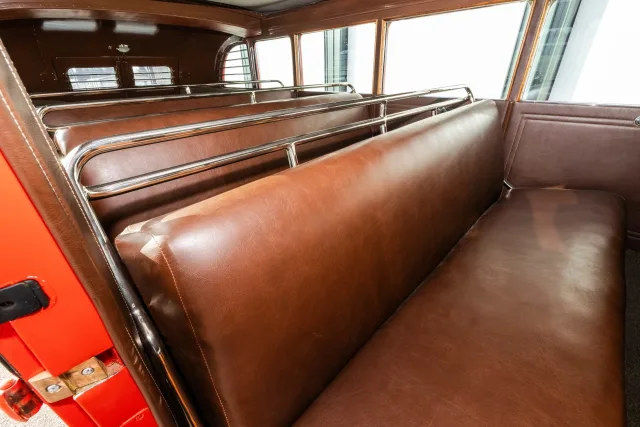
He became famous for his work with brands such as Packard, Cord, and Austin, creating cars in the spirit of aerodynamic modernism — a trend that was just gaining momentum in the 30s. The White 706 also received soft streamlined shapes and several practical solutions: a folding roof and four doors for passengers on the right side. The interior accommodated 14 seats.
 Under the hood of the White 706, a 5.2-liter 6-cylinder engine with 94 horsepower is installed, which works together with a 4-speed manual transmission. The bus accelerates to a maximum of 72 km/h.
This example, put up for auction, previously carried tourists in Glacier National Park in Montana. Some of the buses in this series are still used in the park, but most of them have already received more modern engines. Instead, this White 706 has been preserved in completely factory condition. After a recent restoration, it has covered only 400 kilometers.