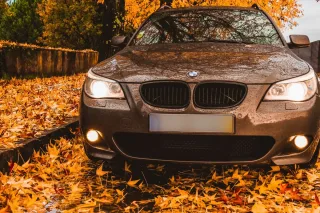
In particular, for the experiment, experts took cars of black and white colors, after which they placed them on scorching asphalt (at an air temperature of 28 degrees). After some time (20 minutes), they measured the temperature inside the cabin, which did not reveal a significant difference in heat absorption depending on the car's color.
At the same time, ADAC came to several other interesting conclusions. It turned out that even with slightly open windows, the car heats up under the sun's rays exactly the same as with closed ones. So, at the same 28 degrees, after 10 minutes of parking with slightly open windows, the car's interior heated up to 36 degrees, and after 20 minutes – to 42 degrees. In the case of closed windows, the temperature on board rose to 38 and 45 degrees (after 10 and 20 minutes, respectively).
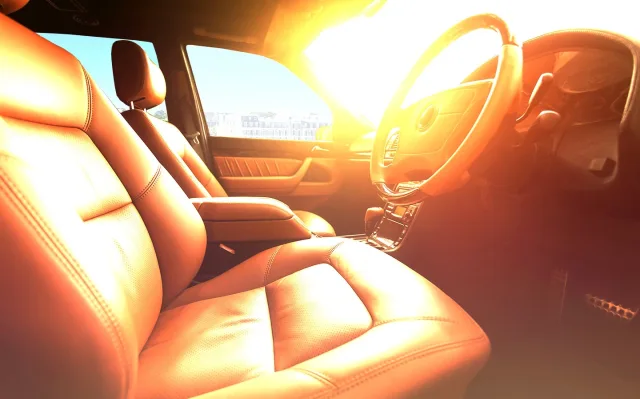
As you can see, there is still a difference, but it is small. At the same time, in both cases, the temperature is not just uncomfortable, but dangerous to human health and life. And after an hour of the car being under the sun's rays, the interior warmed up to a serious 50 degrees!
Furthermore, ADAC established that window tinting is ineffective as a means of combating the sun. At the same time, the degree of heating is influenced by the size of the windows (the larger their area, the more heat they absorb), the angle of the sun's incidence, and the color of the interior.
Finally, the Germans debunked another myth. Many drivers believe that behind car windows they are well protected from UV radiation. But this is only partly true. Yes, the windshield maximally protects against UV-A and UV-B radiation, but the side windows let through UV-A radiation. This, by the way, is the most dangerous – it can cause premature skin aging, and in some cases even lead to skin cancer.