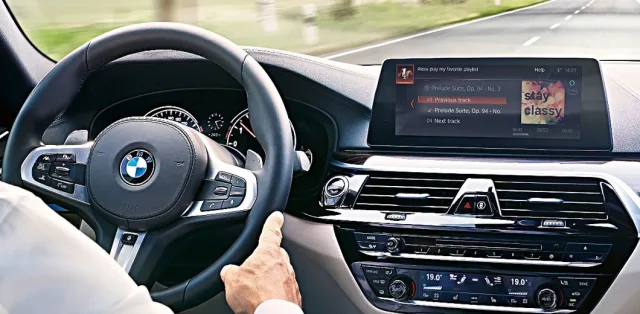
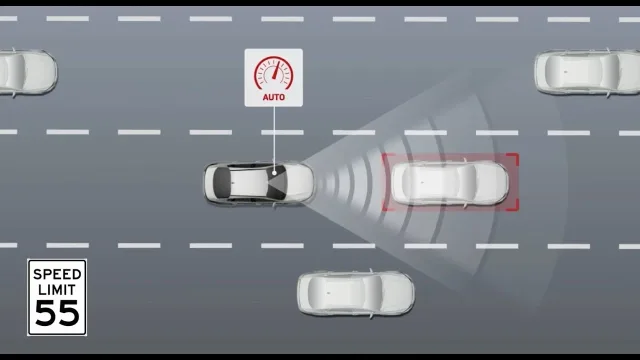
Almost all car brands today offer various systems that can automatically control gas, braking, and steering on certain road sections (automatic braking functions, lane keeping assist, adaptive cruise control, etc.). Such assistants are positioned by manufacturers as means that help the driver on the road, make driving more convenient, and most importantly, safer. But the Swedes have found that not everything is so clear-cut.
At the VTI institute, they organized a small "run" from the city of Linköping to the city of Grenna (distance – almost 90 km, travel time – just over 1 hour). It involved 80 drivers, and the "runs" themselves were conducted during the day and at night. During the trips, scientists monitored the condition of each participant in the experiment to determine how driving combined with electronic assistants affects driver fatigue depending on the time of day. To do this, they measured heart rate, pupil size, blink frequency, etc. As a safety net, each driver had an accompanying person who, in case of an unforeseen situation, was supposed to take control (but fortunately, there were no incidents).
As a result, it turned out that during the day, assistance systems did not have a significant impact on driver fatigue. But at night – very much so. Due to accumulated fatigue, drivers allowed themselves to relax and, to some extent, lose vigilance.
Overall, this study showed that technology is good, but the driver must always remain focused, even when the most advanced assistance systems are on board, as situations often arise when a person urgently needs to intervene in the car's operation (a number of accidents involving Tesla's autopilot have shown this clearly). In this regard, the Swedes emphasize that along with such assistants, the car's equipment must include driver fatigue monitoring.