
Real range of electric vehicles
The testing principle was as follows – take each car with a fully charged battery and drive until it “runs out” and turns off. After that, the data obtained on the distance traveled was compared with the “official” range according to the WLTP cycle (Worldwide Harmonized Light Vehicles Test Procedure).
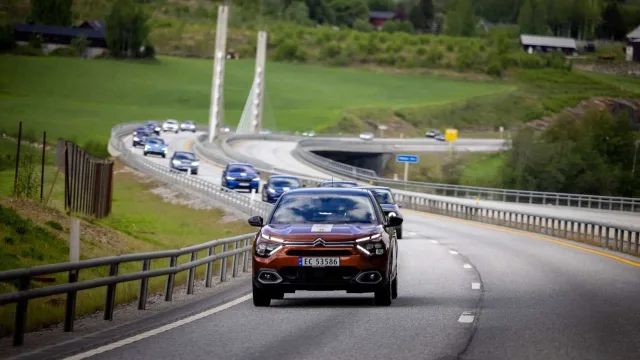
At the same time, the following mandatory conditions were observed: each car drove along the same route on the same day with the same climate control/air conditioning settings – so that the conditions were equal for everyone. The test route ran through the city, highways, dirt roads, and even mountain roads. The speed on the highway varied from 60 to 110 km/h.
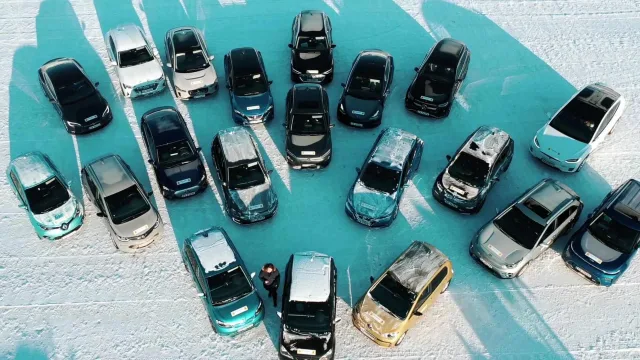
The winter test of electric vehicles was carried out at temperatures from 3 to –6 degrees Celsius, with 20 electric vehicles participating. The summer test took place at 20-25 degrees of heat, and 21 electric vehicles were already declared in it.
Real range of electric vehicles (winter)
Cold weather significantly affects the battery charge level of electric vehicles, and the NAF test demonstrated this clearly. The average loss of range across all “electrics” was 18.5%, and not a single car reached the declared real range. The best result was shown by the Hyundai Kona Electric crossover – it drove only 9% less than the WLTP method promised (405 km instead of 449 km). But the worst was the Opel Ampera-e hatchback (also known as the Chevrolet Bolt) – its real range was only 70% of the declared one (297 km instead of 423 km).
And what about Tesla? The result of the “Americans” also turned out to be far from ideal. In particular, the brand's flagship – Model S Long Range – actually drove 470 km instead of the promised 610 km.
Real range of electric vehicles (summer)
But warm weather is a completely different matter! Of the 21 tested electric vehicles, only three cars drove less than declared, while the rest exceeded their official range.
The BMW iX3 crossover made the greatest impression on the testers – it covered 556.2 km, while its WLTP range is 432 km. That is, after the theoretical discharge of the battery, the “German” stretched another 106 km (20%)!
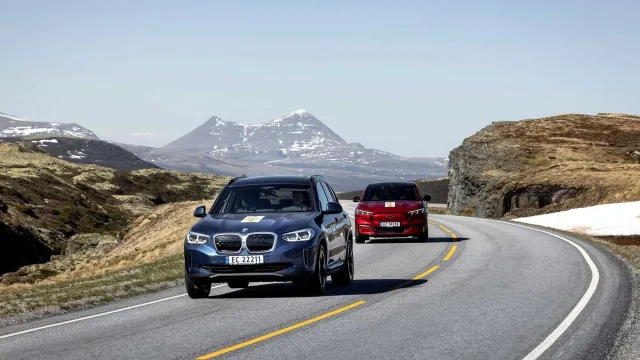
The greatest autonomy (first place in range) was demonstrated by the Tesla Model 3 Long Range sedan – an impressive 654.9 km with 614 km declared. In second place was the Ford Mustang Mach-E Long Range RWD crossover – 617.9 km (only 27 km less than Tesla) instead of 610 according to the passport, and the top three was closed by the Volkswagen ID.3 Pro S hatchback, which managed to “hit” 564 km, while the factory estimates its range at 539 km.
As for the three outsiders, they included the Polestar 2, Citroen e-C4, and Xpeng G3. Even in summer, they managed not to reach the official figures (drove less than declared by 3, 5, and 12 km, respectively).
Real range of electric vehicles (table)
Car: range in summer/range in winter/range according to WLTP cycle (km)
1. Tesla Model 3 Long Range AWD 2021: 654.9/514.8/614
2. Ford Mustang Mach-e Long Range RWD: 617.9/502.5/610
3. VW ID.3 Pro S: 564/n/a/539
4. BMW iX3: 556.2/432/450
5. Ford Mustang Mach-e Long Range AWD: 551.9/430/540
6. Hyundai Kona 64 kWh: 537/n/a/484
7. VW ID.4 1st Edition: 532/n/a/487
8. Audi e-tron GT: 528.1/n/a/468
9. Skoda Enyaq iV 80: 522/n/a/520
10. Hyundai Ioniq 5: 502/n/a/460
11. Polestar 2: 467/344/470
12. Mercedes-Benz EQA: 451/n/a/417
13. Tesla Model 3 Standard Range: 454.4/n/a/448
14. Volvo XC40 Recharge: 442.9/332/417
15. Xpeng G3: 438.9/341.8/451
16. VW ID.3: 421/340/418
17. Citroen e-C4: 345/261/350
18. Opel Mokka-e: 332.4/n/a/324
19. Fiat 500 electric: 307.8/230.2/298
20. Honda e: 236.2/162/210
21. Mazda MX-30: 219.6/165/200