Ford EcoBoost 1.0 — “International Engine of the Year 2012”
STUTTGART, Germany, June 14, 2012 — Ford Motor Company's new 1.0-liter EcoBoost engine, which began appearing this year on Ford Focus models sold in Europe, has been named “International Engine of the Year 2012.”
This compact three-cylinder unit also won in two other award categories: “Best New Engine” and “Best Engine Under 1 Liter.” The “International Engine of the Year” competition, founded by “Engine Technology International” magazine, determines winners based on votes from 76 journalists from 35 countries.
For Ford, this is the first “International Engine of the Year” title in the award's 13-year history. Moreover, the 1.0-liter EcoBoost scored a record number of points in the competition's history.
“When we started developing this engine, we set ambitious goals for ourselves,” said Joe Bakaj, Ford's vice president of engine development. “We aimed to achieve unprecedented fuel efficiency, excellent dynamic performance, minimal noise, and impeccable engineering in such a compact three-cylinder unit.”
“Our team managed to solve this complex task thanks to an unconventional innovative approach,” Bakaj added. “This engine will change the perception of gasoline engines worldwide.”
“The victory of a truly outstanding engine is fully deserved,” commented Dean Slavnich, chairman of the award jury and editor of “Engine Technology International.”
The miniature power unit, whose dimensions are comparable to a sheet of A4 paper, was developed at Ford's technical centers in Danton, UK, and Merkenich, Germany. Engine production is established at the company's plants in Craiova, Romania, and Cologne, Germany.
The 1.0-liter EcoBoost design uses low-inertia turbochargers that provide rapid power build-up when the throttle opens at low revs. These turbochargers can spin up to 248,000 rpm.
The key technological features of the 1.0-liter EcoBoost include:
- An exhaust manifold integrated into the cylinder head, which reduces exhaust gas temperature and allows the engine to maintain an optimal air-fuel mixture ratio across a wider rev range;
- Using a cast-iron cylinder block instead of the traditional aluminum one reduces the energy needed to warm up the engine by 50% and lowers fuel consumption;
- Both drive belts of the engine are located in an oil bath, making the unit quieter and more efficient;
- Instead of a massive balance shaft, Ford engineers deliberately altered the balancing of the flywheel and pulley, directing vibrations in a less sensitive direction, which reduces noise and vibrations.
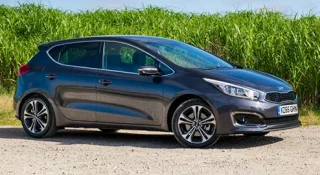
The 1.0-liter EcoBoost debuted this year on European Ford Focus models. Later this year, it will appear on the C-MAX and B-MAX models. And starting next year, the engine will be available in Ford vehicles in the US, Asia-Pacific, and Africa markets.
The Ford Focus with the 100 PS 1.0-liter EcoBoost engine demonstrates best-in-class fuel consumption figures of 4.8 l/100 km (58.9 mpg)* and CO₂ emissions of 109 g/km. The 125 PS version consumes 5.0 l/100 km (56.5 mpg) with emissions of 114 g/km.
During the first month of sales in Europe, over 4,700 customers chose the Focus with the 1.0-liter EcoBoost engine, accounting for approximately a quarter of all orders for this model across Ford's 19 European markets.
Ford of Europe plans to triple the annual production volume of vehicles with highly efficient EcoBoost gasoline engines — from 141,000 units in 2011 to about 480,000 by 2015. The company forecasts that over 300,000 of these vehicles will be equipped with the 1.0-liter engine.
The jury of the “International Engine of the Year” award, consisting of 76 automotive journalists from 35 countries, evaluates engines' driving qualities, performance, fuel efficiency, engineering excellence, and use of advanced technologies. The 1.0-liter EcoBoost received the highest scores from judges in the competition's history.
“The fact that a three-cylinder engine handles driving a Ford Focus so easily indicates a very bright future for internal combustion engines,” commented Dean Slavnich, editor of “Engine Technology International.” “Power, drivability, and fuel efficiency are just part of this unit's advantages. Bravo, Ford!”
Other jury members also expressed admiration for the new engine:
“If you consider downsizing as a promising direction, there is currently no better embodiment of this idea. It provides the same power as the naturally aspirated 1.6-liter engine it replaces, but is significantly more responsive,” noted British journalist John Simister.
“This high-tech three-cylinder turbo with excellent low-end torque offers the characteristics of a small turbodiesel, but without its inherent noise and vibrations,” added Christophe Congrégat from France's “L’automobile Magazine.”
In the Russian market, the EcoBoost engine is available in a 2.0-liter version with 200 and 240 PS, paired with PowerShift transmission. It is available for order in top trim levels of C-D segment models: Mondeo, S-Max, and Galaxy.
* Fuel consumption and CO₂ emissions figures in g/km were obtained during official tests according to EU Directive 93/116/EC. Fuel economy figures are provided in accordance with European Directive 80/1268/EEC and differ from test results conducted in other regions of the world.
About Ford Motor Company
Ford Motor Company is a global leader in the automotive industry, manufacturing and selling vehicles on six continents. The company's headquarters is located in Dearborn, Michigan, USA. 70 plants are located worldwide. The number of employees is about 164,000. The company represents the Ford and Lincoln vehicle brands. Financial services are provided through Ford Motor Credit Company. More information about the company is available at http://corporate.ford.com.
Ford of Europe manufactures, sells, and services Ford-brand vehicles in 51 markets. The company employs more than 66,000 people. In addition to Ford Motor Credit Company, Ford of Europe includes the Ford Customer Service Division and 22 manufacturing facilities, including joint ventures. The first Ford vehicles appeared in Europe in 1903 — the year the company was founded. European production began in 1911.