Advertising
Lada Niva: prices and specifications
4 generations Country of origin: Russia

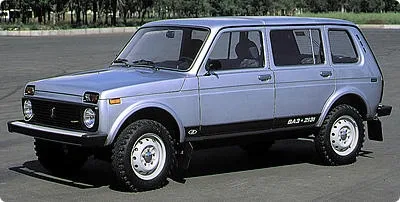
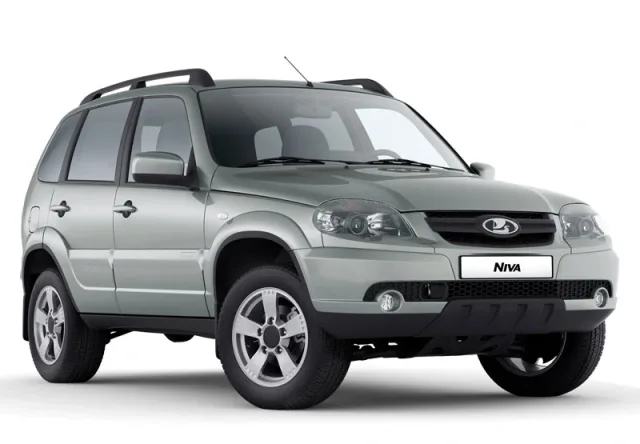
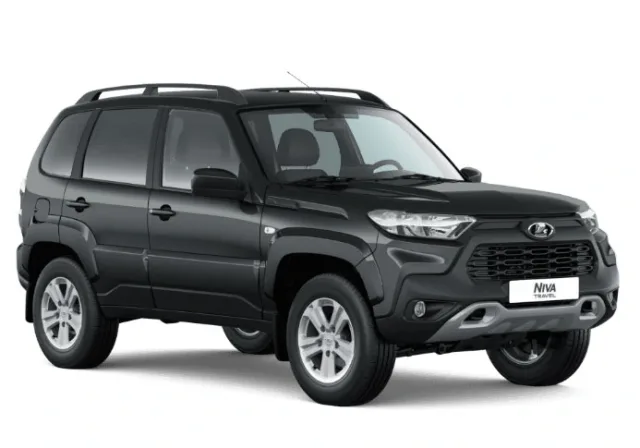
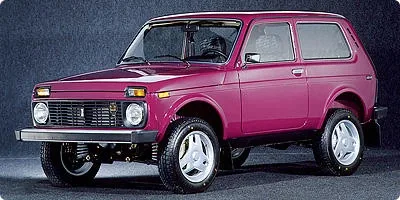
The first all-wheel drive vehicle of the Volga Automobile Plant was the model 2121, production of which began in 1977. This compact SUV had a unibody construction. Over its long history, many versions appeared: both with a short wheelbase (21214, 21213) and with an extended one. Other vehicles were also created on the basis of the Niva, including the Chevrolet Niva.
Over the years, the car was equipped with gasoline engines ranging from 1.3 to 1.7 liters — carburetor and injection. Some modifications, such as the 21215, received a Peugeot diesel engine. The gearbox is manual, five-speed, paired with a two-speed transfer case.
History
The VAZ-2121, known as the Niva, is considered the world's first compact SUV with a unibody body and permanent all-wheel drive. Serial production started on April 5, 1977.
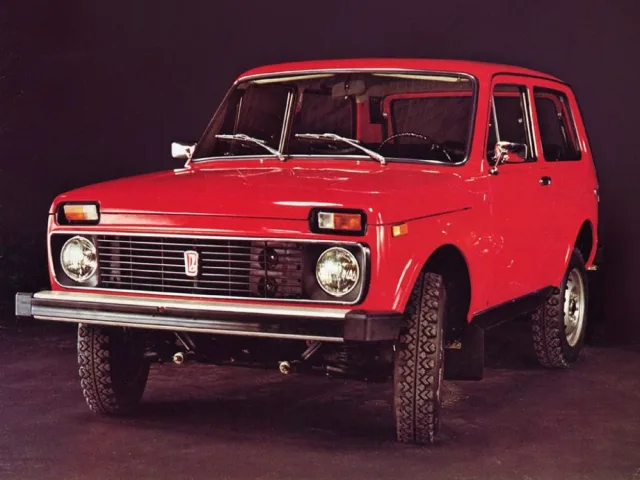
The LADA 2121 is the most popular Soviet (later Russian) car in the world. It is known in almost every country, and local fan clubs exist almost everywhere.
Initially, VAZ engineers were tasked with creating a compact city car, which explains the model's dimensions. However, the plant management changed the concept, turning the microcar into a small SUV. Despite the unexpected turn, the idea turned out to be successful. Compared to other all-wheel drive vehicles of the time, the Niva was ultra-compact and light, which improved its off-road capability. The high ground clearance also helped to navigate poor roads. The main feature was that the car outwardly remained an ordinary passenger car. Unification with the popular VAZ-2106 model reduced costs and simplified access to spare parts.
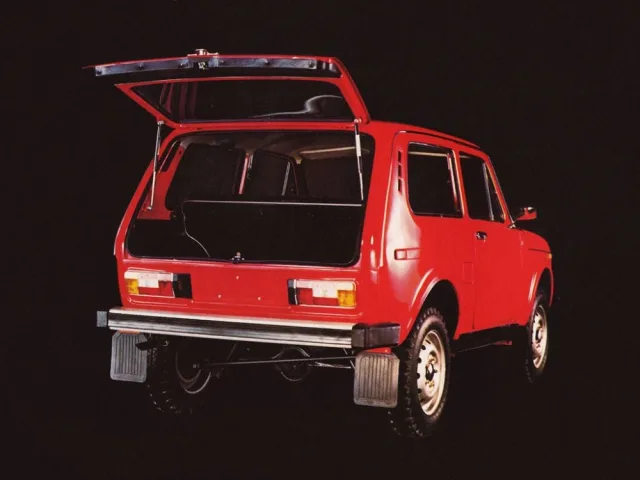
Most SUVs of the 70s had a part-time four-wheel drive, ladder frame, dependent suspension, and simple bodies. When the public was presented with the VAZ-2121 with permanent all-wheel drive, independent front suspension, all-metal sealed body, and low price, it caused a sensation. Later, many well-known brands began to develop similar models.
In 1978, at the Brno exhibition, the VAZ-2121 received a gold medal and was recognized as the best in its class. In 1980, it won gold at the Poznań International Fair.
The Niva was in demand on the world market. A right-hand drive version was sold in the UK and even in Japan — it was the only Soviet car on the Japanese market. There was an export diesel version with a Peugeot engine. The export potential remains to this day: foreign tuning companies create convertibles, pickups, and special equipment based on the Niva, such as for snow removal.
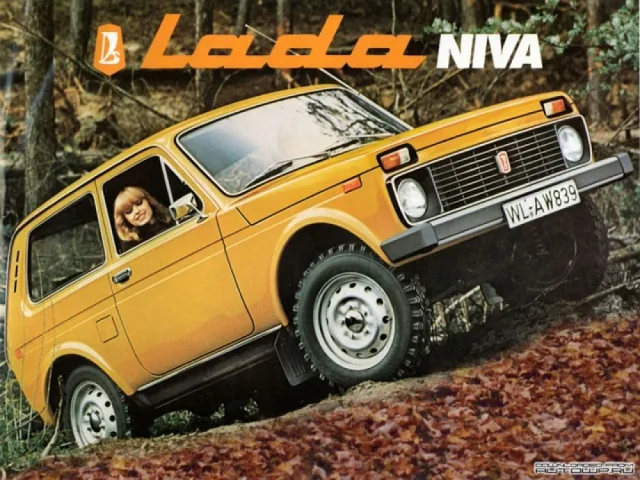
Over 35 years, 1.8 million VAZ-2121 units were produced, of which more than 500,000 were exported.
Today, the VAZ-2121 is assembled from Togliatti components in Kazakhstan and Ukraine. Previously, assembly from SKD kits was carried out in Greece and Ecuador.
The VAZ-2121 has set several world records:
- In 1998, the car climbed to the Everest base camp at an altitude of 5200 m, and in 1999 — to the Tibetan Plateau in the Himalayas, reaching 5726 m.
- In April 1998, the Niva conquered the North Pole as part of an international parachute event: it was dropped by parachute, started after landing, and successfully drove the route.
- At the Russian polar station Bellingshausen, the VAZ-2121 operated for 12 years at temperatures down to -54°C and in the complete absence of roads, covering 40,000 km.
- In 1999 and 2000, the Lada Niva Marsh snow and swamp vehicle based on the production Niva conquered the North Pole.
Modifications of the VAZ-2121:
- VAZ-2121 Niva (export name Niva 4X4) — base version with a 1.6 L (75 hp) engine and 4-speed manual. Produced from 1977 to 1993.
- VAZ-21211 (Lada Niva 1.3) — export version with VAZ-21011 engine (1.3 L, 69 hp).
- VAZ-21212 (Lada Niva 4x4) — right-hand drive version.
- VAZ-2122.600 Reka — army amphibious vehicle based on VAZ-2121 components. Did not go into production.
- VAZ-21213 — restyling with a modified rear end. Equipped with a new VAZ-21213 engine (1.7 L, 81.8 hp, 125 N·m) with Solex carburetor, contactless ignition, and aluminum radiator.
- VAZ-21214 (LADA 4x4) — modification of 21213 with VAZ-21214 engine (1.7 L, 81.8 hp, 127.5 N·m) and central injection. From 2002, the VAZ-21214-10 engine (Euro-0) with multipoint injection was installed, in 2006 — Euro-2 (21214-20), in 2008 — Euro-3 (21214-30). Since 2006, due to an agreement with the GM-AvtoVAZ joint venture, the model lost the Niva name and became LADA 4x4.
- VAZ-21215 — export diesel version with Peugeot engine. Produced from 1999 to 2007.
- VAZ-21216 — export right-hand drive version of 21213 with carburetor engine VAZ-21213.
- VAZ-21217 — export version of 21213 with VAZ-21011 engine (1.3 L).
- VAZ-2121B — armored cash-in-transit vehicle.
- VAZ-2121F — export commercial van based on VAZ-2121 and 21213.
- LADA 4x4M — modernized version of VAZ-21214, some parts from Chevrolet Niva.
Exterior
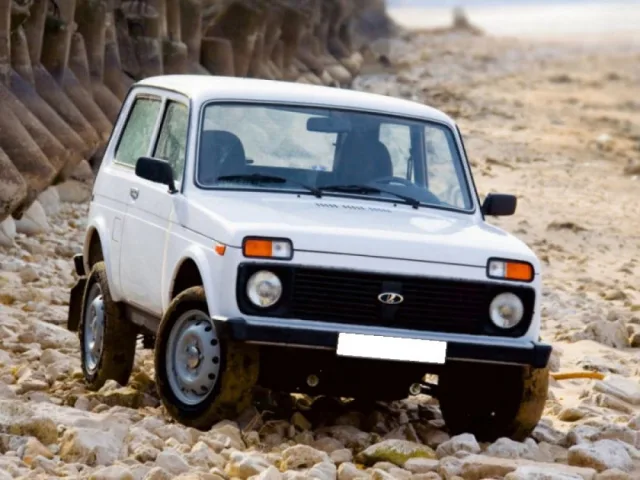
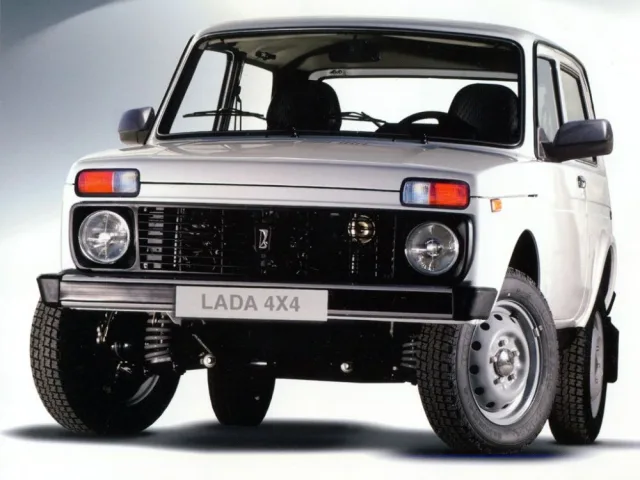
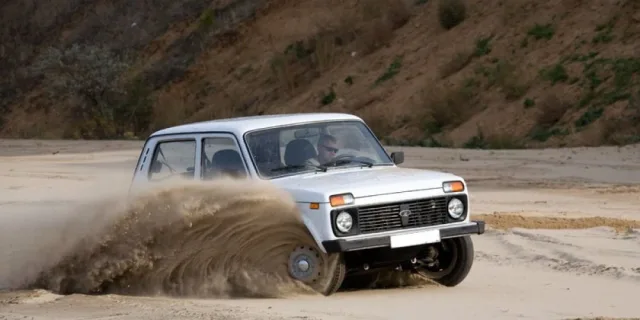
The appearance of the VAZ-2121 is familiar to everyone from childhood. The short three-door body and round headlights make it recognizable. The large ground clearance and short overhangs are noticeable. The factory narrow tall wheels look awkward, so owners often replace them with wider tires, giving the car a rugged look.
Interior
The interior will appeal only to fans of classic Soviet cars. The driving position is uncomfortable: the steering wheel is not adjustable, the driver feels like sitting with legs raised, and the steering wheel is positioned too high. Over time, you get used to it and stop noticing the discomfort.
The trim is made of unremarkable cheap plastic, the level corresponds to the Tavria or other VAZs. The dashboard is designed in the traditional VAZ style and is unified with rear-wheel drive models.
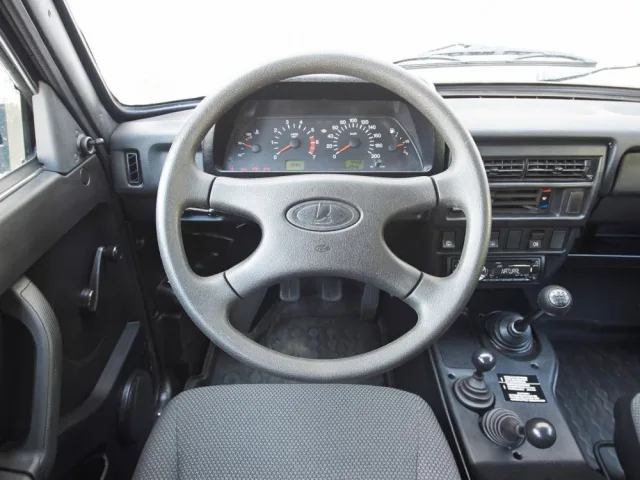
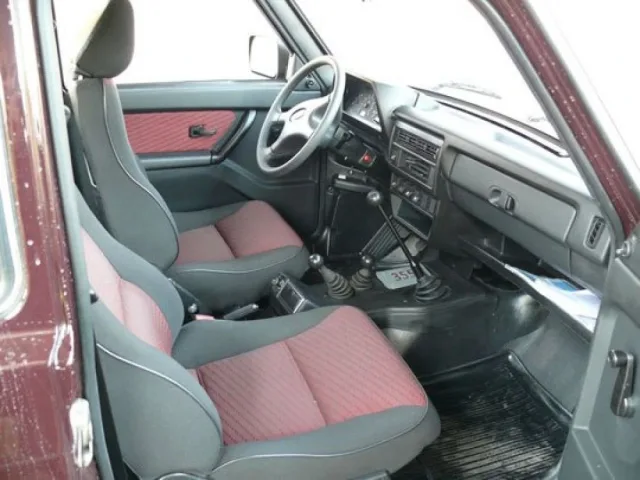
There is enough space in the front seats for both the driver and passenger.
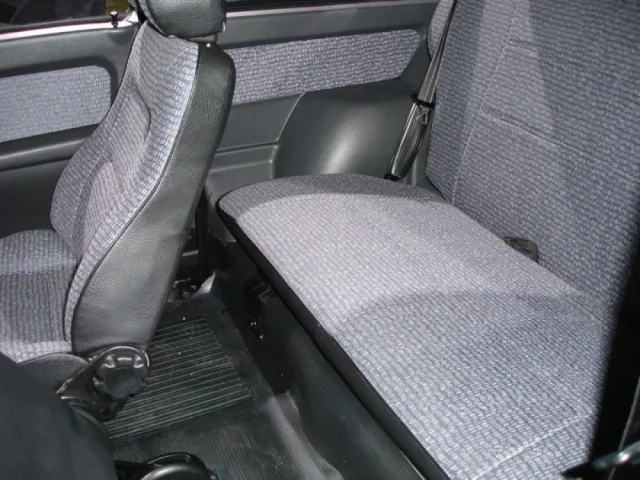
In the back row, only two passengers can sit comfortably; a third is cramped.
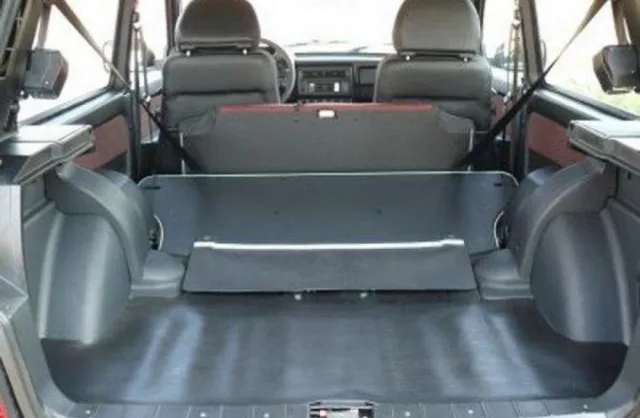
The trunk volume is one of the Niva's drawbacks; not many things will fit.
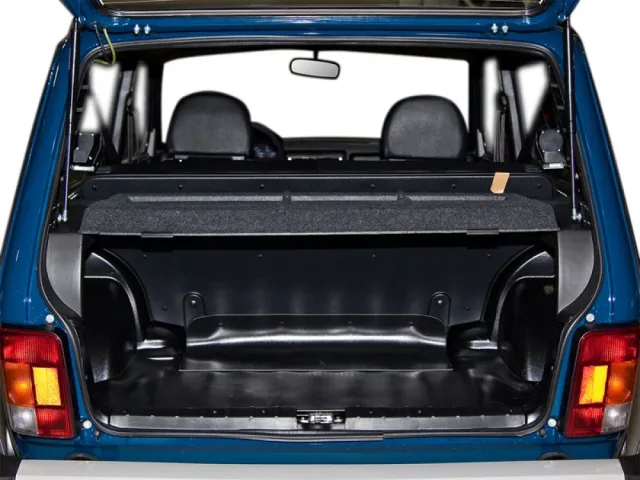
The situation is saved by the folding rear row, which increases space to an acceptable level.
Engine and Transmission
Initially, under the hood were engines from rear-wheel drive VAZs — VAZ-2106 (75 hp) and, for some markets, VAZ-21011 (69 hp). With the advent of the VAZ-21214 modification (LADA 4x4), the VAZ-21214 engine (1.7 L, 81.8 hp, 127.5 N·m) began to be installed.
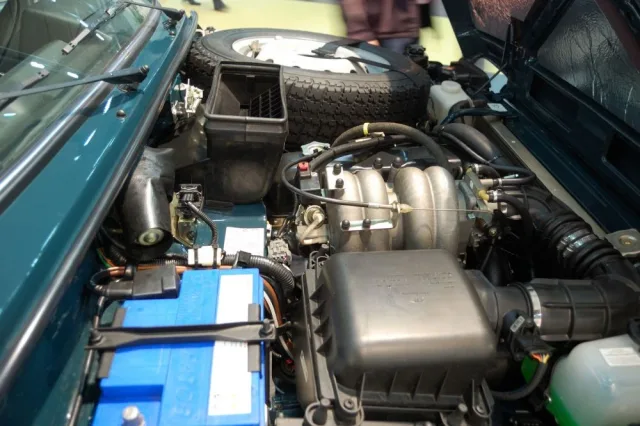
Initially, the gearbox was a four-speed manual, later replaced by a modernized five-speed. All-wheel drive is permanent, implemented through a two-speed transfer case. On hard surfaces, torque between axles is distributed by a symmetrical differential with locking capability.
Safety
The VAZ-2121 was developed in the 70s, when there were no strict passive safety requirements.
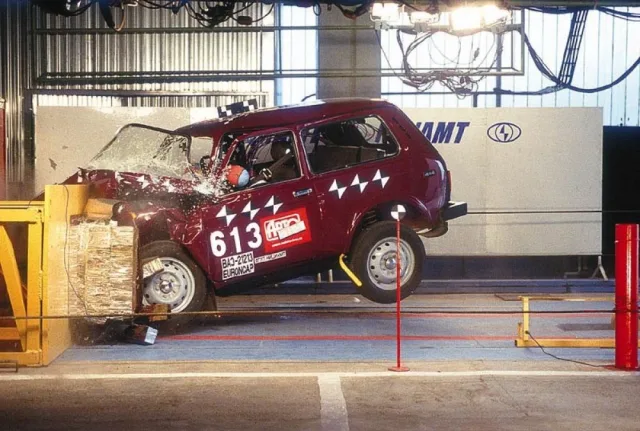
The modern Niva has been improved, but it is difficult to call it safe. The driver and passengers can only rely on decent brakes and inertia-reel seat belts.
Features
The VAZ-2121 is the most affordable all-wheel drive SUV on the market. For such money, nothing similar can be found. Unlike most crossovers, it is not a soft-roader but a full-fledged off-road vehicle capable of tackling serious off-road conditions. It is no wonder that the Niva is chosen by hunters and fishermen.
Popularity in Ukraine
The car is in demand among hunters, fishermen, and extreme sports enthusiasts on a limited budget.
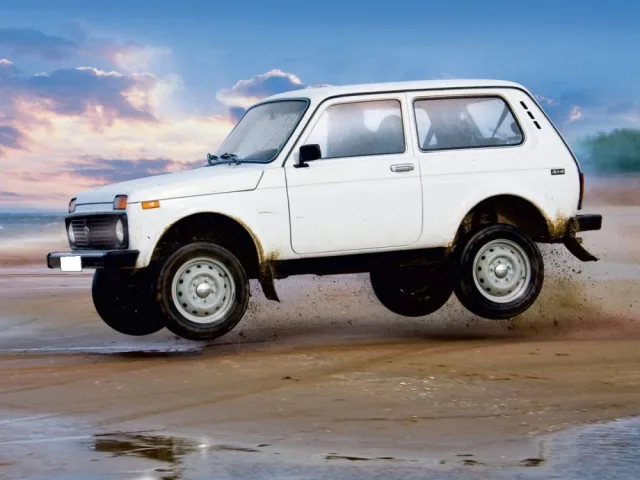
Despite the increased noise level, the Niva has earned a reputation as a reliable and unpretentious car.
Our Verdict
The best choice for those who want a serious off-road vehicle but are on a tight budget. Operation does not require large expenses: spare parts are cheap and available, and any workshop can handle repairs.