Advertising
Ford Kuga: prices and specifications
4 generations Country of origin: United States

Ford Kuga – compact crossover for Europe
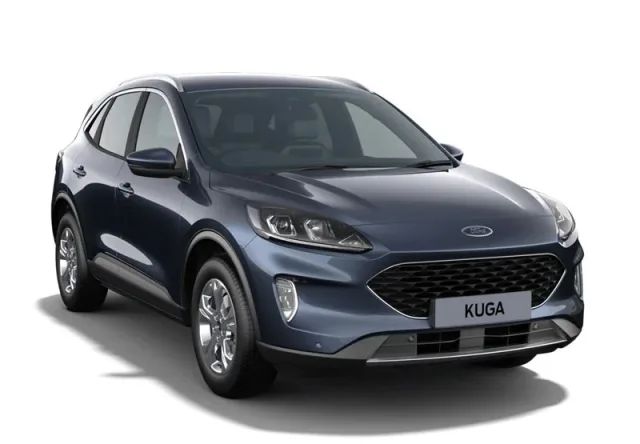
Ford Kuga is a compact crossover that the American brand developed specifically for the European market to compete with the Nissan Qashqai. The model name is derived from the similar spelling of the word Cougar (pronounced [Ku'-ga]), meaning 'cougar' — a type of puma. Interestingly, in Serbian, Montenegrin, Slovenian, and Croatian, the word Kuga translates to 'disease', but the company decided not to change the name for this region.
Work on the model began in 2005. In 2006, the Iosis X concept car was presented at the Paris Motor Show, showcasing what the future crossover would look like. However, engineers at Ford's European division needed another two years to finalize the production version.
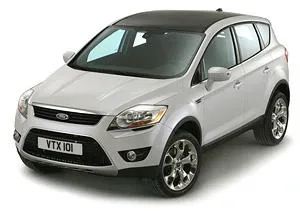
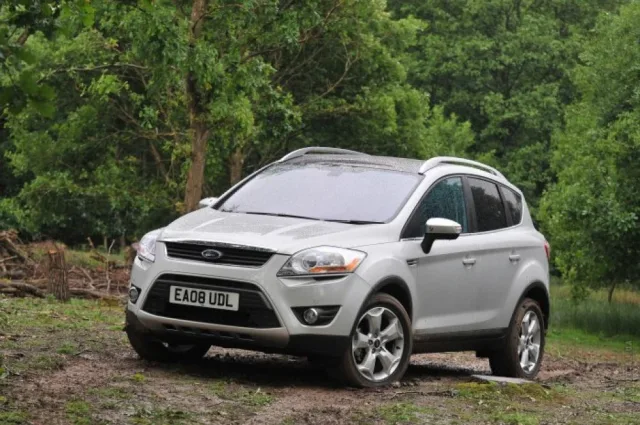
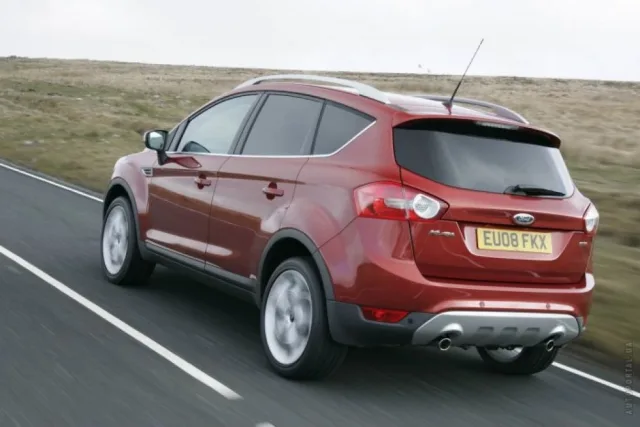
The official premiere of the first-generation Ford Kuga took place in 2008 at the Geneva Motor Show. Production was set up at Ford's plant in Saarlouis, Germany. The car was built on a modified 'C1' platform, which was already used for the Ford Focus and C-Max models.
The exterior is designed in the signature 'kinetic design' style. Among the model's features is the intelligent Haldex all-wheel drive system. In 2012, the crossover underwent a facelift: innovative systems were added, such as hands-free tailgate opening with a foot motion under the bumper, automatic parallel parking, and blind spot monitoring.
Deliveries of the Ford Kuga to Ukraine began in 2010. For the local market, two engines were offered: a 2.5-liter Duratec petrol and a 2.0-liter Duratorq diesel. The petrol engine worked only with a five-speed automatic transmission, while the diesel came with a six-speed manual or automatic. The base version was front-wheel drive, with the Haldex all-wheel drive modification offered as an option.
History
The compact crossover Kuga was developed by Ford Motor from 2006 to 2008 to conquer the European market. At the end of the first decade of the 21st century, a boom in compact, stylish, and practical vehicles with high cross-country capability began in Eurasia. Although such crossovers existed before, demand had never been so high. To not lose market share to competitors, Ford presented the first generation Kuga in 2008 in Frankfurt. The model name echoes the English word Cougar, meaning 'puma'. This car attracted attention with its aggressive design featuring lens low-beam headlights, all-wheel drive, powerful engines, and 6-speed transmissions. A 2.0-liter turbo diesel engine was also offered, popular among Europeans and Ukrainians. The model stood out for its increased cross-country capability, spacious interior, and off-road features, while taking up no more space than a regular Ford Focus, as it was built on its platform.
In 2013, the second generation Ford Kuga entered the market.
Exterior
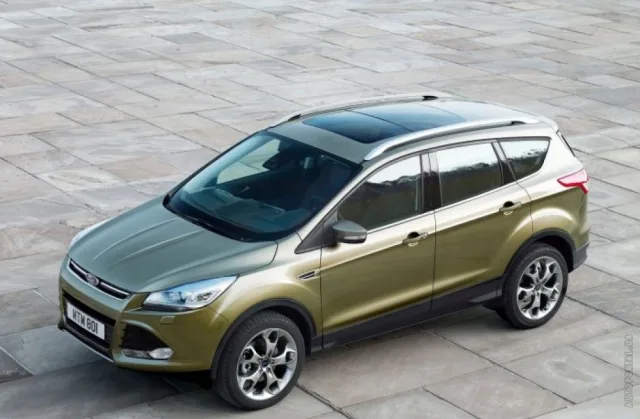
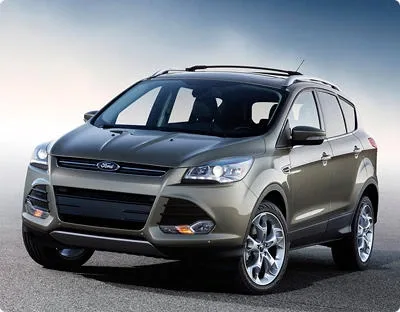
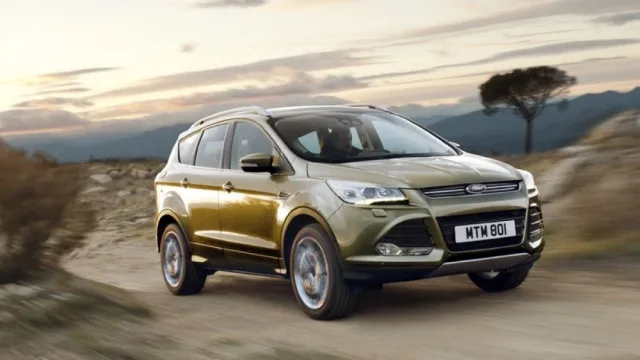
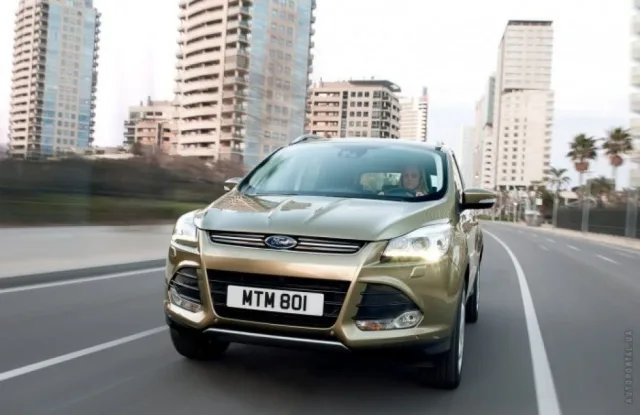
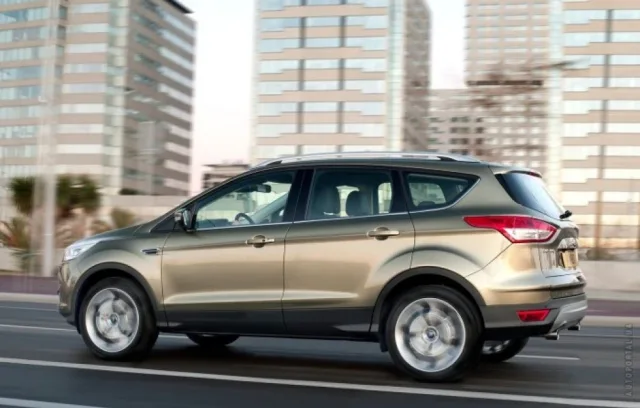
The exterior of the second-generation Ford Kuga resembles its predecessor: a high shoulder line, sloping windshield, sculpted hood, and angular front headlights. However, despite the similarity in proportions, the second Kuga looks more rugged — in the best sense of the word. The design combines sharp, brutal forms with smooth artistic touches. The car has become noticeably longer than the first generation — gaining 8 centimeters from bumper to bumper. Larger diameter wheels with low-profile tires emphasize its belonging to the Sport Utility Vehicle class — sporty and practical. The Kuga also received abundant chrome trim, visually elevating it from the 'affordable' car category.

Interior
The interior of the second-generation Kuga resembles a spaceship more than an everyday car. The center console is packed with numerous buttons, each with its own function — you just need to get used to this set of controls. Other interior design elements are also unlike a typical passenger car. For example, the contrasting instruments with white-blue backlighting seem to have come from an intergalactic fighter.
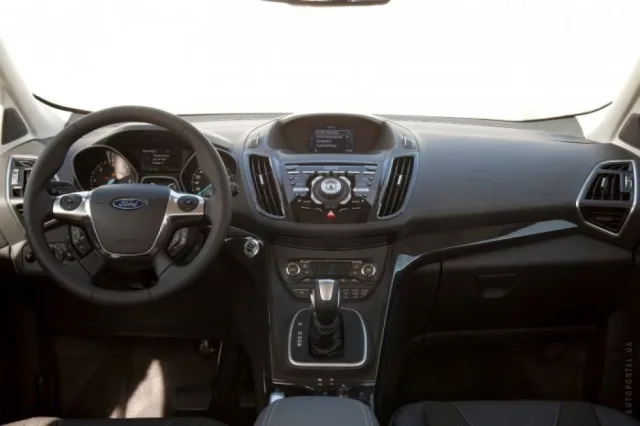
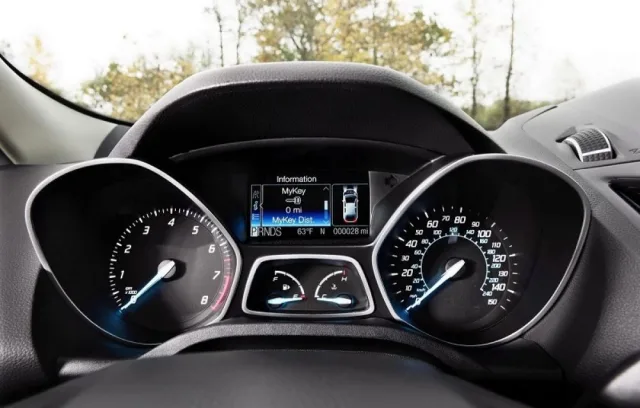
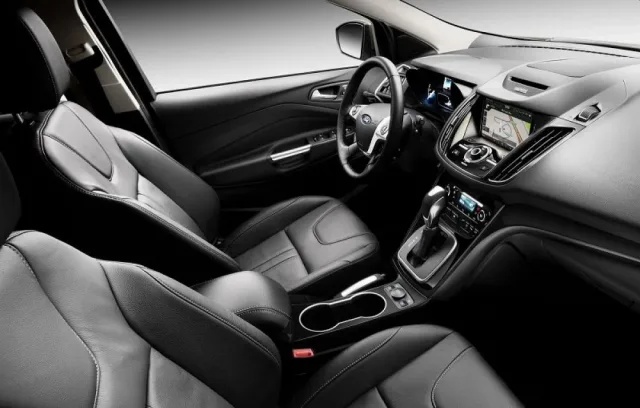
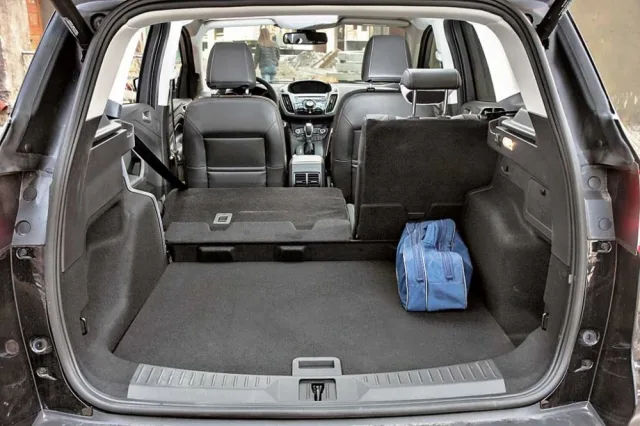
Buyers can choose from two interior color options offered by the official Ukrainian dealer: light or dark. There is also LED ambient lighting, the color of which can be changed with a button. The front seats are adjustable in all directions, the rear seat backrests recline, and the seats themselves slide fore and aft. According to factory designs, the interior space is designed to maximize free space for all passengers. The luggage compartment volume in travel mode is 456 liters.
Engine and transmission
The new Ford Kuga is available in Ukraine only with turbo diesel engines. Automatic and manual transmissions are available, as well as all-wheel drive versions.
| Engine | Transmission |
| Diesel turbo 2.0 L (140 hp/320 Nm) | 2x4, manual 6-speed |
| Diesel turbo 2.0 L (140 hp/320 Nm) | 4x4, manual 6-speed/4x4 auto 6-speed |
| Diesel turbo 2.0 L (163 hp/340 Nm) | 4x4, auto 6-speed |
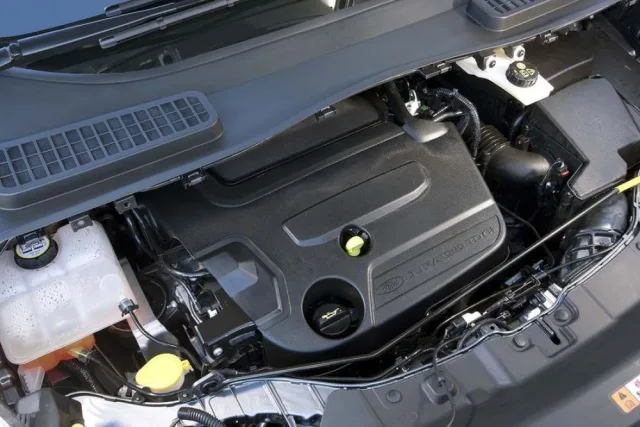
All versions boast low claimed fuel consumption: depending on the modification, 5.3 to 6.2 liters of diesel per 100 km. Dynamic performance is on par with competitors: acceleration to 100 km/h takes 10.5–11.5 seconds, and top speed ranges from 187 to 196 km/h.
Safety
The Ford Kuga is equipped with a range of active and passive safety systems. For sale in Europe, manufacturers are required to install at least two airbags, ABS, and electronic stability control. The standard Kuga comes with 6 airbags, including curtain airbags, as well as adaptive cruise control with a speed limiter function. The body is made of high-strength steel, and the load-bearing structure has programmed crumple zones that preserve the passenger cell. In a frontal collision, the steering column moves deeper into the dashboard and shifts sideways to avoid injuring the driver's ribs.
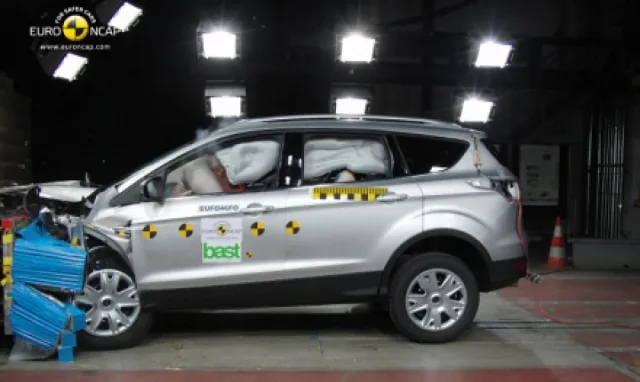
The extended ESP program constantly monitors vehicle behavior and corrects the trajectory in case of loss of direction. However, the driver can disable the electronic assistant, allowing the car to spin or slide.
Features
Innovative turbo diesel engines allow you to forget about high fuel prices: consumption is incomparable with the dynamics and dimensions of the car. At the same time, the driver and passengers get a full set of options for comfortable long trips: multimedia, climate control, seat adjustments. Unlike many competitors, the service interval for the diesel Ford Kuga is 20,000 kilometers.
Popularity in Ukraine
The first generation Kuga influenced Ukrainians' perception of crossovers. For many, this car became a symbol of the class. It suits both successful entrepreneurs and advanced housewives, as evidenced by the car's high popularity on the secondary market.
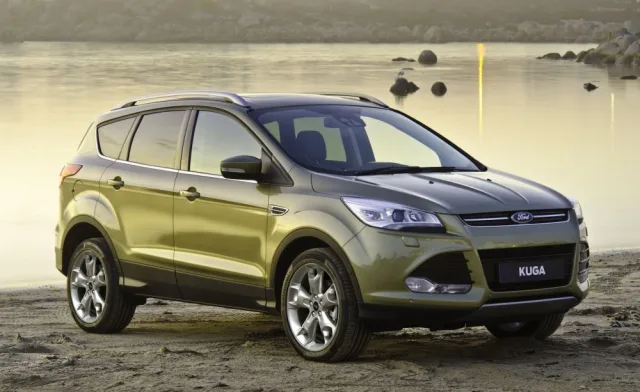
The second generation Kuga is also in demand, but due to unfavorable economic conditions, potential customers often choose something simpler or cheaper.
Our verdict
The Ford Kuga is a stylish and dynamic crossover that handles asphalt, sand, and mud. It is perfect for long trips. Therefore, we recommend this car to those who love to travel with high comfort, low costs, and no route restrictions.