Современные полноприводные системы могут быть выполнены по-разному, в зависимости от того, для каких условий предназначен автомобиль. Одни машины рассчитаны на асфальт и лёгкое бездорожье, другие — на серьёзные испытания, когда нужно добраться до самой удалённой точки.
Именно условия эксплуатации определяют, насколько сложной и надёжной будет конструкция, как она поведёт себя на разных покрытиях и, в итоге, сколько будет стоить.
Все существующие схемы полного привода можно свести к двум основным типам: постоянный (FullTime) и подключаемый (PartTime). Остальное — лишь вариации на эту тему.
Начнём с простого:
Схема PartTime. Автомобиль, у которого ведущей является одна ось (обычно задняя, но бывает и передняя), и при необходимости подключается вторая. Межосевого дифференциала здесь нет.
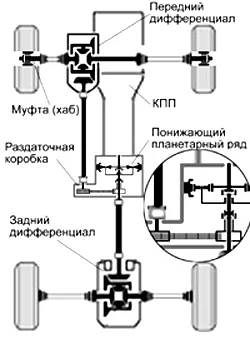
Это самый простой вариант полного привода. Для тяжёлых условий в раздаточной коробке есть понижающая передача. Включение полного привода может быть механическим (рычагом) или с помощью электро- или пневмопривода. Чтобы экономить топливо на шоссе, можно отключить приводные валы от колёс — для этого служат механические муфты свободного хода («хабы»). Управляются они вручную или электроприводом.
Главные плюсы такой схемы — простота и надёжность. Минусы — использовать полный привод можно только на бездорожье, льду, песке или снегу. Если ездить с включённым полным приводом по асфальту на высокой скорости, это приведёт к повышенному износу трансмиссии и шин.
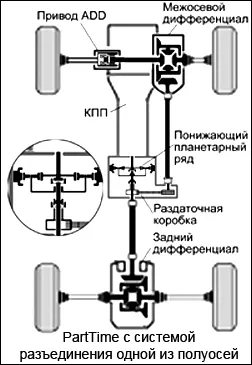
В некоторых конструкциях, чтобы упростить подключение переднего моста и отказаться от хабов, применяется разъединение одной из полуосей подключаемого моста. Так вращение от колёс не передаётся на карданный вал.
Такая схема полного привода используется на внедорожниках: Great Wall Haval, Jeep Cherokee (стандартная раздаточная коробка Command Trac), Jeep Wrangler, SsangYong Kyron, SsangYong Rexton (с механической коробкой), Suzuki Jimny, УАЗ (все модификации).
FullTime 4WD — это настоящий постоянный полный привод. Здесь три дифференциала: межосевой, передний и задний межколёсные.
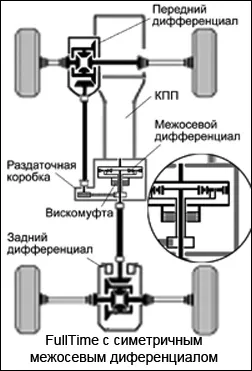
Межосевой дифференциал может распределять момент по-разному. Классика — 50/50. В современных авто чаще встречаются несимметричные варианты, например 30:70 или 40:60. Чтобы улучшить внедорожные качества, применяются разные системы блокировки центрального дифференциала. Самыми распространёнными являются гидромеханические муфты с электронным управлением и вискомуфты. Отдельно стоит самоблокируемый дифференциал Torsen — чисто механическое устройство, которому не нужны управляющие системы. Если машина изначально создана для серьёзного бездорожья, в ней предусмотрена принудительная блокировка центрального дифференциала и, часто как опция, заднего.
Постоянный полный привод используется на таких автомобилях: Land Rover Discovery, Land Rover Defender, Lada Niva, Jeep Grand Cherokee/WK (с раздаточной коробкой NV245), Mercedes G-class (с 1989 года).
Псевдопостоянный полный привод. Широко применяется в кроссоверах, которые производители называют автомобилями с постоянным полным приводом, хотя конструктивно это не так. По сути, это схема PartTime, но подключение происходит автоматически.
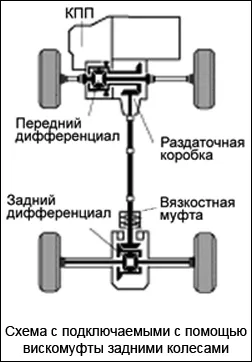
Одними из первых на рынке появились системы, где вторая ось подключалась вискомуфтой. Пионером среди производителей стала Toyota. На её примере и разберём принцип работы.
Система называлась V-Flex Fulltime 4WD. Как уже говорилось, полноценным полным приводом её можно назвать лишь условно. Межосевого дифференциала не было, а раздаточная коробка представляла собой простой угловой редуктор, соединённый с карданом. Перед задним редуктором стояла вискомуфта (V-Flex II). Когда передние колёса пробуксовывали и скорость вращения передней и задней осей отличалась, муфта замыкалась и соединяла кардан с входным валом редуктора. Если скорости были равны, машина оставалась переднеприводной. Конструкция была дешёвой, но имела минусы: вискомуфта срабатывала с задержкой, не могла полностью заблокироваться, при активной езде была опасна, а сама муфта отличалась недолговечностью.
Столкнувшись с такими проблемами, производители начали искать решение, и появились системы, где за включение полного привода отвечала гидромеханическая муфта с электронным управлением. Принцип подключения изменился.
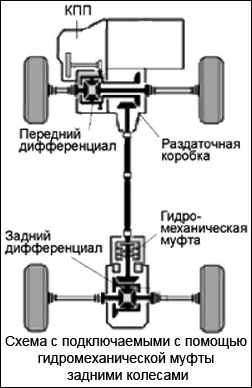
Крутящий момент передаётся через пакет фрикционных дисков, сжимаемых гидравликой. Сжимая пакет, можно менять передаваемый момент вплоть до 100%. Блок управления позволял подключать задний привод не только при пробуксовке, но и по другим условиям движения. Муфта могла дозированно распределять усилие между осями. До срабатывания системы машина остаётся моноприводной. Но полностью избавиться от недостатков не удалось: при частых срабатываниях или больших нагрузках муфта может перегреться и временно отключиться.
Пример такой конструкции — муфта Haldex, одна из самых популярных в мире. Она постоянно развивается, и на сегодняшний день появилось уже пятое поколение.
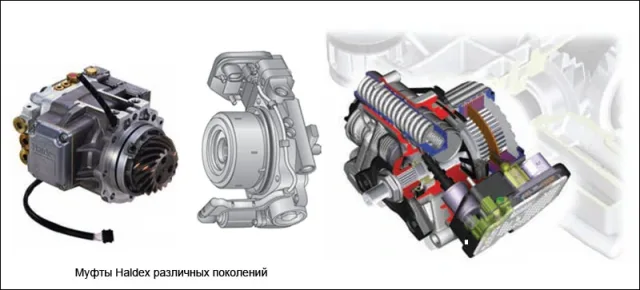
Принцип работы муфт Haldex разных поколений одинаков, различается лишь способ создания давления масла и управление. В первом и втором поколениях давление создавал насос, работающий от разницы скоростей вращения передней и задней осей, а в четвёртом и пятом — электрический насос.
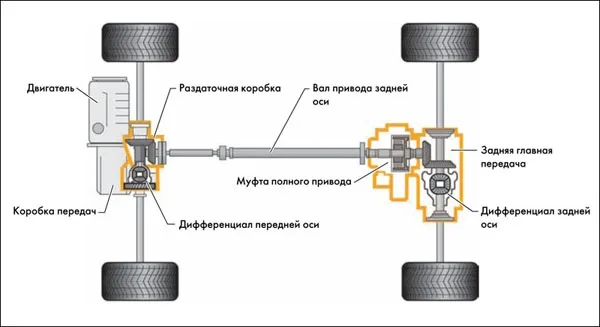
Передаваемый момент корректируется блоком управления, который анализирует данные со множества датчиков. Разница скоростей вращения колёс больше не является главным условием включения полного привода. Муфта может включиться заранее, например, при резком разгоне. Система работает настолько плавно, что момент включения и выключения полного привода практически незаметен. Машина остаётся полноприводной, когда это нужно.
Полный привод с гидромеханическими муфтами — оптимальное решение по конструкции и цене. Он позволяет превратить любой переднеприводный автомобиль в полноприводный с минимальными затратами. Это хороший вариант для машин, которые в основном ездят по асфальту, а самое серьёзное бездорожье для них — грунтовка на дачу. Полный привод здесь нужен скорее для улучшения управляемости на скользком покрытии. Серьёзные препятствия такой машине не по зубам. При длительной езде по плохим дорогам муфта перегревается, и датчики безопасности отключают её. Тогда машина из полноприводной становится моноприводной, что может стать неприятным сюрпризом посреди лужи или снега (мы это выяснили при езде по снегу на Ferrari FF). К тому же даже в рабочем состоянии муфта не передаёт 100% момента. Для серьёзных внедорожников нужны другие решения.
Такая схема полного привода (Haldex или аналогичные собственные разработки) используется на автомобилях: BMW X5 с 2004 года (система XDrive), Chevrolet Captiva, Ford Kuga, Infiniti EX/QX/FX35, Honda CR-V, Hyundai Santa Fe (с 2007 года), Hyundai Tucson, Kia Sportage (с 2004 года), Nissan X-Trail (постоянный передний привод, задний подключается при пробуксовке переднего)
Одной из лучших, но технически сложных, является система Super Select от Mitsubishi. Японцы были первыми среди своих соотечественников, кто применил на внедорожниках схему «отключаемого» полного привода с межосевым дифференциалом.
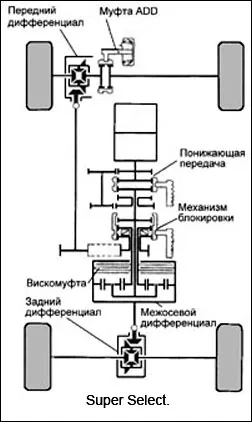
Конструкция оказалась настолько удачной, что её позаимствовала Toyota. Внесла небольшие изменения и представила под названием MultiMode.
Возможность ездить на постоянном полном приводе (благодаря центральному дифференциалу) и отключать его для экономии топлива сделала эту схему одной из лучших для современного водителя. На серьёзном бездорожье достаточно включить принудительную блокировку межосевого дифференциала, и машина превращается в «танк».
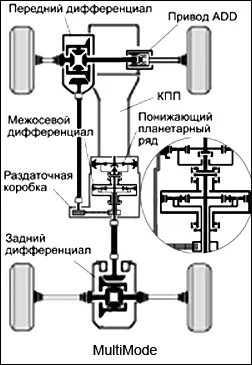
Соединив все варианты в одной системе, конструкторы дали водителю полную свободу выбора. Такая конструкция легко превращается из PartTime в FullTime 4WD и обратно.
Полный привод по этой схеме ставится на: Mitsubishi Pajero Sport (последнего поколения), Mitsubishi Pajero, Lexus / Toyota Land Cruiser (некоторые модификации)
Мы дали общую информацию о системах полного привода. Возможно, читатель задумается, что выбрать. Первое и главное — подумайте, где и как вы будете ездить.
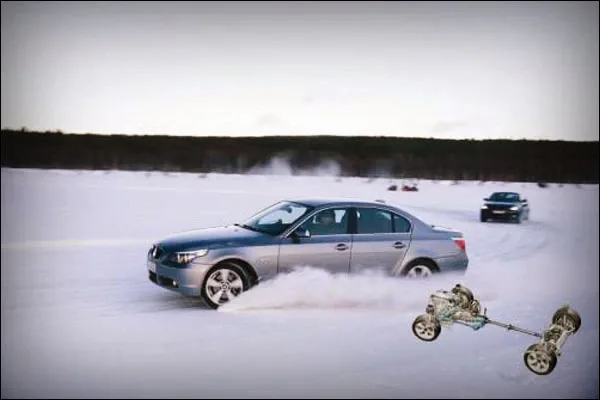
Любителям скорости подойдёт легковой автомобиль с постоянным приводом, желательно с электронным управлением. Если вы ездите спокойно и полный привод нужен как страховка зимой — машина с подключаемым полным приводом (ручным или автоматическим) может стать вашим выбором. Тем, кто любит активный отдых или рыбалку, лучше присмотреться к автомобилям с «жёстким» включением полного привода, блокировкой центрального дифференциала и понижающим рядом в раздаточной коробке. Помните, полноприводный автомобиль всегда дороже моноприводного аналога. Взвесьте все за и против, прежде чем принять окончательное решение.