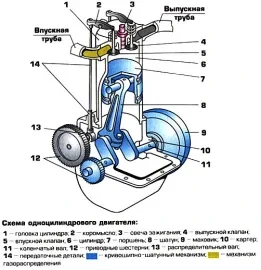
Начнем с того, что двигатель внутреннего сгорания это устройство, в котором химическая энергия топлива, сгорающего в рабочей зоне, преобразуется в механическую работу.

Схематически это выглядит так:
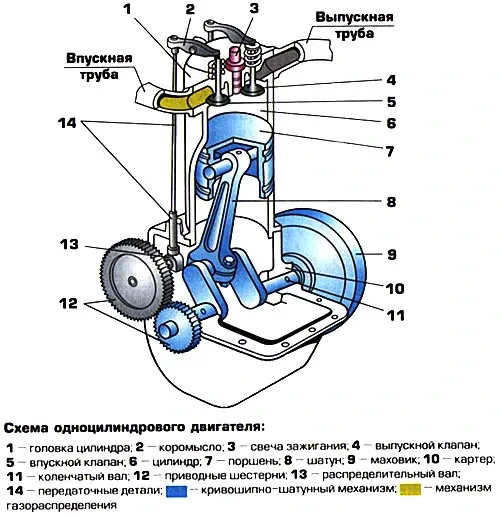
Возгорание топлива в цилиндре (6) приводит к перемещению поршня (7), что, в свою очередь, приводит к проворачиванию коленчатого вала.
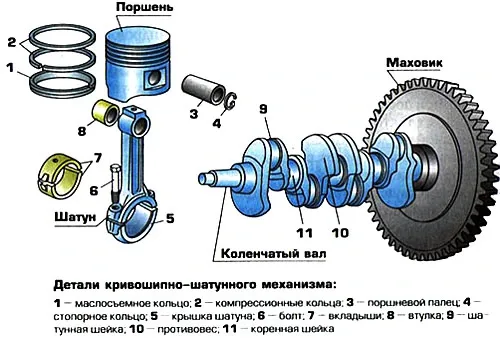
То есть, циклы расширения и сжатия в цилиндрах приводят в действие кривошипно-шатунный механизм, который, в свою очередь, преобразует возвратно-поступательное движение поршня во вращательное движение коленчатого вала:
Обороты двигателя
Под широкоупотребимым термином «обороты двигателя» имеется в виду количество оборотов коленчатого вала в единицу времени (в минуту).
И мощность, и крутящий момент - величины не постоянные, они имеют сложную зависимость от оборотов двигателя. Эта зависимость для каждого двигателя выражается графиками, подобными нижеследующему:
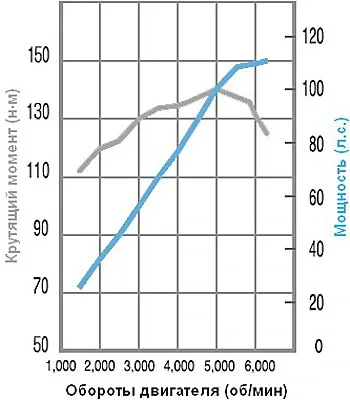
Производители двигателей борются за то, чтобы максимальный крутящий момент двигатель развивал в как можно более широком диапазоне оборотов («полка крутящего момента была шире»), а максимальная мощность достигалась при оборотах, максимально приближенных к этой полке.
Мощность двигателя
Мощность - это отношение работы, выполняемой за некоторый промежуток времени, к этому промежутку времени. При вращательном движении мощность определяется как произведение крутящего момента на угловую скорость вращения.
Мощность двигателя последнее время все чаще указывают в кВт, а ранее традиционно указывали в лошадиных силах.
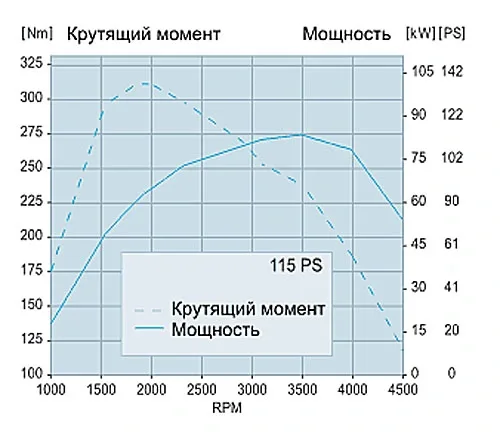
Как видно на приведенном выше графике, максимальная мощность и максимальный крутящий момент достигаются при различных оборотах коленвала. Максимальная мощность у бензиновых двигателей обычно достигается при 5-6 тыс. оборотов в минуту, у дизельных - при 3-4 тыс. оборотов в минуту.
График мощности для дизельного двигателя:
В практической плоскости - мощность влияет на скоростные характеристики авто: чем выше мощность, тем большую скорость может развивать автомобиль.
Крутящий момент
Крутящий момент (момент силы) - это произведение силы на плечо рычага. В случае кривошипно-шатунного механизма, данной силой является сила, передаваемая через шатун, а рычагом - кривошип коленчатого вала. Единица измерения - Ньютон-метр.
Иными словами, крутящий момент характеризует силу, с которой будет вращаться коленвал, и насколько успешно он будет преодолевать сопротивление вращению.
На практике высокий крутящий момент двигателя будет особенно заметен при разгонах и при передвижении по бездорожью: на скорости машина легче ускоряется, а вне дорог - двигатель выдерживает нагрузки и не глохнет.
Еще примеры
Для большего практического понимания важности крутящего момента приведем несколько примеров на гипотетическом двигателе.
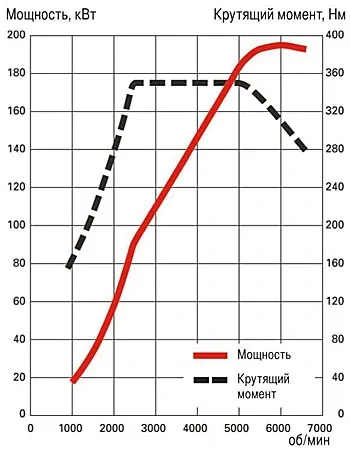
Даже без учета максимальной мощности, по графику, отражающему крутящий момент, можно сделать некоторые выводы. Разделим количество оборотов коленчатого вала на три части - это будут низкие обороты, средние и высокие.
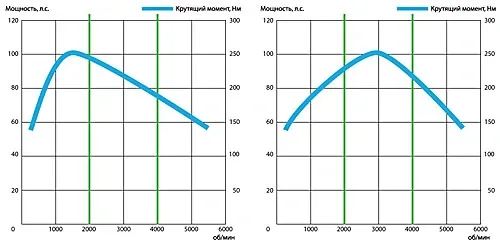
На графике слева представлен вариант двигателя, который имеет высокий крутящий момент на низких оборотах (что равносильно высокому крутящему моменту на малых скоростях) - с таким двигателем хорошо ездить по бездорожью - он "вытянет" из любой трясины. На графике справа - двигатель, у которого высокий крутящий момент на средних оборотах (средних скоростях) - этот двигатель рассчитан для использования в городе - он позволяет достаточно резво ускоряться от светофора до светофора.
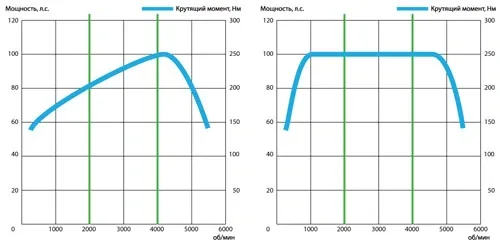
Следующий график характеризует двигатель, который обеспечивает хорошее ускорение даже на высоких скоростях - с таким двигателем комфортно на трассе. Замыкает графики универсальный двигатель - с широкой полкой - такой двигатель и из болота вытянет, и в городе позволяет хорошо ускоряться, и на трассе.
К примеру 4,7-литровый бензиновый двигатель Toyota Land Cruiser 200 развивает максимальную мощность 288 л.с. при 5400 об/мин, а максимальный крутящий момент в 445 Нм при 3400 об/мин. А дизельный 4,5-литровый двигатель, устанавливаемый на это же авто развивает максимальную мощность 286 л.с. при 3600 об/мин, а максимальный крутящий момент – 650 Нм при "полке" в 1600-2800 об/мин.
1,6-литровый двигатель Mitsubishi Lancer X развивает максимальную мощность 117 л.с. при 6100 об/мин, а максимальный крутящий момент в 154 Нм достигается при 4000 об/мин.
2,0-литровый двигатель Honda S2000 обеспечивает максимальную мощность в 240 л.с. при 8300 об/мин, а максимальный крутящий момент в 208 Нм при 7500 об/мин, являясь примером "спортивности".
Итог
Итак, как мы уже видели, связь между мощностью, крутящим моментом и оборотами двигателя - довольно сложная. Суммируя, можно сказать следующее:
- крутящий момент отвечает за способность ускоряться и преодолевать препятствия,
- мощность ответственна за максимальную скорость автомобиля,
- а обороты двигателя все усложняют, так как каждому значению оборотов соответствует свое значение мощности и крутящего момента.
А вцелом все выглядит так:
- высокий крутящий момент на низких оборотах дает автомобилю тягу для передвижения по бездорожью (таким распределением сил могут похвастать дизельные двигатели). При этом мощность может стать уже вторичным параметром - вспомним, хотя бы, трактор Т25 с его 25 л.с.;
- высокий крутящий момент (а лучше - «полка крутящего момента) на средних и высоких оборотах дает возможность резко ускоряться в городском потоке или на трассе;
- высокая мощность двигателя обеспечивает высокую максимальную скорость;
- низкий крутящий момент (даже при высокой мощности) не позволит реализовать потенциал двигателя: имея возможность разогнаться до высокой скорости, автомобиль будет достигать этой скорости невероятно долго.