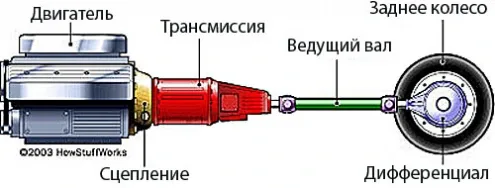
Крутящий момент от силового агрегата доходит до колёс не напрямую, а через цепочку узлов: сцепление, коробку передач, дифференциал и прочие элементы. Трансмиссия даёт мотору возможность работать в выгодном диапазоне оборотов при любой скорости, а сцепление нужно для разъединения двигателя и коробки в те моменты, когда водитель меняет ступень.
Вот как выглядит стандартная схема:
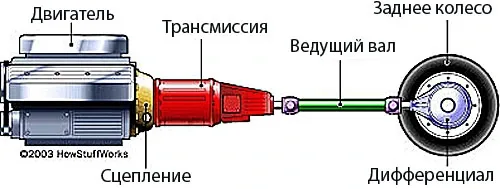
Когда включается задний ход, ведущий вал начинает крутиться в противоположном направлении.
У механической и автоматической коробок конструкция сильно различается, поэтому и реакция на попытку включить «заднюю» во время езды вперёд у них будет разной.
Машина с механической коробкой
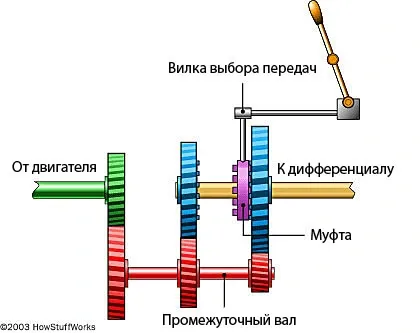
Вариантов исполнения МКПП существует немало, но суть работы удобно разобрать на примере трёхвальной коробки:
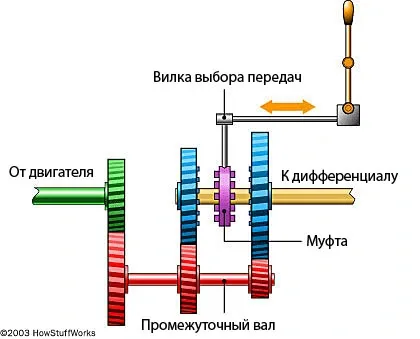
Усилие от двигателя (через сцепление) поступает на промежуточный вал, где жёстко закреплён блок шестерён. Уже с этого вала момент уходит на дифференциал и далее на колёса.
Шестерни на шлицевом валу, который идёт к дифференциалу, посажены на подшипники и могут свободно вращаться вокруг него, причём каждая со своей скоростью.
Проще говоря, когда двигатель заведён, а рычаг стоит в нейтрали, вращаются вал от двигателя, промежуточный вал и все шестерни. А вот шлицевой вал и муфта остаются неподвижными, и момент на колёса не передаётся.
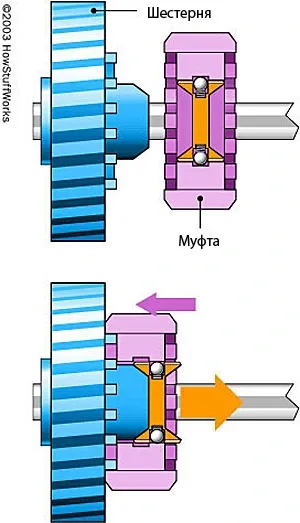
Муфта нужна для того, чтобы жёстко соединить одну из шестерён со шлицевым валом (она может скользить вдоль вала) и тем самым начать передачу усилия:
Какую именно шестерню задействовать, решает водитель, выбирая передачу, а муфта эту шестерню «цепляет».
Схема пятиступенчатой механики с задним ходом выглядит так:
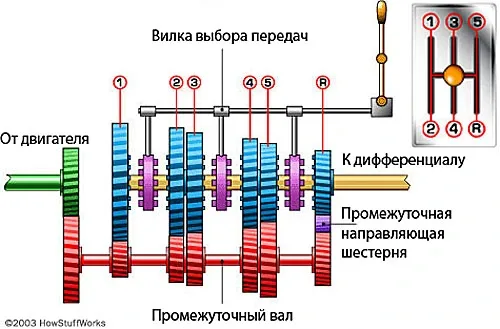
При смене ступени срабатывает определённая муфта, которая подключает одну из своих шестерён.
Задний ход устроен через дополнительную промежуточную шестерню, которая заставляет ответную шестерню на шлицевом валу вращаться в обратную сторону.
В процессе переключения зубья муфты выходят из пазов на торце одной шестерни, после чего муфта сцепляется с другой.
Чтобы разъединить муфту с шестернёй, а потом снова их соединить, поток момента от двигателя прерывают — водитель выжимает сцепление.
Напомним: шестерни на шлицевом валу вращаются с разной скоростью. Чтобы при переключениях не нагружать детали трансмиссии и сделать управление комфортнее, придумали синхронизаторы — они выравнивают скорости вращения муфты и шестерни до того, как те войдут в зацепление.
Что из этого следует? А вот что: при переключении скорость вращения муфты (она совпадает со скоростью ведомого вала) синхронизаторы подгоняют под скорость вращения шестерни. Кроме того, шестерня заднего хода крутится всегда в сторону, обратную вращению остальных шестерён и муфты, поэтому зубья муфты просто не смогут зацепиться за неё.
Эти два момента и не дадут включить заднюю передачу на ходу — будет слышен хруст, но муфта не зацепится, и даже рычаг КПП физически не переведётся в положение заднего хода.
Но тут есть нюанс: если упорно пытаться включить заднюю на ходу, можно повредить синхронизатор, муфту или шестерню — они будут испытывать повышенные нагрузки, пусть и без результата.
Для полноты картины добавим: да, в первой половине прошлого века легковые машины нередко оснащались коробками без синхронизаторов. Но суть от этого не меняется — заднюю передачу на ходу всё равно не включить, а вот риск сломать коробку вырастает в разы.
Машина с «автоматом»
В машинах с автоматической коробкой функцию сцепления выполняет гидротрансформатор (его принцип в том, что момент от мотора передаётся трансмиссии не через жёсткое соединение, а через вязкую жидкость).
Ключевая особенность АКПП в том, что для получения разных передаточных чисел используется один и тот же набор шестерён, тогда как в МКПП для каждой передачи — свой.
Это достигается за счёт планетарной передачи, где передаточные отношения меняются путём фиксации одних деталей относительно других.

Планетарная передача — это система из нескольких шестерён-сателлитов, которые вращаются вокруг центральной солнечной шестерни:
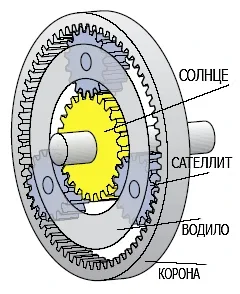
Неподвижный | Ведущий | Ведомый | Передача |
Корона | Солнце | Водило | Понижающая |
Водило | Солнце | Повышающая | |
Солнце | Корона | Водило | Понижающая |
Водило | Корона | Повышающая | |
Водило | Солнце | Корона | Реверс, понижающая |
Корона | Солнце | Реверс, повышающая |
Переключение ступеней (то есть фиксация нужного элемента) происходит под управлением гидравлики или электроники.
В обоих случаях на выходном валу АКПП стоит датчик скорости: в гидравлической системе он создаёт давление, пропорциональное скорости машины, а в электрической — напряжение.
Моменты переключения определяются исходя из скорости автомобиля и степени нагруженности мотора. Также в выборе передачи участвует клапан выбора диапазона, связанный с рычагом АКПП, который в зависимости от его положения запрещает включать определённые передачи.
Иными словами, в автомате передачами заведует автоматика, получающая данные с двигателя и вала коробки. Она не включит заднюю передачу при движении вперёд, что бы ни делал водитель с рычагом. Максимум — коробка уйдёт в «нейтраль».
Для пущей надёжности многие современные автомобили оснащаются механизмом, который не даёт сдвинуть селектор АКПП, пока не нажата педаль тормоза.
Вывод
- На машине с механической коробкой (как и с роботизированной МКПП) включить заднюю передачу на ходу не выйдет — сил не хватит. А если упорствовать, можно довести коробку до ремонта.
- На машине с автоматом (как и с вариатором) задняя не включится, потому что датчики сообщают «мозгу» АКПП скорость и направление движения, и уже на основе этих данных выбирается передача. Пока датчики работают — «автомат» ни за что не включит заднюю при движении вперёд (а если датчики вышли из строя, машина вообще не поедет).
Так что на вопрос «что будет, если на ходу включить заднюю передачу?» ответ один: не будет ничего!