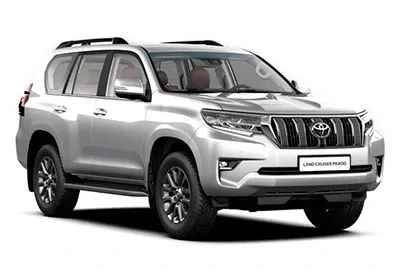
Toyota Land Cruiser Prado: prices and specifications
4 generations Country of origin: Japan

Toyota Land Cruiser Prado: history and model range overview
Toyota Land Cruiser Prado is the younger model in the legendary Land Cruiser SUV lineup. Serial production began in 1990. The Prado suffix (from Portuguese for 'field') was added to the Land Cruiser name to differentiate commercial and passenger versions of the 70-series SUVs. The vehicle was positioned as a comfortable SUV for light off-road use.
The first generation (70 Series) was based on a modified platform of the larger Land Cruiser with a shortened wheelbase and reduced dimensions. The car retained a body-on-frame construction and four-wheel drive. The first-generation engines were smaller in displacement than those of the standard Land Cruiser, both gasoline and diesel.
The second generation (90 Series) was officially introduced in 1996. It was produced in three-door and five-door body styles.
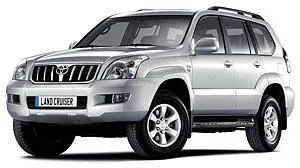
The third generation (120 Series) appeared on the market in 2002.
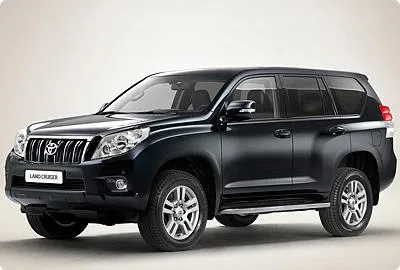
The fourth generation (150 Series) was introduced in 2009 at the Chicago Auto Show. The model is not sold in the North American market, where its counterpart, the Lexus GX470, is offered.
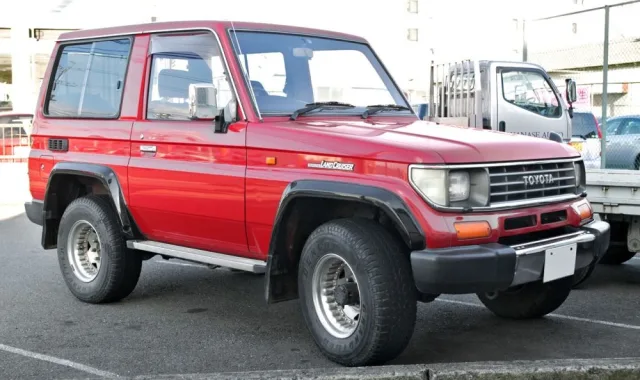
First generation (1984–1996)
The Land Cruiser Prado 70 emerged due to the growing popularity of true SUVs that were smaller than the Land Cruiser 60. At the same time, high demands were placed on comfort. Buyers could choose between three-door and five-door body styles. Engines included gasoline (22R/1RZ) and diesel (2L/3L/1KZ).
Second generation (1996–2002)
The Land Cruiser Prado 90 was designed as a more advanced SUV compared to the Land Cruiser 80, but its appearance and smaller engine displacement did not bring the expected popularity. Nevertheless, the Prado 90 became the first vehicle in the family to feature an independent front suspension and set new all-wheel drive configurations in the lineup.
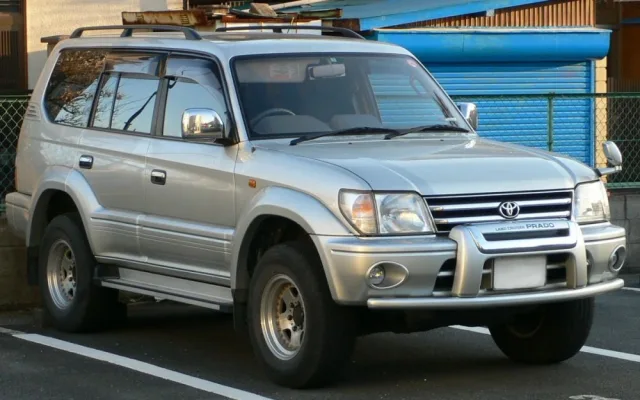
In 1999, the Prado II underwent a facelift and minor modernization, improving safety. In 2000, the car received a new diesel engine, the 1KD-FTV.
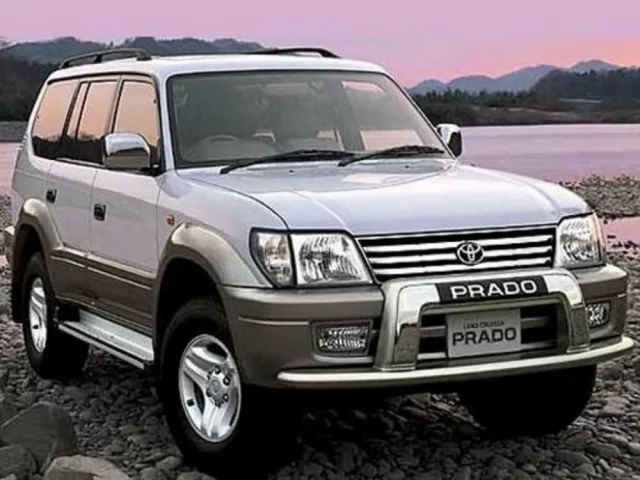
Engines of the second generation:
- 3RZ-FE — 2.7 L, 150 hp, gasoline inline 4-cylinder
- 5VZ-FE — 3.4 L, 180 hp, gasoline V6
- 1KZ-TE — 3.0 L, 125 hp, turbo diesel inline 6-cylinder
- 1KD-FTV — 3.0 L, 163 hp, turbo diesel inline 6-cylinder
Third generation (2003–2009)
The Prado 120 was built on the basis of the Toyota 4Runner, like previous generations. The car had two wheelbase options: 2455 mm for the three-door body and 2790 mm for the five-door body. A version with three rows of seats was available in the five-door body. The third generation was equipped with four gasoline engines and a turbodiesel.
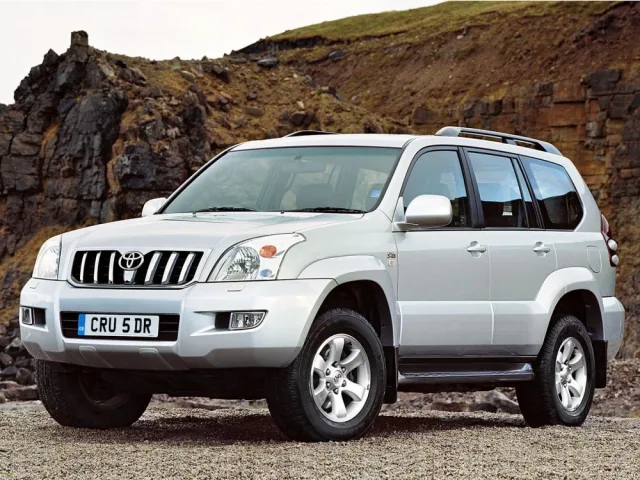
Engines of the third generation:
- 2TR-FE — 2.7 L, VVT-i, 163 hp, gasoline inline 4-cylinder
- 3RZ-FE — 2.7 L, 150 hp, gasoline inline 4-cylinder
- 5VZ-FE — 3.4 L, 185 hp, gasoline V6
- 1GR-FE — 4.0 L, VVT-i, 249 hp, gasoline V6
- 1KD-FTV — 3.0 L, 170 hp, turbo diesel inline 4-cylinder
- 5L-E — 3.0 L, 95 hp, diesel inline 4-cylinder
The Prado 120 had several transmission options: a 5-speed manual and a 4-speed automatic. Drive was permanent all-wheel drive with a lockable Torsen center differential, which could be fully locked manually, and a rear differential lock. The front suspension was independent, the rear semi-independent.
Fourth generation (2009–present)
The Land Cruiser Prado in the J150 body was introduced in 2009 at the Frankfurt Motor Show. Soon after, the car went on sale. With minor changes, this version is still sold today.
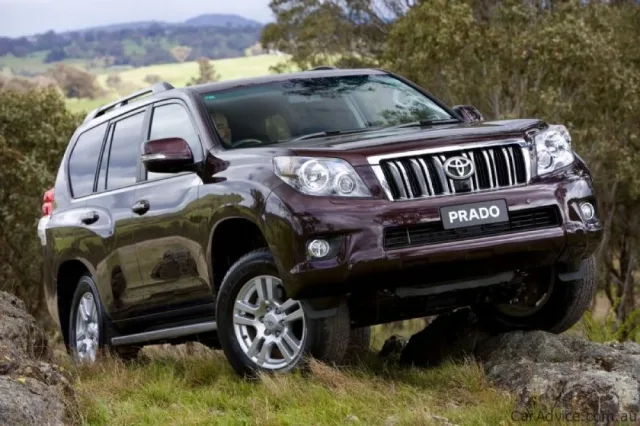
The Prado 150 is built on a modernized platform of the 120th generation. Despite the same wheelbase, external dimensions are increased. The main differences from the 120th are a reinforced ladder frame.
In Ukraine, three engines are available:
- turbodiesel 3.0 D-4D 1KD-FTV, 173 hp (410 Nm)
- gasoline 4.0 L, 282 hp (387 Nm)
- gasoline 2.7 L, 163 hp (246 Nm)
The Prado J150 is equipped with permanent all-wheel drive. Some modifications feature the Multi-Terrain System, which adapts the suspension operation to various conditions (rocks, gravel, snow, mud). Central and rear differential locks are provided. Transmission is a 4-speed automatic (for the 2.7 L engine) or a 5-speed automatic (for the 3.0 L and 4.0 L engines).
The car is produced in five-door and three-door versions. In Ukraine, only five-door versions are available. A seven-seat interior is possible only in the most expensive trim, with power-folding third-row seats.
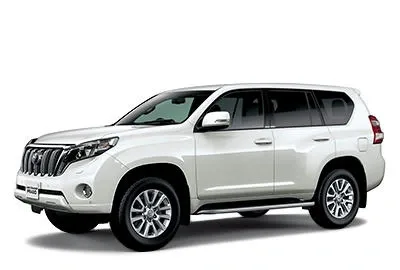
In 2014, the Prado 4 underwent cosmetic changes to the interior and exterior.
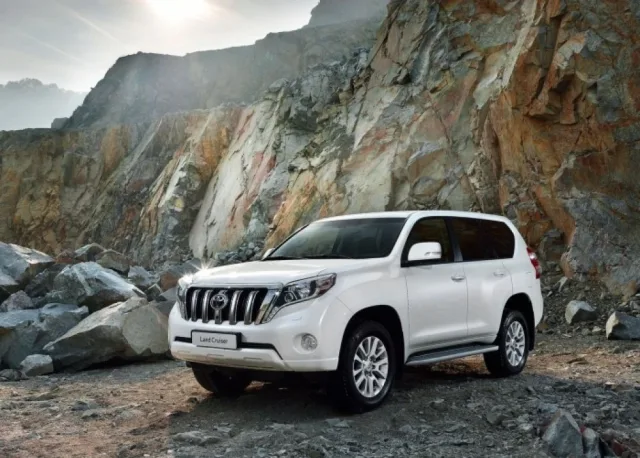
Exterior
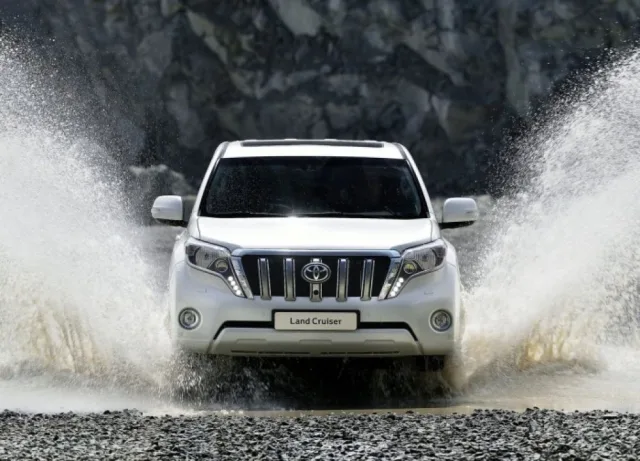
The appearance of the 2014 Prado differs little from the pre-facelift versions of the fourth generation. Changes are concentrated at the front and rear. At the front, there are original headlights with stylish LED daytime running lights and a large aggressive grille.
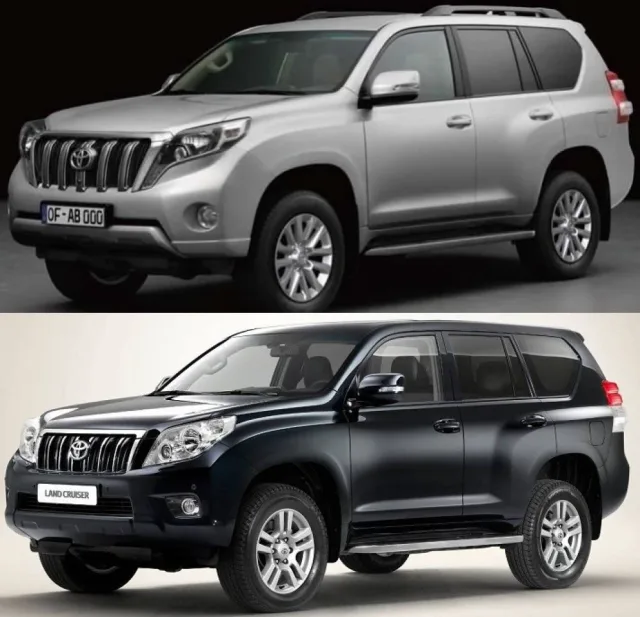
More chrome has been added; a powerful frame on top and sides gives the grille a more solid look. The front bumper with large fog lights emphasizes the overall appearance.
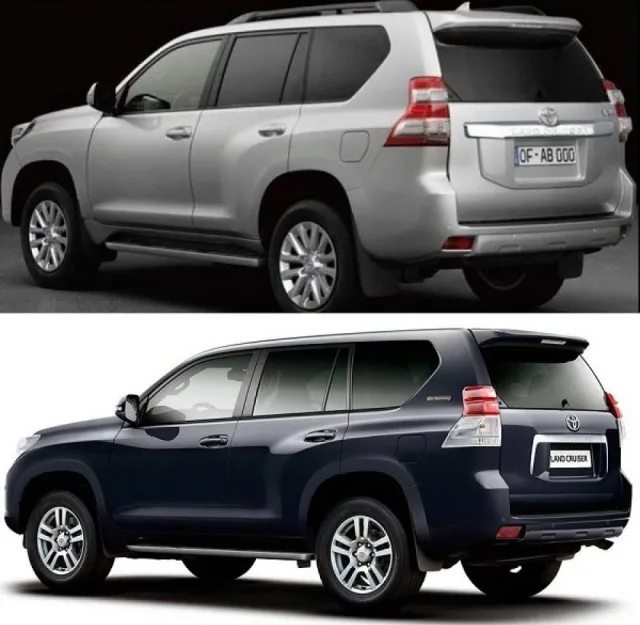
The sides remain unchanged. At the rear, there are modified taillights, a different design of the tailgate, and a wide chrome strip that appeared after the facelift.
Interior
Changes to the interior mainly affected the center console. Designers completely reworked the button layout and the climate control unit. In the center are the switches for the permanent all-wheel drive system and suspension. When driving on serious off-road terrain, the suspension and drive modes can be selected by feel.
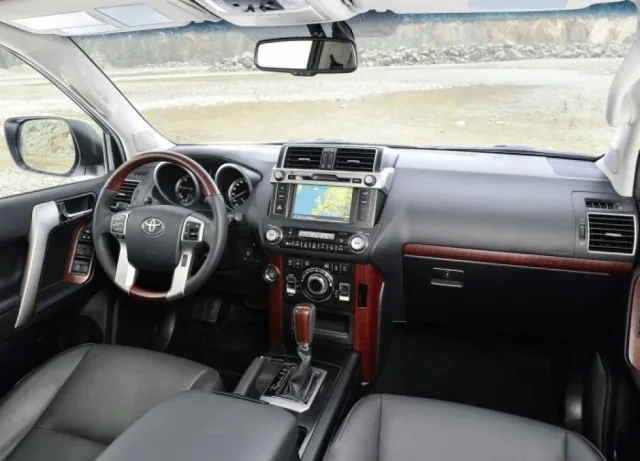
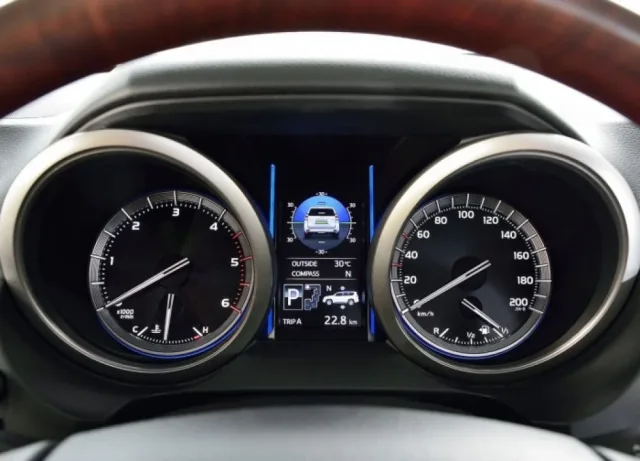
The instrument panel and steering wheel have been changed. Overall, the interior remains the same, but the quality of materials has improved.
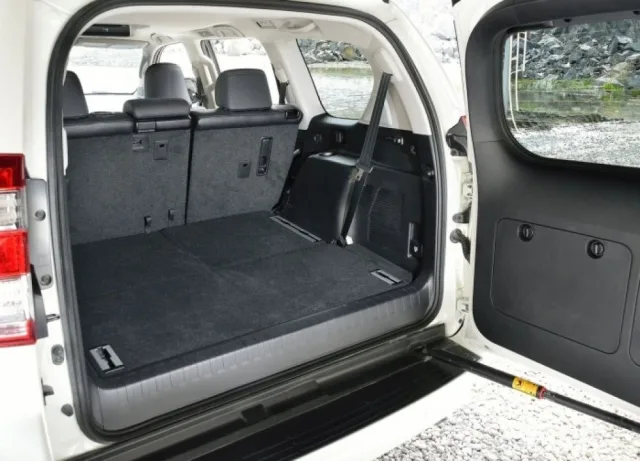
In terms of spaciousness, the Prado deserves only positive reviews: plenty of space, comfortable seating for the driver and passengers, and a large trunk.
Engine and transmission
On the Ukrainian market, the Prado is offered with a 2.7 L VVT-i gasoline engine (163 hp) paired with a 4-speed automatic or 5-speed manual, as well as a 4.0 L V6 DUAL VVT-i gasoline engine (282 hp) with a 5-speed automatic. For diesel enthusiasts, a 3.0-liter D-4D (173 hp) with a 5-speed automatic is available.
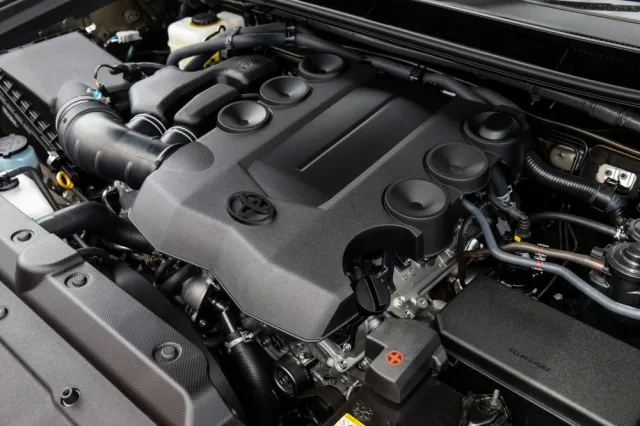
The sound insulation of the latest Prado is good: neither the engine nor the transmission are audible.
Safety
Safety is in order with the Prado: an energy-absorbing body made of high-strength steel, airbags, and an ESP stabilization system with ABS.

A high center of gravity leads to significant body roll in corners, but the car is not intended for high-speed maneuvering on the highway.
Features
The handling of the Prado is adequate, but during sharp maneuvers, there is a lack of feedback from the steering. The car enters corners somewhat leisurely. On the highway, it reliably holds its line.
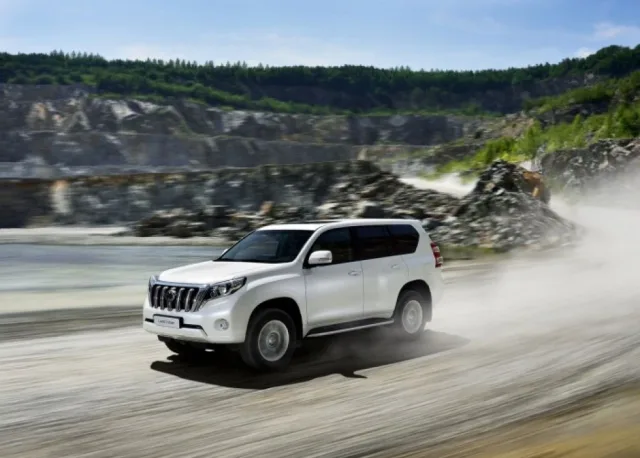
The Toyota Prado is not a 'crossover' SUV; it can handle real off-road conditions without much trouble. All-wheel drive helps on slippery or snowy roads, assists in getting out of snowdrifts, and driving on dirt roads. If desired, you can conquer snowy terrain and clay, but with appropriate tires.
Popularity in Ukraine
In its class, the Toyota Prado is one of the most popular SUVs. The Toyota Land Cruiser is among the bestsellers in Ukraine.
Verdict
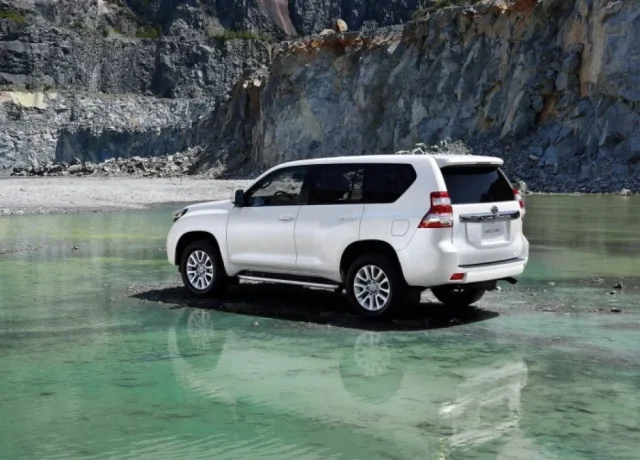
A good choice for a buyer who wants to own not just a crossover, but a true off-road conqueror. The car is modern and technologically advanced, although the powertrain and transmission can hardly be called cutting-edge. But they are time-tested, which is more important for operation on Ukrainian roads.